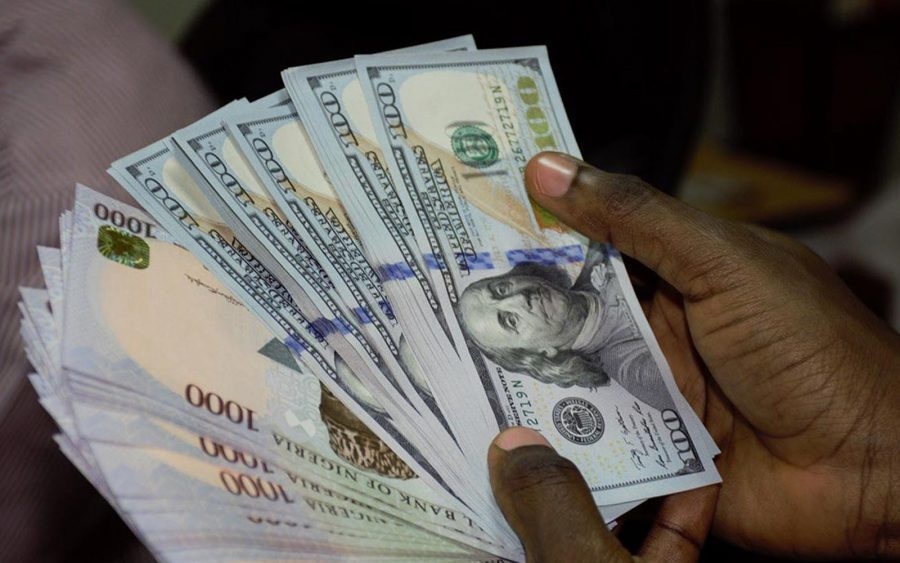
The Nigerian Naira recorded a mild depreciation against the U.S. Dollar on Thursday, April 23, 2026, adding to concerns over inflationary pressure and the rising cost of imported goods across the country.
At the official Nigerian Foreign Exchange Market (NFEM), the currency opened at an average of ₦1,351.59 per dollar, according to data from the FMDQ Securities Exchange. The movement reflects a slight weakening from earlier week levels of around ₦1,345–₦1,347, indicating renewed pressure in the foreign exchange market.
The disparity between the official and parallel markets remains pronounced, sustaining cost distortions for import-dependent businesses and consumers.
In major trading hubs such as Ikeja in Lagos and Wuse Zone 4 in Abuja, the dollar was reportedly exchanged between ₦1,465 and ₦1,480, widening the spread to over ₦100 per dollar.
Economists warn that the gap continues to incentivize informal market activity while raising the effective cost of imports for businesses unable to access official FX windows.
The currency movement comes against the backdrop of rising inflation. The National Bureau of Statistics (NBS) recently reported that headline inflation climbed to 15.38% in March 2026, reversing earlier signs of moderation.
For households, the impact is immediate, as Nigeria’s heavy reliance on imported raw materials and finished goods means exchange rate fluctuations quickly feed into retail prices.
A Lagos-based distributor, Chima Okechukwu, noted that price adjustments often happen instantly. “Once our replacement cost changes, we adjust prices immediately. We can’t wait for month-end. The dollar decides the market,” he said.
Market analysts attribute the latest depreciation to a combination of factors, including sustained corporate demand for foreign exchange to meet trade obligations, elevated import dependence, and persistent energy-related cost pressures.
Although high global oil prices—hovering above $100 per barrel—have strengthened Nigeria’s external reserves to about $50.45 billion, domestic fuel costs remain elevated, with petrol prices nearing ₦1,300 per litre, adding further strain to production and logistics costs.
The Central Bank of Nigeria (CBN), operating a managed float system, continues to intervene to smooth volatility. However, analysts say the bank faces a difficult balance between defending the currency and preserving foreign reserves amid persistent dollar scarcity.
Despite the latest dip, the Naira remains stronger than the lows of around ₦1,650 recorded in late 2025. Forecasts from the Nigeria Economic Summit Group (NESG) project an average exchange rate of approximately ₦1,480 for 2026, though risks remain tilted toward volatility.
Economists caution that ongoing migration pressures, high energy costs, and limited domestic production capacity could keep the currency under strain unless structural reforms reduce import dependence.
For now, the daily movement of the Naira against the dollar continues to serve as a key indicator of Nigeria’s broader economic stability and consumer purchasing power.



 Maritime1 week ago
 Football7 days ago
 Latest1 week ago
 Latest1 week ago
 Health1 week ago
 Energy7 days ago
 Energy6 days ago
 Comments and Issues7 days ago