
Business
Nigeria should be mindful of implication of many loans – Moghalu

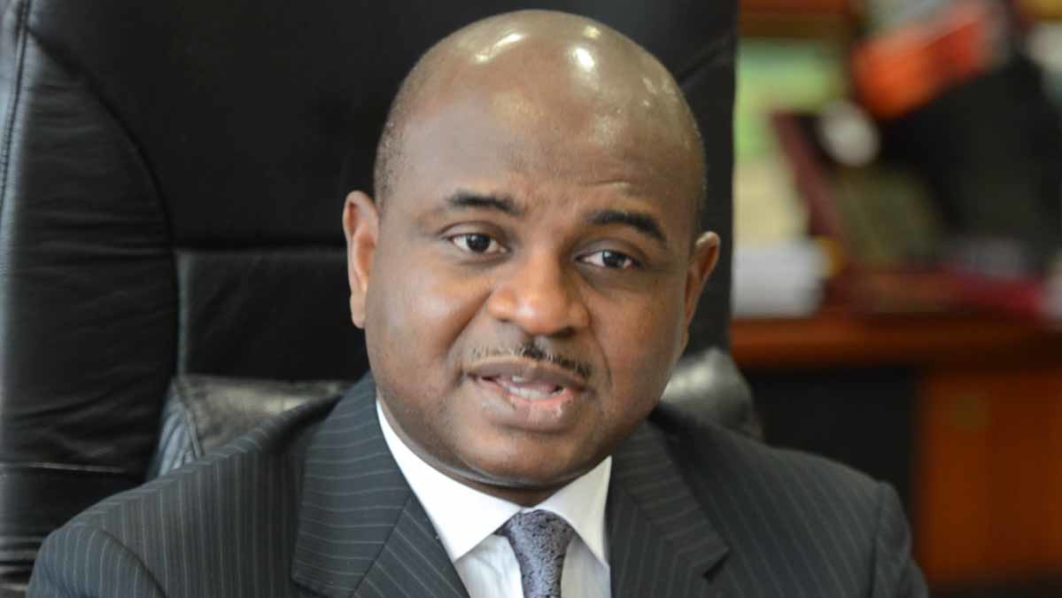
A former Deputy Governor of the Central Bank of Nigeria, Kingsley Moghalu has advised the federal government to be mindful of a further implication of the may loans it seeks to take, noting that borrowing so much without a real source of revenue to repay will likely result in a sovereign debt crisis.
In a statement issued by the former presidential aspirant, the borrowing of $3.4bn from the International Monetary Fund under the Fund’s Rapid Financing Instrument program, and also seeking another $3.5 from the World Bank and the African Development Bank without structural economic and constitutional reforms, in an age of declining oil revenues, is to postpone the evil day.
“While we are told that our ratio of debt to our GDP is a moderate 21 per cent, the more relevant ratio is that of revenue to debt servicing which in the region of 60 per cent or more. This means simply, that nearly two-thirds of our country’s revenues go to debt servicing. Nigeria is entering a dangerously vicious cycle.
He said a combination of the Covid-19 pandemic and the crash in oil prices has created a perfect storm for Nigeria’s economy — which was already fragile even before Covid-19.
“We need to re-incentivize the economy to be productive. The surest way to do so after the Covid crisis subsides is to wean ourselves of oil dependence by commencing a constitutional restructuring that devolves far more powers to regions (not states, many of which are not viable on their own) so they can make use of the economies of scale to create viable regional economies.
“Mexico, which has deployed hedging as a risk management tool to protect its fiscal revenues from oil price fluctuations, has made a $6 billion windfall in the current oil price crash. That’s almost as much as the $7 billion the Nigerian government is borrowing from international financial institutions.
“In any case, the Covid-19 crisis will see oil prices depressed for several months because the global economic recession it will entail will see demand for oil remain depressed because of decreased productivity in the national economies of industrialized countries. So, the hedging proposal is simply a holding pattern until we diversify our economy by restructuring its political foundations.
Also speaking on FG’s palliatives measures, Moghalu said it was clear from experience with the Covid-19 palliatives debacle, that the Nigerian authorities lack the infrastructure and capacity to run an efficient and effective country-wide program of such magnitude and potential impact.
This, he said is necessary to stimulate the economy and address the increased unemployment brought about by the Covid crisis.
He also advised that the 2021 budget allocates not less than 15% of the budget to health and education respectively, noting that the allocation should be for capital investments and reforms, not for recurrent expenditure.


-
 Latest5 days ago
Israel marks 3 years since October 7 Hamas attack amid Gaza strikes, election debate
-
 Energy5 days ago
Fuel Battle: Dangote, marketers and government clash over petrol imports
-
 Energy6 days ago
Petrol, diesel prices rise 86% in 2026 as costs hit fresh highs
-
 Energy7 days ago
Has Iran lost control of the Strait of Hormuz? Oil flows rebound as war disruptions persist
-

 Football6 days ago
Nigeria’s World Cup exit under spotlight as FIFA’s DR Congo files emerge
-
 Latest6 days ago
US Court set to rule on release of FBI, DEA records on Tinubu
-
 Business6 days ago
Nigerian investors at a crossroads as fixed-income yields slide
-

 Business7 days ago
LoveWorld Trade and Investment Forum to Convene Business Leaders in Accra