
Health
NUC announces date for implementation of new varsity curriculum

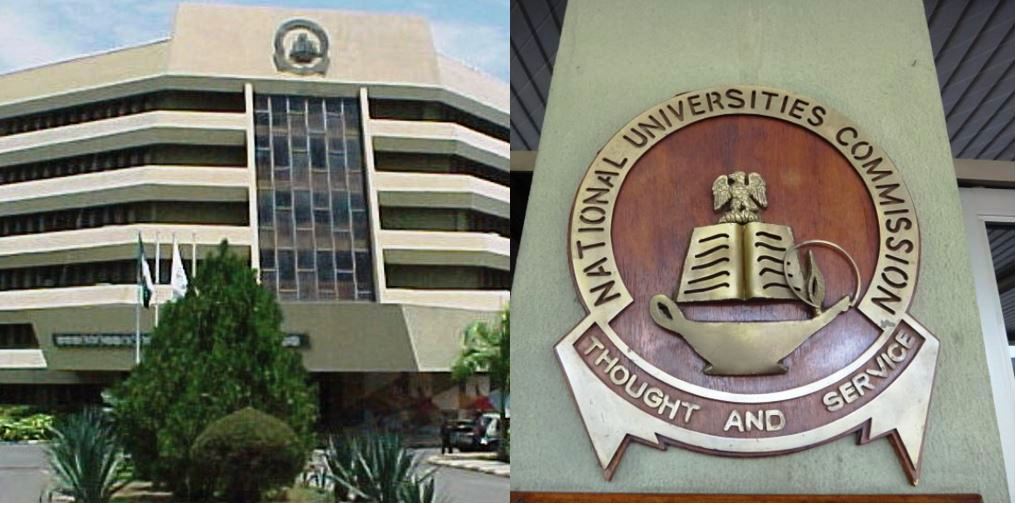
The National Universities Commission, says that the implementation of the Core Curriculum Minimum Academic Standards CCMAS (CCMAS) commences in September.
The commission said the new CCMAS document would guide institutions in the design of curricula for their programmes.
It added that the COMES would bring necessary innovation into the content and delivery of their programmes towards achieving overall goals of education in the country.
It added that the COMES would bring necessary innovation into the content and delivery of their programmes towards achieving the overall goals of education and training in the country.
The commission stated that the implementation will help sharpen the future of the education sector.
Acting Executive Secretary of NUC, Chris Maiyaki, who disclosed this at a Stakeholders’ Colloquium on CCMAS in Abuja on Wednesday, said the document would reposition Nigerian universities among the best rated in Africa.
READ ALSO: ABU, NDA partner on nuclear science training
The NUC chief said the CCMAS would make up 70 per cent of the curriculum while the universities would decide on what to include in the remaining 30 per cent.
Maiyaki said: “The role and development of the CCMAS is to ensure commitment in advancing our education and our great nation. NUC dedicated to ensuring quality and global competitiveness of Nigerian universities as well as the graduates we produce.
“The development of the CCMAS went through a painstaking process by bringing experts from our universities comprising professors, regulatory bodies, Nigerian Economic Summit Group (NESG) and all stakeholders.
“The CCMAS reflect global initiative that will equip graduates with knowledge and wherewithal that will advance the development of the nation.”
In his remarks, the minister of education, Prof. Tahir Mamman, encouraged universities to make optimal use of the 30 per cent university senate’s input.
He advised universities to ensure that learning outcomes, skills were acquired, irrespective of the core discipline.
“This is through using a curriculum and applying minimum standards that would guarantee we teach our students in such a way and manner that they would be employable.
READ ALSO: ASUU, public universities and federal government’s “Autogoal”
Mamman commended universities who had concluded work on the 30 per cent component and submitted the same for a review.
He urged those who have not concluded work on their 30 per cent to endeavour to do so in the shortest possible time as the next academic session rolls in.
The minister e pledged the commitment of the Federal Government in ensuring that the education system remained nationally relevant and globally competitive.
A former vice-hancellor, Obafemi Awolowo University, Ile-Ife, Prof. Michael Faborode said the idea of the CCMAS was to promote diversification and differentiation in the system.
This, he said, was to provide proper conceptual administrative guidelines and a harmonised legal framework for higher education.
He said this was the way to go so that universities could be globally relevant and competitive and as well provide the educational needs to the students so they could be employable after graduation.
The CCMAS was developed in 2018 following the review of the Benchmark Minimum Academic Standards (BMAS) –the curriculum guide for Nigerian universities, which had been in use since 2007.











-

 Latest1 week ago
Global excitement builds as Healing Streams Live Services returns October 23
-

 Featured7 days ago
Inside INEC’s race to prepare for Nigeria’s 2027 elections
-

 Business1 week ago
President Tinubu and the Low Transport Fares Fiasco
-

 Featured7 days ago
2027: APC unveils nationwide campaign timetable, Tinubu to rally in 12 states
-

 Business4 days ago
Naira faces exchange rate gap as Dollar hits N1,380 on parallel market
-
 Business7 days ago
Court dismisses ₦170m Trade Fair contract claim, says Zenith Bank was not a party
-

 Latest7 days ago
Breaking: NNPCL raises petrol price to ₦1,405 per litre amid discount controversy
-
 Business1 week ago
Rite Foods targets beverage market growth with LIDA Malt