
Business
Outlook for Naira remains bleak as analysts expect further pressure

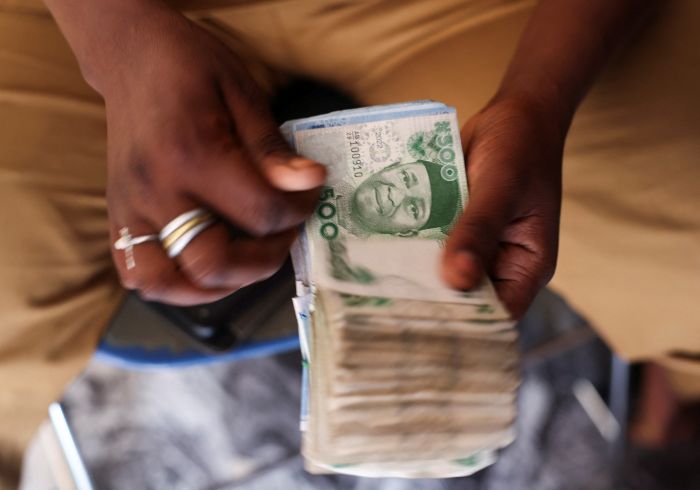
With the naira losing 23 per cent value in the third quarter of 2023, plummeting from N770/$1 at the end of the second quarter to N1000/$1 by the end of the third quarter at the parallel market, analysts expect further pressure on the currency in the fourth quarter of 2023.
Meanwhile, the official exchange rate at the end of the third quarter was N755.27/$1, a noticeable drop from N769.25/$1 at the end of the second quarter.
The widening gap between the official and unofficial rates reflects the persistent scarcity of foreign exchange in the country, as well as the divergent policies of the CBN and the market forces.
The Central Bank of Nigeria (CBN) has blamed the forex backlog estimated at between $6 billion to $10 billion as the major reason for the currency depreciation.
READ ALSO: FX disparity widens as Naira trades at N1000 at black market
At the recent Senate confirmation of the CBN governor, Yemi Cardoso stated that he intends to establish the exact unsettled obligations and find ways to “take care of it” confirming that progress will not be made without clearing the backlog.
He said it would be naive to think that the CBN will be able to make progress if it don’t handle that side of the foreign exchange
“But definitely, the immediate priority will be to verify the authenticity and extent of the unsettled obligation and once we do that, we need to look for a way to take care of it.
The naira’s weakness has had negative impacts on the Nigerian economy, as it has increased the cost of imports, fuelled inflation, eroding purchasing power, and discouraged investment.
According to the Head of Macro Strategy at FIM Partners UK Ltd, Charlie Robertson, the CBN may have to devalue the official rate again to align it with the market reality and conserve its dwindling external reserves, which fell from $34.1 billion at the end of June to $33.2 billion at the end of September.
He noted that further devaluation might be avoided if the apex bank is able to meet its obligations to clear forex backlogs, adding that achieving this might require the government tap new loans from friendly countries.
READ ALSO: Naira volatility on FX market to persist, says Africa FX monitor
Stears Africa FX Monitor, a data and intelligence company, also has predicted a continued naira volatility.
The company highlighted fiscal policies, external trade, and global market trends, including inflation rates, interest rates, policy events, and geopolitical factors as key factors affecting the naira’s performance.
Fadekemi Abiru, Head of Insights at Stears, expressed concerns about the naira volatility. “The continued unpredictability of the naira underscores the importance of timely and informed decision-making for businesses and investors in Nigeria,” she said.
The CBN had removed trading restrictions on the official market in June which drove the naira to a record low of N750 to the Dollar on the official market, down from the previous N477 to the dollar it traded for.
This was the first time since 2016 that the naira had recorded a big fall on the official market before the CBN introduced a managed exchange rate in 2017.












-

 Latest5 days ago
Full List: Meet the 2026 Nobel Prize winners across six categories
-

 Football5 days ago
Premier League Matchweek 7: Five Fixtures That Could Shape the Weekend
-

 Latest4 days ago
Umahi defends Lagos-Calabar highway route changes amid public outcry
-

 Business3 days ago
Dangote Refinery IPO: 70% Subscription claim meets fourfold demand assertion as investors seek clarity
-
Business4 days ago
Dangote Refinery IPO Extension: Was the 70% subscription report overhyped?
-

 Latest2 days ago
UCTH faces morgue crisis as 50 unclaimed corpses await mass burial
-

 Featured4 days ago
El-Rufai, ADC governorship candidate’s court appearance puts Kaduna opposition politics in focus
-

 Latest5 days ago
Makinde’s Chief of Staff, Segun Ogunwuyi, resigns