
News
Poilievre’s path to redemption: A by-election battle in rural Alberta

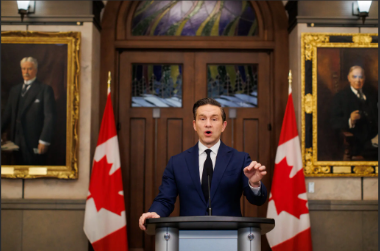
The political stage was set in the Battle River-Crowfoot riding, a vast, rural expanse of Alberta. Pierre Poilievre, once a prominent figure in the House of Commons, found himself fighting to reclaim his seat. This wasn’t just any by-election; it was a do-or-die moment for his leadership of the Conservative Party.
Just a few months earlier, Poilievre had faced a painful defeat. His party lost the general election to Mark Carney’s surging Liberals, and he personally lost the Ottawa-area riding he’d held since 2004. Now, sidelined and facing a mandatory leadership review in January, his path back to power depended on winning this remote, Conservative stronghold.
The race was unlike any other. Poilievre faced a record-breaking 214 candidates, many of whom were part of a protest group advocating for electoral reform. This overwhelming number of names meant voters would have to use a unique write-in ballot, a logistical challenge that added a layer of complexity to the campaign.
Poilievre had a lot to prove. He wasn’t just expected to win in a riding where his predecessor had secured over 80% of the vote; he needed to win by a significant margin to silence his critics and solidify his leadership. While some, like independent candidate Bonnie Critchley, accused him of simply using the riding as a “means to an end,” others believed he was connecting with voters. Political analyst Joan Crockatt noted that despite initial skepticism, many locals were coming to see Poilievre as a “guy who does want to represent them, has core values that match their core values.”
The by-election also brought attention to a deeper issue in Alberta: a growing separatist sentiment. The region, rich in energy resources, has long felt ignored by Ottawa. As Crockatt explained, Poilievre’s loyalty to a united Canada could cost him some votes among those who feel their patience with the federal government is running thin.
While the outcome of the by-election seemed certain, the true test lay in the numbers. After the personal blow of losing his seat and blowing a 20-point lead in the general election, all eyes would be on Poilievre’s margin of victory. It would be the final, scrutinizing measure of his leadership and a sign of what’s to come for the Conservative Party.
Poilievre, in the meantime, was using his time to sharpen his attacks on Prime Minister Carney, particularly on issues of international trade. He’s been quick to point out a new 76% tariff on Canadian canola, directly impacting his potential future constituents. His message was clear: “Mark Carney promised he was an international man of mystery who is going to negotiate deals and end tariffs… Well, what’s the result been so far?”
The eyes of the nation were on this small, rural riding. Poilievre’s future, and perhaps the future of the Conservative Party, hung in the balance.











-

 Featured3 days ago
BREAKING NEWS: Shouts of joy rock the world as Pastor Chris opens final Healing Streams edition for 2026
-

 Football3 days ago
Man United shortlist Emery, Nagelsmann as potential replacements for Carrick
-

 Business3 days ago
Hoodlums raid JED Benue office, abduct 10 staff over power dispute
-

 Business6 days ago
Naira faces exchange rate gap as Dollar hits N1,380 on parallel market
-

 Football3 days ago
Aston Villa ready to freeze out Garnacho to avoid £43m Chelsea transfer
-

 Business3 days ago
EV adoption: Roxettes seeks cheaper financing, local manufacturing incentives
-
 Latest3 days ago
Akpabio tasks Tompolo-backed movement with spreading Tinubu’s renewed hope message
-

 Business2 days ago
How Ethiopian Airlines is challenging Africa’s aviation narrative through self-reliance