
Latest
Tinubu seeks ₦10.79tn loan: Debt concerns grow as Nigerians await infrastructure gains

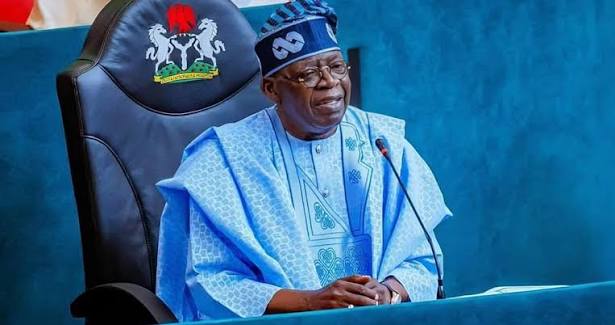
President Bola Tinubu has asked the National Assembly to approve a ₦10.79 trillion ($7.7 billion) external borrowing plan to help finance the 2026 budget deficit, renewing concerns about Nigeria’s rising debt obligations and whether additional loans will translate into better public services.
The request, contained in a letter read by Senate President Godswill Akpabio during plenary on Wednesday, November 4, 2026, was referred to the Senate Committees on Local and Foreign Debts and Appropriations for scrutiny.
The proposed borrowing represents the external financing component of the ₦29.2 trillion new borrowing provision in the 2026 Appropriation Act. The budget provides for ₦18.4 trillion in domestic borrowing and ₦10.79 trillion in external financing to help cover an estimated ₦31.4 trillion deficit.
The latest proposal replaces an earlier request seeking approval for $20.52 billion and €1.05 billion in external loans under the 2026–2027 borrowing plan.
Tinubu said the funds would support projects and programmes in infrastructure, defence and security, agriculture, healthcare, power and education.
He also argued that the foreign currency proceeds would strengthen Nigeria’s external reserves and support the naira.
How the government plans to raise the money
The President said the government would explore several financing options, including Eurobond issuance, concessional and commercial loans from multilateral and bilateral institutions, facilities from international financial institutions, loan syndications and bridge financing.
However, he indicated a preference for Eurobonds, arguing that they could be concluded more quickly and raise larger amounts under potentially favourable conditions.
The final interest rates, repayment periods and other conditions will depend on market conditions when the funds are raised.
This means the actual cost of the borrowing will not be fully known until the financing arrangements are concluded.
The Senate has not approved the request. Its committees are expected to examine the proposed financing options, borrowing terms and implications before lawmakers take a final decision.
Nigeria’s rising debt and repayment obligations
The proposed loan comes as Nigeria continues to face pressure from its growing public debt and the cost of servicing existing obligations.
Data from the Debt Management Office showed that the country’s total public debt stood at ₦166.79 trillion as of June 30, 2026, up from ₦159.35 trillion at the end of March.
The increase of ₦7.44 trillion in three months has intensified scrutiny of the government’s borrowing strategy.
The Federal Government also spent about ₦7.7 trillion on debt servicing between January and June 2026, while the 2026 budget provides ₦15.81 trillion for debt service over the full year.
The Ministry of Finance’s economic reform scorecard puts projected federal revenue for 2026 at ₦36.87 trillion, meaning the debt-service allocation represents a substantial share of the government’s expected income.
The figures highlight a central challenge for the government: borrowing may provide resources for infrastructure and development, but repayment obligations can leave less money available for other public needs.
What Nigerians should expect from the loan
The government says the proposed funds will support projects in sectors that directly affect economic activity and living conditions.
Infrastructure investment could improve transportation networks, reduce the cost of moving goods and connect businesses to markets. Additional financing for power could support electricity infrastructure, while spending on healthcare, education and agriculture could strengthen essential services and productivity.
However, the benefits will depend on how the money is allocated, the quality of project execution and whether the projects are completed within budget and on schedule.
For Nigerians, approval of the loan would not automatically translate into improved roads, more reliable electricity, better hospitals or adequately equipped schools.
Those outcomes would depend on transparent procurement, effective supervision, timely project delivery and public disclosure of how the borrowed funds are spent.
The government will also need to demonstrate that the projects generate economic and social benefits capable of justifying the cost of borrowing.
Is the borrowing sustainable?
The administration has maintained that borrowing is necessary to bridge the gap between government revenue and expenditure and to finance infrastructure required for economic growth.
President Tinubu recently defended the government’s borrowing strategy, arguing that the focus should be on what the country builds with borrowed money and the economic value those investments create.
The Ministry of Finance has also maintained that Nigeria’s debt remains sustainable under internationally accepted measures, while acknowledging that debt-servicing costs and limited revenue remain significant fiscal challenges.
The distinction is important. A country’s debt-to-GDP ratio alone does not show how easily it can meet repayment obligations. Government revenue, interest rates, foreign exchange movements, repayment periods and the currency in which loans are denominated also matter.
Foreign borrowing carries additional exchange-rate risks. If the naira weakens against the dollar, the domestic currency cost of repaying dollar-denominated debt can increase, even when the amount owed in dollars remains unchanged.
The accountability question
Beyond the National Assembly’s approval, the critical issue will be how the government manages the proposed funds.
Lawmakers will need to scrutinise the financing terms and ensure that the borrowing does not expose the country to unnecessarily expensive repayment obligations.
The government, in turn, will face pressure to publish clear details of the projects financed, the amounts released, implementation timelines and measurable results.
For households and businesses struggling with infrastructure gaps and the cost of living, the success of the borrowing plan will ultimately be judged not by the amount raised but by whether it delivers visible improvements.
Until those results emerge, the ₦10.79 trillion proposal will remain both a financing opportunity for the government and another test of Nigeria’s debt management and public spending accountability.

-
 Business2 days ago
OPay explains how Nigerians can access FG’s N50,000 monthly cash relief
-

 Sports6 days ago
Senegal opens Dakar 2026 Youth Olympic Games, Africa’s first Olympic event
-

 Football1 week ago
U-17 Women’s World Cup: Flamingos Beat Mexico to Reach Quarter-Finals
-
 Latest6 days ago
FG Announces N50,000 cash support for vulnerable Nigerians under new relief programme
-
 Business6 days ago
NNPC’s N66-per-litre petrol discount set to end October 31
-

 Latest5 days ago
INEC recognises Pantami for Gombe, keeps Kano NDC candidate off final list
-

 Latest6 days ago
Netanyahu, Eisenkot face coalition deadlock as Israel struggles to form new government
-
 Latest6 days ago
NDC Chieftain tells Atiku to drop presidential ambition over son’s support for Tinubu