
Business
Why CBN may leave interest rates, others unchanged – Experts

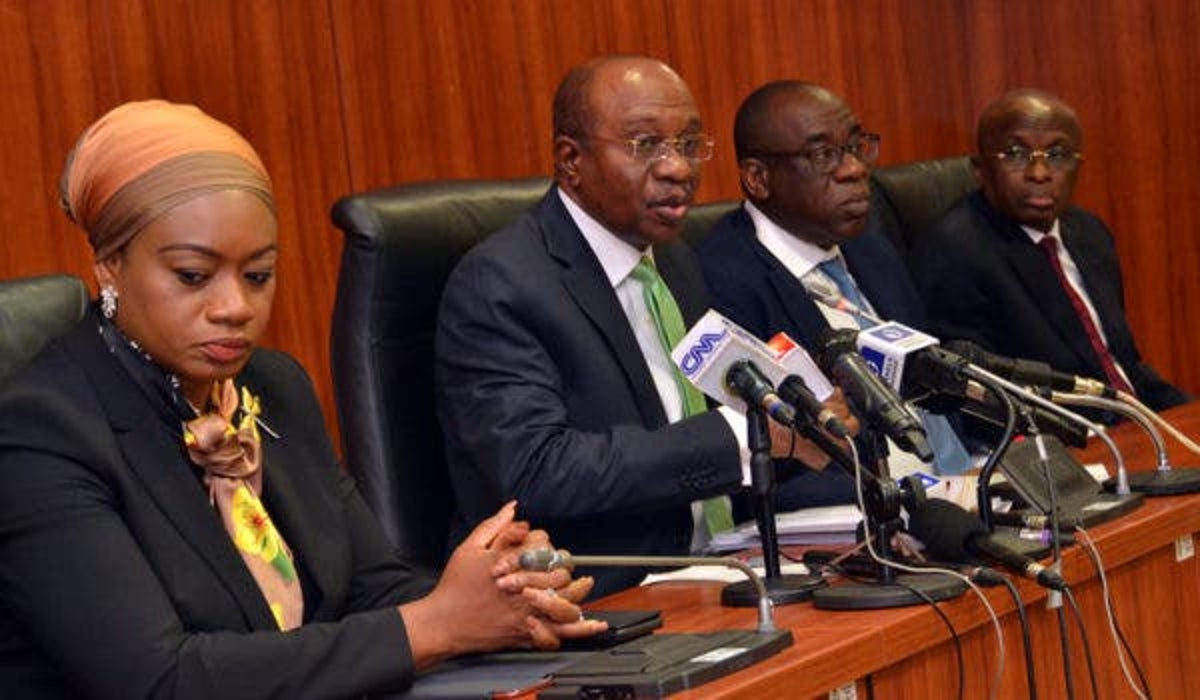
Nigerians are waiting for details on how the Central Bank of Nigeria would swing interest rates, among other things, as the 284th meeting of the Monetary Policy Committee (MPC) begins.
Mosope Arubayi, an economist at IC Group in Lagos stated that despite the less than Ideal economic growth the CBN is expected to leave rates unchanged.
He said, “Economic growth in Nigeria is still at suboptimal levels and the CBNis unlikely to buck their trend of undermining consumer-price pressures to achieve their growth objectives,” he added, “I see them staying pat on monetary policy tools.”
Prof. Ndubisi Nwokoma, Director, Centre for Economic Policy Analysis and Research (CEPAR), University of Lagos, stated that the CBN options were between holding and increasing the rates.
“I think the meeting will be a mixed grill. Inflation is not falling as has been trending in the past few months. The last NBS report showed Inflation trended slightly upwards so it needs to be tamed by either holding rates or increasing slightly to restrict credit,” he said.
READ ALSO: CBN introduces cash collection centres for withdrawals, deposits
On the other hand, Nwokoma said that the preponderance of uncertainties in the economy would need to make credit cheaper.
Akpan Ekpo, Professor of Economics and Public Policy at the University of Uyo, Akwa Ibom, opined that the MPC should marginally increase the monetary policy rate.
“Honestly, it is difficult to predict what will be the outcome of the MPC because of the global environment.
“The Ukraine-Russia war and the hike in interest rates by the Federal Reserve Bank of the USA; with inflation beginning to trend upwards and the Federal hike in rates as well as the Ukraine-Russia war, the MPC should marginally increase the monetary policy rate.
“This is to anticipate, that is, cushion the expected rise in inflation due to domestic bottlenecks and the global environment.”
The Central Bank of Nigeria’s Monetary Policy Committee convened for the first time this year and unanimously decided to hold the benchmark interest rate at 11.5% while keeping all other monetary parameters unchanged.
READ ALSO: Stakeholders commend CBN’s `100 for 100’ PPP initiative
Despite a jump in inflation in December 2021, the decision was made. The committee pointed out that the increase in the country’s inflation rate in December 2021 is due to higher demand during the holiday season, implying that the spike in the numbers is just transitory.
However, a slew of economic trends, including supply shocks from the Ukraine-Russia crisis, fuel scarcity, reaction to the CBN’s e-invoice program, and the persistence of inflation, have given the central bank more to think about due to increased demand during the holiday season, implying that the surge in numbers could be a one-time occurrence.
Nigeria’s inflation rate changed direction in February as it rose 15.7% from 15.6% recorded in the previous month. This represents a 0.1% point increase compared to the rate recorded in January 2022.
Notably, food inflation rate, which is a closely watched index, dropped to 17.11% in February 2022 from 17.13% recorded in the previous month.


-

 Featured1 week ago
Inside INEC’s race to prepare for Nigeria’s 2027 elections
-
 Featured1 week ago
2027: APC unveils nationwide campaign timetable, Tinubu to rally in 12 states
-
 Business5 days ago
Naira faces exchange rate gap as Dollar hits N1,380 on parallel market
-
 Business1 week ago
Court dismisses ₦170m Trade Fair contract claim, says Zenith Bank was not a party
-
 Latest1 week ago
Breaking: NNPCL raises petrol price to ₦1,405 per litre amid discount controversy
-
 Featured1 week ago
From kitchen to Supreme Court: Nigerian’s fight over alleged support for terrorists
-

 Football1 week ago
Maresca reveals Guardiola’s reaction to Man City’s 4-2 defeat to PSG
-

 Business7 days ago
NCC launches Internet Governance Working Group to tackle AI risks, boost online safety