
Agribusiness
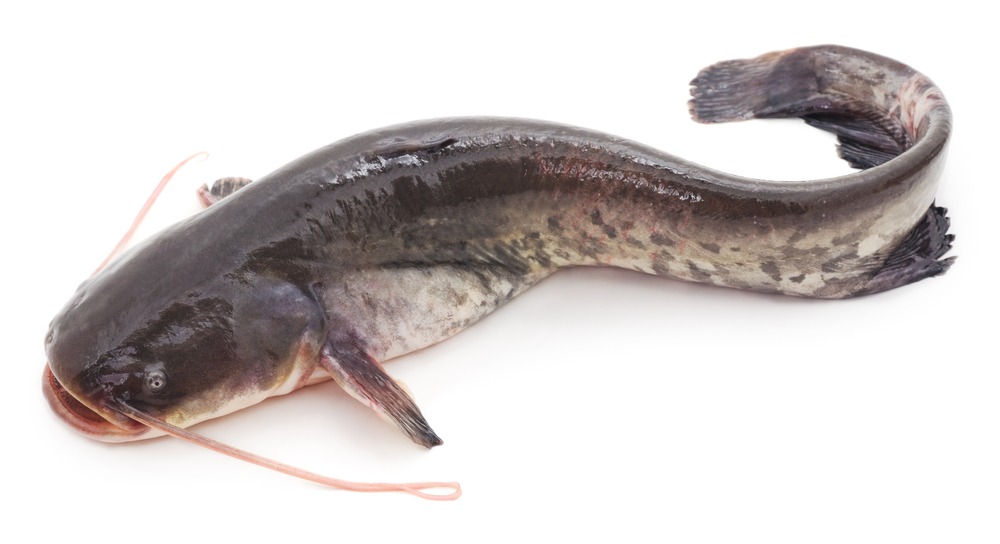
Japan creates catfish that looks, tastes like eel-fish

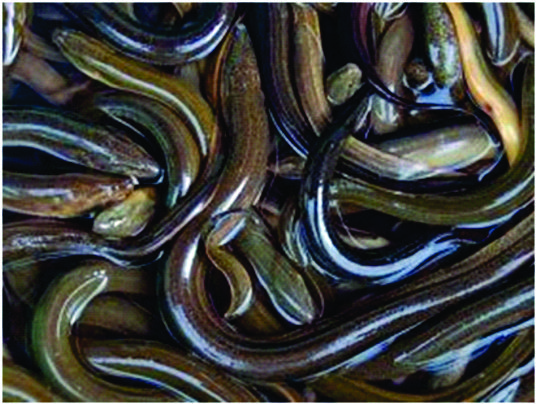
JAPANESE Kinki University Faculty of Agriculture, Associate Professor Masahiko Ariji has disclosed that its country has succeeded in producing a catfish that tastes like eel as the research hopes to move consumers away from eating eel which is dangerously overfished and listed on the International Union for Conservation of Nature and Natural Resources(IUCN) red list of endangered species.
Ariji. who said his research team were motivated into the venture by eel farmers said that their businesses were threatened and asked if there was a way to cultivate a new species that could prove just as popular as eel ,reiterated that Unagi, or freshwater eel, is a big hit during the summer in Japan but its popularity comes at a cost as its price has been rising, as overfishing and pollution have caused stocks to decline.
Ariji with his team noticed that the unpleasant mud-like smell of catfish made it unpopular choice of food for the Japanese people, but could be farmed in facilities that cultivate eel. More to their discovery during the research is that the catfish mud-like smell came from bacteria in river water and could be removed through proper cultivation. Working with eel farming company Makihara Youman in Kagoshima Prefecture, the team was able to create a catfish with the same taste and texture as eel. The team method was to find the best combination of feed that would make the catfish meat juicy and give it a better taste.
Ariji’s team first sample was produced in February of this year. Although it didn’t have a strong smell, the salmon feed had made it slightly oily so the worked on creating different feed combinations and produced another sample for testing in September. During the research, they also compared varieties of catfish from across Japan and studied their smell and fat content, in order to select the best kind that could be cooked in the “kabayaki” style, a method in which eel is dipped in sweet soy sauce before being broiled on a grill.
The Professor confessed that the eel-like taste was very difficult to create, as he has to eat many samples of raw catfish to see whether they were making progress. With several feed formulations trials they final came up with the catfish that taste exactly like eel. “Coming up with the best taste was our greatest challenge,” Ariji explained.
The team leader further narrating their challenges said that discovering how to get rid of the strong distinctive smell was hard, as he has to check catfish samples from areas such as Lake Biwa where water conditions are good, and the Yamato River in Nara Prefecture where the water conditions are bad. He said “It really was a bit of trial and error”.
Another challenge, Ariji says, is that selling the catfish depends on whether large markets can be developed but he remains optimistic, saying that catfish can be completely farm-raised and if commercialised, would be available for half the price of eel, ideally around 500yen (N783/kg).
The team took about 400 samples of the new eel catfish to a recent Catfish Festival in Hashima city, Gifu Prefecture about two months ago. Ariji said over 30,000 attendees tried a small supply of eel-tasting catfish before its release for public consumption. The festival is an annual event to celebrate Hashima’s tradition of eating river fish.
Ariji who believes that it is possible to market this catfish in other parts of Japan and the world, disclosed that twenty areas across Japan have expressed an interest, as well as companies in the US who believe there is a big eel market there. The professor hopes to produce more of the catfish in his own company so he can eventually export to other areas such as Europe.
The team leader said spawning and producing broodstock is another important part of the process, and he is aiming to turn this into an industry to provide more job opportunities, sustain existing farmers and, of course, increase the amount of eel-tasting catfish across the globe.







-
 Latest6 days ago
Israel marks 3 years since October 7 Hamas attack amid Gaza strikes, election debate
-
 Energy6 days ago
Fuel Battle: Dangote, marketers and government clash over petrol imports
-
 Energy7 days ago
Petrol, diesel prices rise 86% in 2026 as costs hit fresh highs
-

 Football7 days ago
Nigeria’s World Cup exit under spotlight as FIFA’s DR Congo files emerge
-
 Energy1 week ago
Has Iran lost control of the Strait of Hormuz? Oil flows rebound as war disruptions persist
-

 Latest7 days ago
US Court set to rule on release of FBI, DEA records on Tinubu
-
 Latest16 hours ago
Full List: Meet the 2026 Nobel Prize winners across six categories
-

 Business7 days ago
Nigerian investors at a crossroads as fixed-income yields slide