
Business
CBN Injects $2.63 trillion to defend naira

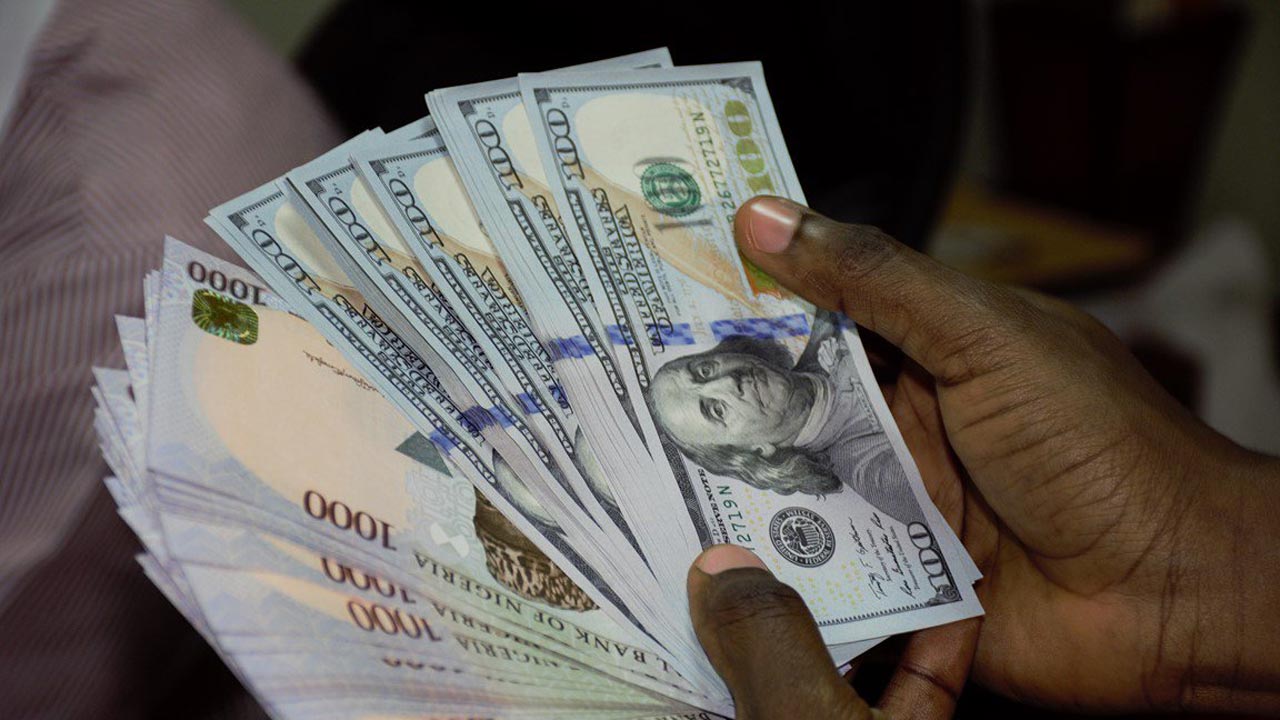
As part of its continued intervention in the foreign exchange market, the Central Bank of Nigeria (CBN) injected a cumulative sum of $2.63 billion to further sustain relative stability in the Foreign Exchange (FX) market.
According to the latest CBN’s monthly economic report covering the month of July 2019, Nigeria’s apex bank made available a whopping sum of $2.63 billion to authorised dealers in July, compared to US$2.50 billion supplied in the previous month. This indicates an increase of 5.2% above the level in the preceding month.
The breakdown of the Central Bank’s intervention in the FX market in the month of July 2019 shows that interbank sales rose by 1.9% to $0.08 billion, compared to the level in the preceding month.
Currency sales to the Bureau De Change (BDC) rose by 3.8% and estimated at US$1.08 billion. In essence, injection in BDC FX window scooped the biggest share.
The average exchange rate of the naira to the US-dollar, at the inter-bank segment, was N306.94/US$, representing a depreciation of 0.02%. The average exchange rate at the BDC segment, at N359.43/US$, appreciating by 0.1% relative to the level at the end of the preceding month.
At the “Investors” and “Exporters” (I&E) window, the average exchange rate of the naira vis-à-vis the US dollar, was ₦361.26/US$, indicating that naira depreciated by 0.2%.
The higher sales of FX in the month of July must have been triggered by the high demand for FX at the BDC segment which recorded a 3.8% increase. Unlike the interbank segment, demand for FX is always on the rise at the BDC segment. This means that the Central Bank had to increase its supply of forex to ease pressure on the Nigerian Naira.
At the “Investors” and “Exporters” (I&E) window, the average exchange rate of the naira vis-à-vis the US dollar, at ₦361.26/US$, depreciated by 0.2% below the level in the preceding month.
Consequently, the premium between the exchange rates at the interbank and BDC segments narrowed by 0.2% point to 17.11% from 17.27% in June 2019. The premium between the BDC and I&E rates widened by 0.5% point.
A further look into the CBN report shows the gross external reserves stood at US$43.96 billion at the end of July 2019, indicating a decline of 1.8% ($790 million) below the US$44.75 billion recorded at end-June 2019.
According to the bank, the decrease was due, mainly, to increased foreign exchange market interventions and public sector payments.
Also, the external reserves position could finance 6 months of imports of goods and services, and 10.2 months of goods only, using the import figure for the first quarter of 2019.
Similarly, a breakdown of the external reserves by ownership showed that the share of Federation was $0.004 billion (0.01%) of the total; Federal Government, $7.62 billion (17.3%); and the CBN, $36.33 billion.
While the intervention will keep the naira stable for now, analysts are of the opinion that it is only a matter of time before the CBN will float the exchange rate in the face of falling oil price. The CBN governor had earlier disclosed that naira could only be considered to be floated if oil dropped to between $30 billion and $25 billion.














-

 Featured5 days ago
Nigeria’s youth unemployment paradox: Graduates struggle as millions survive in informal jobs
-

 Business5 days ago
Nigerian Banks earn N521.8bn from E-banking, card fees in nine months
-

 Business1 week ago
Petrol import cost drops to N1,164 per litre as crude oil prices decline
-

 Energy5 days ago
Nigeria’s power crisis deepens as ₦639bn unpaid gas debt threatens electricity supply
-

 Latest5 days ago
Dalung claims ‘message from Buhari’s grave’ urges Nigerians to vote Atiku in 2027
-

 Latest1 week ago
2027 elections: Former INEC commissioner warns against ‘Rig and Die’ slogan, says violence undemocratic
-
 Latest1 week ago
2027: Donald Duke offers to step down for consensus opposition candidate
-
 Featured4 days ago
Tinubu’s Renewed Hope: Reforms, hardship and the unanswered question of a second term