
Business
Nigeria eyes $8.5bn solar market as import dependence tests local manufacturing ambition

By Diden Abigail Owuntarose
Nigeria could attract up to $8.5bn in solar power investments by 2030, as growing demand for alternative electricity creates opportunities for local manufacturing, mineral processing and renewable energy businesses.
However, the country’s continued dependence on imported solar equipment is raising questions about its ability to turn the expanding market into a competitive domestic industry.
The investment opportunity was identified in a report by the International Finance Corporation (IFC), which estimated that Nigeria could attract up to $8.5bn in private investment in solar power by 2030, potentially creating about 365,000 jobs.
The opportunity was highlighted during a discussion at the Nigerian Pavilion on the sidelines of the 31st United Nations Climate Change Conference (COP31) in Türkiye, where experts called for increased local participation in the solar energy value chain.
Speaking at the event, Michael David, Executive Director of the Global Initiative for Food Security and Ecosystem Preservation (GIFSEP), said Nigeria possessed the mineral resources and market potential to develop a competitive solar manufacturing industry.
He identified silica, lithium, copper, aluminium, iron ore, graphite, manganese, nickel, cobalt, tin, zinc and silver as minerals that could support different stages of solar panel and battery production.
According to him, these resources are available across several Nigerian states, including Nasarawa, Kogi, Kwara, Niger, Zamfara, Plateau, Bauchi, Ondo and Osun.
David said Nigeria needed to move beyond importing finished solar technologies to developing local manufacturing, mineral processing, battery storage and assembly facilities that could serve domestic and regional markets.
He disclosed that Nigeria imported solar panels worth more than N450bn in 2025, highlighting the scale of the opportunity available to domestic manufacturers.
Foreign trade statistics from the National Bureau of Statistics put the value of imported photovoltaic cells assembled into modules or panels at approximately N435.52bn during the year.
READ ALSO; Petrol import cost drops to N1,164 per litre as crude oil prices decline
The growing import bill reflects increasing demand from households and businesses seeking alternatives to unreliable electricity supply and expensive petrol and diesel generators.
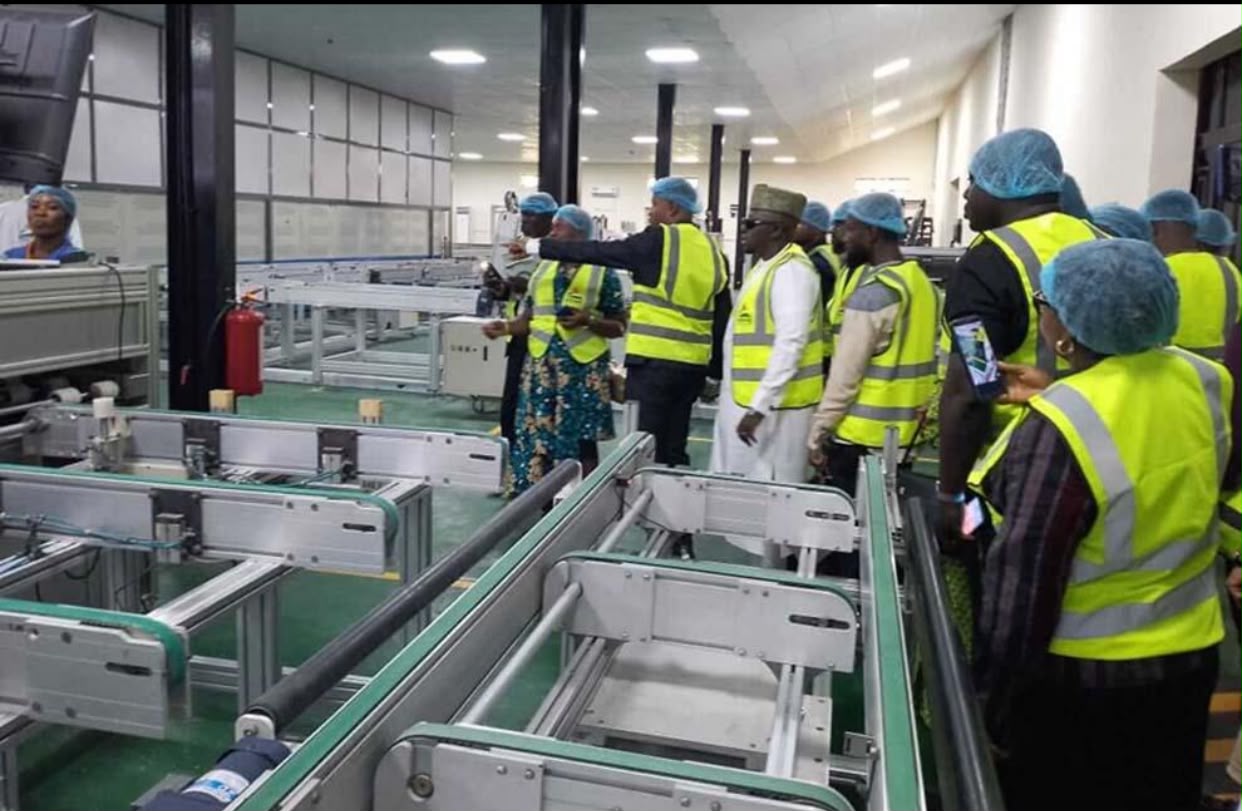
Nigeria’s solar manufacturing capacity, however, remains relatively small compared with the country’s growing demand.
The International Energy Agency, in its Renewables 2026 report, estimated that Nigeria would have approximately 500 megawatts of annual solar module assembly capacity in 2026, with the figure projected to exceed one gigawatt annually by 2031.
The agency cautioned that the emerging manufacturing facilities were unlikely to significantly reduce the country’s dependence on imported solar equipment during the forecast period.
This suggests that while domestic assembly is expanding, Nigeria still faces challenges in developing the wider industrial infrastructure required to manufacture solar technologies locally.
The country also faces competition from established international manufacturers, particularly in China, which dominates major stages of the global solar supply chain.
David argued that Nigeria could overcome some of these limitations by investing in local production facilities and developing the technical skills required across the renewable energy industry.
He also identified opportunities in solar-powered agriculture, irrigation, cold storage and agro-processing, noting that renewable energy could improve productivity, reduce post-harvest losses and support food security.
Beyond the domestic market, he pointed to the electricity access deficit across West Africa as an opportunity for Nigerian manufacturers to expand into neighbouring countries.
He cited figures indicating that approximately 185 million people in West Africa lacked access to electricity in 2023, representing about 33 per cent of the 565 million people without electricity across sub-Saharan Africa.
According to him, Nigeria could position itself as a regional manufacturing and distribution centre for solar technologies by developing competitive production facilities and strengthening trade relationships across the region.
Also speaking at the event, Olamide Fagbuji, Senior Special Assistant to the President on Climate Technologies, said the Federal Government was working to establish an enabling policy environment to attract private investment into renewable energy.
He identified the Electricity Act, which allows state governments to participate in electricity generation and distribution, as an important framework for expanding decentralised electricity supply.
Fagbuji also highlighted Nigeria’s Nationally Determined Contribution 3.0, which outlines the country’s renewable energy ambitions and climate commitments.
He stressed that achieving the targets would require substantial financing and stronger collaboration between government institutions and private investors.
However, affordability remains another challenge affecting the expansion of solar energy adoption, particularly among low-income households and underserved communities.
Gloria Bulus, Executive Director of Bridge That Gap Initiative, said the high upfront cost of solar panels, batteries and other components continued to prevent many households from adopting the technology.
She argued that improving access to solar energy would require financing arrangements that allow households and small businesses to spread installation costs over time.
Industry stakeholders have also called for stronger quality standards and effective regulation of solar equipment installers to protect consumers against substandard products and poor installations.
The expansion of solar manufacturing is expected to create opportunities for employment, technology transfer and industrial development. However, experts say the country must address challenges involving financing, technical expertise, infrastructure and consistent government policies.
For Nigeria, the challenge is not only expanding access to solar electricity but also ensuring that the growing demand translates into domestic industrial capacity, employment and export opportunities.
Without sustained investment in local manufacturing and supporting industries, the country risks remaining heavily dependent on imported equipment while missing opportunities to capture more economic value from its expanding renewable energy market.


-

 Featured5 days ago
Nigeria’s youth unemployment paradox: Graduates struggle as millions survive in informal jobs
-

 Business1 week ago
Fuel price: Our eyes on you, FCCPC tells oil marketers
-

 Business5 days ago
Nigerian Banks earn N521.8bn from E-banking, card fees in nine months
-
 Business1 week ago
Petrol import cost drops to N1,164 per litre as crude oil prices decline
-

 Latest1 week ago
2027 elections: Former INEC commissioner warns against ‘Rig and Die’ slogan, says violence undemocratic
-

 Latest5 days ago
Dalung claims ‘message from Buhari’s grave’ urges Nigerians to vote Atiku in 2027
-

 Energy5 days ago
Nigeria’s power crisis deepens as ₦639bn unpaid gas debt threatens electricity supply
-
 Latest1 week ago
2027: Donald Duke offers to step down for consensus opposition candidate