
Featured
Check out the 3 possible foundations suitable for building construction

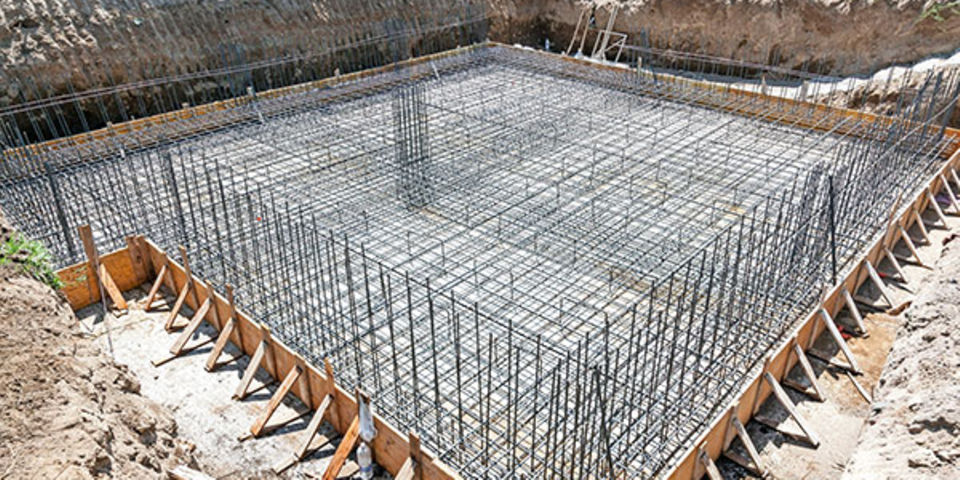
Foundation is the lower part of the building that supports and anchors the superstructure of a building and transfer its gravity loads directly to the earth. Foundation may be grouped into two categories – deep and shallow foundation.
A shallow foundation is placed on firm soil near the ground and beneath the lowest part of the superstructure. Examples of shallow foundations are Pad or Isolated, Raft or Mat and Floating foundation.
Deep foundation on the other hand is the one that is placed on soil that is not firm, and which is considerably below the lowest part of the superstructure. Examples of common deep foundations include piles, caissons, cylinders, basements, hollow box and shaft foundations.
In this article, I will explain the three common shallow and deep foundations usually done in engineering practice. They are the 3 possible types of foundation suitable for building construction in Nigeria. The three foundations are as follows:
Isolated or Pad foundation
Pad foundation is the type of foundation used when the soil bearing capacity is good. It is the most widely recognized shallow foundation because it is economical in construction. Pad foundations are formed by rectangular, square, or sometimes circular concrete ‘pads’ that support localised single-point loads such as structural columns, groups of columns or framed structures. This load is then spread by the pad to the strata of soil or rock below. It can also be combined or designed as continuous footing when columns of the building are too close to one another.
Raft or Mat foundation
A raft or mat foundation is the type of foundation which is used when the soil bearing capacity is too weak. It is essentially a continuous slab (most especially a one-way slab) distributing the entire loads of the building to the ground beams and transferring them to the ground. The sizes of the raft slabs and beams always depend on the load on the structure.
Pile foundation
A Pile foundation is a deep foundation that transfers building loads to the earth farther down from the surface than a shallow foundation does to a subsurface layer or a range of depths. It will be used when the soil bearing capacity is low to the extent that the raft foundation can no longer withstand the load of the building. It is commonly used for highrise buildings. As pile foundations carry a lot of loads, they must be designed and constructed very carefully. A good structural engineer will study the soil reports very well deigning the piles to ensure that the soil is not overloaded beyond its bearing capacity.


-

 Latest2 days ago
Pastor Chris Oyakhilome announces mother’s passing at 88 [VIDEO]
-

 Football5 days ago
Saka: England still carry World Cup scar
-

 Comments and Issues7 days ago
Sometimes, goodwill finds us through the people we love
-

 Latest3 days ago
Arsenal eye €70-80m move for Real Madrid star
-

 Business6 days ago
CBN reduces MPR by 350bps to 23% in major monetary policy shift
-

 Latest2 days ago
How adulterated palm oil, coloured pepper are putting consumers at risk
-

 Crime3 days ago
Police arrest suspect, launch manhunt for 2 others over Delta Education Director’s death
-

 Crime2 days ago
Deaths in NSCDC Custody: Can Nigeria guarantee the safety of detainees?