
Featured
2023: How new Electoral Act will affect chances of Amaechi, Malami, others

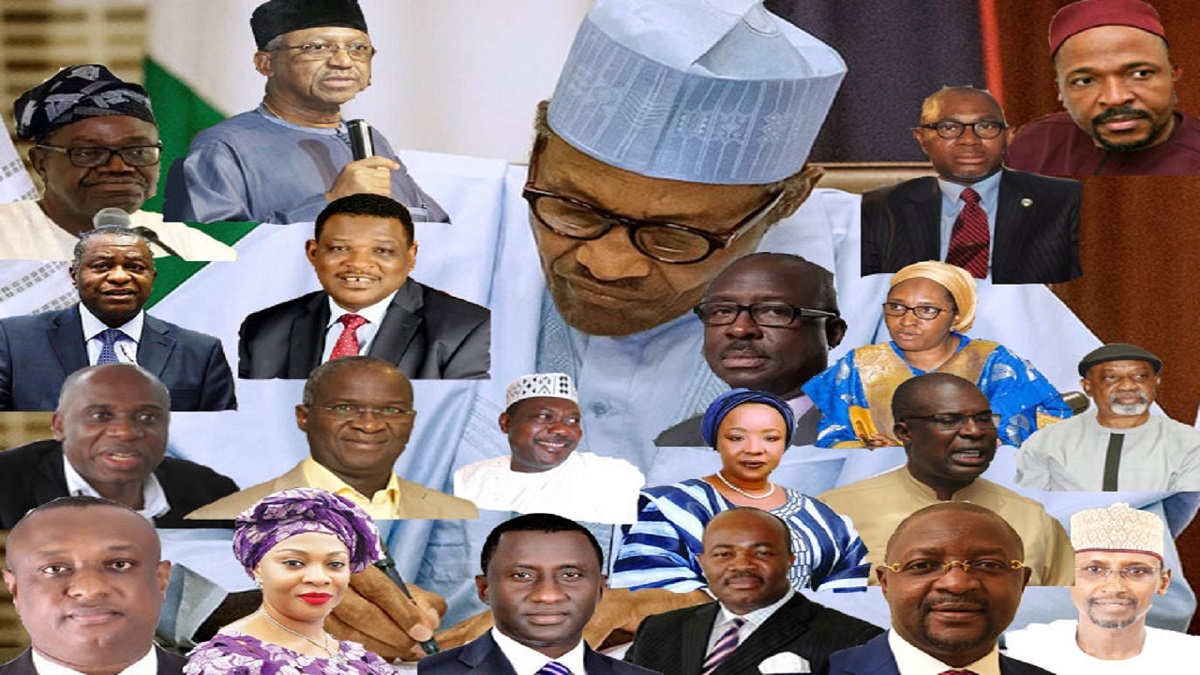
Going by the provisions of the new Electoral Act, political appointees — such as Rotimi Amaechi, Minister of Transportation; Abubakar Malami, Minister of Justice; Chris Ngige, Minister of Labour; Emeka Nwajiuba, Minister of State for education; Godswill Akpabio, Minister of Niger Delta affairs; Timipre Sylva, Minister of State for Petroleum Resources, among others — who have been reportedly linked to presidential and governorship ambitions must resign if they want to contest in 2023.
One of the provisions of the new Act recently signed into law by President Muhammadu Buhari, is provision mandating political appointees seeking election to resign their positions before participating in party primaries.
Section 84(12) states that “No political appointee at any level shall be a voting delegate or be voted for at the convention or congress of any political party for the purpose of the nomination of candidates for any election”, while section 29(1) of the act mandates political parties to submit names of candidates not later than 180 days before the election.
READ ALSO: How clause 29(1) of the newly amended electoral act may affect the APC
Following the approval of the bill, the Independent National Electoral Commission (INEC) updated the schedule of activities for the general election, giving political parties between April 4 and June 3, 2022 to conduct primaries.
This means that political appointees seeking election must resign before June 3 — when INEC expects that all issues on party primaries must have been resolved.
Malami is said to be interested in becoming Kebbi governor; reports emerged days ago claiming that Sylva is the “favoured candidate” for a presidential ticket; Nwajiuba is being projected by the Project Nigeria Group (PNG) for presidency; Ngige says he is consulting on running for president; Akpabio has received the backing of the Godswill Akpabio Uncommon Transformational Support Organisation (GAUTSO); the Southern Mandate Group and Chibuike Amaechi Crusaders 2023 want the transportation minister to succeed Buhari.
However, section 84(12) of the electoral act, if not reviewed, may constitute a stumbling block for political appointees.
Buhari has criticised that section, which he said “constitutes a disenfranchisement of serving political office holders”. He has also asked the national assembly to delete that section.
READ ALSO: Wike disagrees with Buhari on section 84 of Electoral Act
Speaking on section 84(12) of the electoral act 2022, Mike Ozekhome, a senior advocate of Nigeria (SAN), expressed reservations about the provision.
“It means that political appointees would be forced to resign their appointment before they can seek election and become candidates.”
“If the national assembly is saying that in the amended act, why are they themselves not also resigning as legislators before they seek to contest?
But Ariyo-Dare Atoye, executive director of Adopt A Goal Initiative, said the section “is a noble electoral provision that will save the nation the enormous government’s resources and instruments usually cornered by political appointees to advance their elective interest”.


-

 Featured1 week ago
Inside INEC’s race to prepare for Nigeria’s 2027 elections
-
 Featured1 week ago
2027: APC unveils nationwide campaign timetable, Tinubu to rally in 12 states
-

 Business5 days ago
Naira faces exchange rate gap as Dollar hits N1,380 on parallel market
-

 Business1 week ago
Court dismisses ₦170m Trade Fair contract claim, says Zenith Bank was not a party
-

 Latest1 week ago
Breaking: NNPCL raises petrol price to ₦1,405 per litre amid discount controversy
-

 Featured1 week ago
From kitchen to Supreme Court: Nigerian’s fight over alleged support for terrorists
-

 Football1 week ago
Maresca reveals Guardiola’s reaction to Man City’s 4-2 defeat to PSG
-

 Business7 days ago
NCC launches Internet Governance Working Group to tackle AI risks, boost online safety