
Business
Rise in Non-performing loans threaten Banks stability – CBN

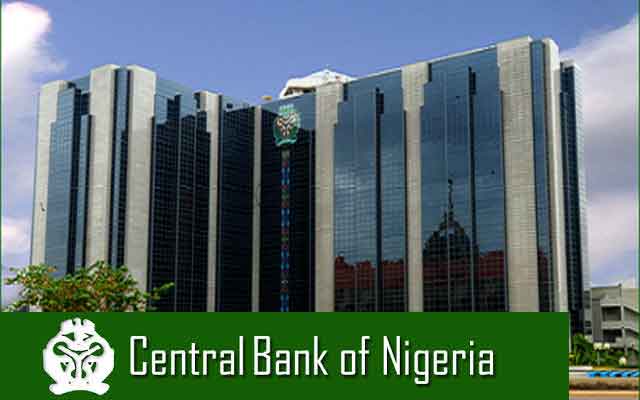
The rise in Non-Performing Loans by Banks in the country occasioned by prevailing economic headwinds is said to be threatening the stability of banks.
According to the financial system stability report released by the Central Bank of Nigeria, the industry ratio of non-performing loans net of provision to capital increased significantly to 30.9 per cent at end-June 2016 from 5.9 per cent at end-December 2015, depicting weak capacity of the sector to withstand the adverse impact of non-performing loans.
“Non-performing loans in the period under review grew by 158 per cent from N649.63 billion at end-December 2015, to N1.679 trillion at end-June 2016.” According to the CBN, the industry wide NPL ratio rose to 11.7 per cent in June from 5.3 per cent in December 2015, exceeding the prudential limit of 5.0 per cent.
Analysing the capital adequacy of the banks in terms of rising NPLs, the CBN said: “During the period under review, indicators of capital adequacy showed marginal declines in the Nigerian banking sector, compared with the positions in the preceding and corresponding periods of 2015.”
The CBN, however, noted that only five large banks showed resilience to the rising credit risk, even at the point of a 200 per cent increase in the NPLs, while the others showed vulnerabilities.
“The large banks were resilient to credit risk and would be able to sustain an impact of the most severe shock of a 200 per cent rise in NPLs as it resulted in 12.60 per cent Capital Adequacy Ratio, CAR, which was above the 10 per cent minimum requirement. “However, banking industry, medium and small bank groups, showed vulnerability to the most severe shock of 200 per cent rise in NPLs as their CAR fell to 8.01, 2.51 and -83.32 per cent respectively,” the CBN disclosed.
According to the CBN, the rising credit risk will be occasioned by increased loan impairments, resulting from the depreciation of the Naira, inability of obligors to service foreign currency-denominated loans, as well as bank exposures to the oil and gas sector.


-

 Latest5 days ago
Full List: Meet the 2026 Nobel Prize winners across six categories
-

 Football5 days ago
Premier League Matchweek 7: Five Fixtures That Could Shape the Weekend
-

 Latest4 days ago
Umahi defends Lagos-Calabar highway route changes amid public outcry
-
 Business3 days ago
Dangote Refinery IPO: 70% Subscription claim meets fourfold demand assertion as investors seek clarity
-
Business4 days ago
Dangote Refinery IPO Extension: Was the 70% subscription report overhyped?
-

 Latest2 days ago
UCTH faces morgue crisis as 50 unclaimed corpses await mass burial
-

 Featured4 days ago
El-Rufai, ADC governorship candidate’s court appearance puts Kaduna opposition politics in focus
-

 Business2 days ago
BREAKING: Nigeria’s Inflation Rate Drops to 14.63% in September