
Business
Senators bicker over Buhari’s request to restructure CBN’s N27.7trn loan

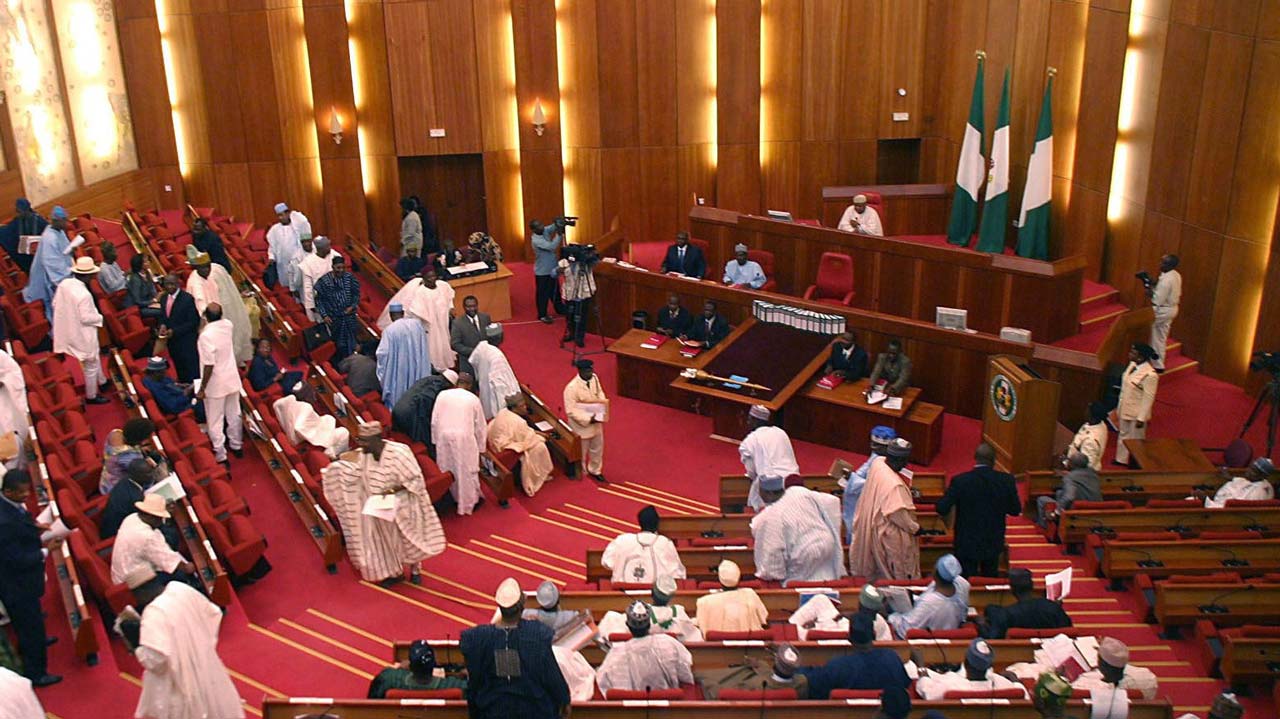
Disagreement among senators over President Muhammadu Buhari’s request to restructure the N22.7 trillion loan from the Central Bank of Nigeria (CBN) has forced the upper chamber to suspend the move.
On Wednesday, the Senate President, Ahmed Lawan, called on the chairman of the Finance Committee, Solomon Adeola, to present the report on the CBN ways and means, as well as request from Buhari.
During Adeola’s presentation, some lawmakers including Senator Betty Apiafi and Senator George Thompson Sekibo, kicked against his decision to approve Buhari’s request.
Apiafi stated that the Nigerian constitution doesn’t recognise CBN’s ways and means of expenditure, but Lawan shut her down for protesting after the committee had already presented their findings.
Sekibo backed her, arguing based on the CBN Act section 38 and 1999 Constitution sections 80, 83, Section1,13(1).
The outcry in the upper chamber forced the Senate to suspend the consideration of the report by the finance committee till another legislative day.
Note that section 38 of CBN Act 2007 states that the total amount of Ways and Means Advances to the Federal Government shall not exceed five percent of the previous year’s actual revenue of FG.
The law also reads, “All advances shall be repaid as soon as possible and shall, in any event, be repayable by the end of the federal government financial year in which they are granted and if such advances remain unpaid at the end of the year, the power of the bank to grant such further advances in any subsequent year shall not be exercisable, unless the outstanding advances have been repaid.”
Also, the CBN had admitted in a statement that pursuing its monetary policy could be frustrated by the financing of the government’s deficit through ways and means advances.
According to the financial regulator, such advances affect domestic prices and exchange rates, “The direct consequence of Central banks’ financing of deficits are distortions or surges in the monetary base, leading to adverse effects on domestic prices and exchange rates i.e macroeconomic instability because of excess liquidity that has been injected into the economy.”
However, despite this admission by the CBN, borrowing from the central bank by the federal government has repeatedly exceeded the five per cent threshold, backing Sekibo’s claim that Buhari and the CBN have breached the apex bank rule.


-

 Latest6 days ago
US Immigration fees rise from October 16 as USCIS announces new charges
-
 Latest21 hours ago
Israel marks 3 years since October 7 Hamas attack amid Gaza strikes, election debate
-

 Business5 days ago
Nigeria’s $55bn reserves raise fresh questions over naira value
-

 Health5 days ago
Florida sues Pfizer over deceptive COVID-19 vaccine marketing
-

 Business7 days ago
Tuoyo Erikowa wins digital marketing personality of the Year at 2026 EDGE awards
-

 Crime5 days ago
From camp to captivity: How kidnappers now target NYSC Corps members on highways
-

 Featured5 days ago
2027: Can Nigeria’s opposition still unite behind a single presidential candidate?
-

 Crime5 days ago
Fulani Militia leader linked to Christian killings arrested in Plateau