
Energy
Buhari promises prompt fuel delivery to Burundi amidst scarcity at home

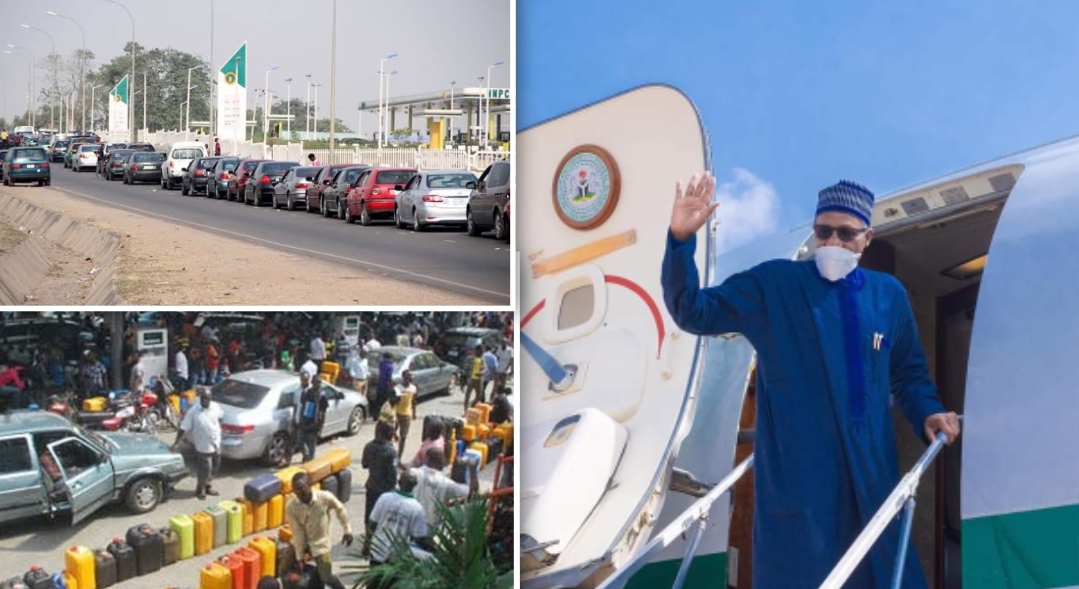
Amidst fuel scarcity in Nigeria for the past months, President Muhammadu Buhari has promised fuel delivery assistance to Burundi.
According to a statement made available by the Special Adviser to the President on media, Femi Adesina, President Buhari made the promise when he received Burundi’s Minister of Finance, Budget, and Economic Planning, Hon. Audace Niyonzima, and a Special Envoy of Burundi’s President Evariste Ndayishimiye.
Part of the statement by Femi Adesina reads, “On request for assistance in the area of energy provision, particularly fuel, by the Burundi leader, President Buhari said he knows what it feels like for a country to suffer from energy shortage, and promised that he would get the Nigerian National Petroleum Company (NNPC) Limited to look into the request,” the statement said.
Since the third quarter of 2022 till date, Nigerians across the country have been dealing with the impacts of fuel scarcity. Fuel scarcity has hampered productivity for many Nigerians and has increased transportation costs, especially during the Christmas holidays.
READ ALSO: Fuel scarcity: Oil marketers proffer solutions, tells FG what to do
In December 2022, Bala Wunti, the Chief Upstream Investment Officer (CUIO) at the NNPC Upstream Investment Management Services (NUIMS) said that the fuel scarcity that has hampered citizens’ productivity in recent years is mostly associated with distribution challenges and not supply.
Amid the challenges at home, it is rather surprising that President Muhammadu Buhari is making such a promise to Burundi. This is exactly the opinion expressed by an energy analyst who spoke on condition of anonymity.
“It is a surprise that President Buhari is making a promise to deliver fuel to Burundi when some Nigerians are finding it difficult to access fuel for their households and businesses,” the analyst said.
The analyst added that Nigeria has to focus on resolving fuel distribution challenges across the value chain first before looking to play Big Brother to other African countries.
During a recent interview with Arise TV, the Chief Executive Officer of the Centre for the Promotion of Private Enterprise (CPPE), Muda Yusuf, said that fuel scarcity queues across the country are a result of subsidy management challenges in Nigeria’s petroleum sector.
“Apart from the issue of corruption, and the burden on fiscal operations, petroleum subsidy is affecting the production process, the supply chain, and more importantly, it is affecting investments in the sector. We cannot get investments into the country’s refineries, pipelines, trucking, as well as marketing and practically all the key investors have left the sector.”


-

 Business6 days ago
Abuja gears up for Jetour T2’s rugged-luxury experience
-
 Business1 week ago
Nigeria Business Outlook: Dangote IPO, markets, inflation and naira in focus this week
-
 Business1 week ago
Dangote IPO rush crashes Bamboo login as investors flood platform
-

 News4 days ago
UK, Canada pledge closer cooperation on trade, defence and AI
-
 Business5 days ago
Tinubu’s economic reforms face public confidence test as cost-of-living crisis persists
-
 Business5 days ago
Dangote: Petrol price gap fuels smuggling as Nigeria faces fresh pump price surge
-
 Latest1 week ago
Hamzat meets Pastor Chris Oyakhilome, hails Christ Embassy’s community impact
-
Business3 days ago
Dangote Refinery IPO: Can small investors really make money from the shares?