
News
Prof. Toyin Falola: Corruption hinders governance and institutional growth in Nigeria
Prof. Toyin Falola, in a convocation lecture at Benue State University, stated that corruption undermines governance and institutions in Nigeria, urging reforms to reduce corruption and strengthen public sectors.

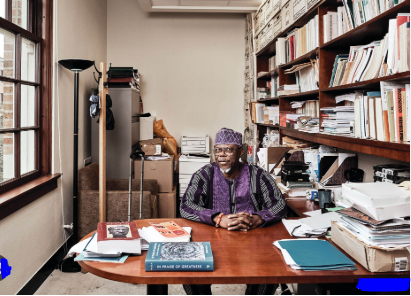
Prof. Toyin Falola of the University of Texas, USA, has stated that corruption is a major factor contributing to ineffective governance and institutional weaknesses in Nigeria.
He made this remark on Friday while delivering a convocation lecture at the Benue State University (BSU), Makurdi, on the topic “Power, Politics, and Policies.”
Falola lamented the detrimental effects of corruption on key public sectors, particularly healthcare and education, and urged for a comprehensive analysis of existing policies like whistleblower programs and anti-corruption agencies to mitigate these issues.
“To reduce corruption and promote a functional government, Nigerians must actively participate in the electoral process and hold leaders accountable,” Falola emphasized. “This requires rejecting money for votes and advocating for transparency and integrity.”
The renowned scholar also proposed that the Power, Politics, and Policies (PPP) course in the Department of Political Science at BSU should be upgraded to a full degree program.
He explained that this would equip students with the necessary skills in technologies, statistics, economics, and data analysis, while exposing them to key theoretical frameworks such as dependency theory, post-colonialism, clientelism, and federalism.
ALSO READ : NUJ Enugu honors Governor Peter Mbah with icon of democracy award
Falola further stressed the importance of continuous education for civil servants on power, politics, and policies, recognizing the current gap in their understanding of these critical issues.
He argued that this knowledge is essential in addressing the power dynamics fueling insurgency, terrorism, and conflicts between herders and settlers.
He concluded by noting that addressing Nigeria’s structural challenges could pave the way for the country to reach its potential as a stable, prosperous, and equitable nation.












-

 Latest5 days ago
Cole-Alegbe unveils memoir, urges leaders to harness technology for lasting impact
-

 Business1 week ago
X3M Ideas donates 50 Walkie-Talkies to strengthen security operations in Onigbongbo
-

 Business3 days ago
Nigeria records N12.59trn trade surplus in Q2 2026 — NBS
-

 Business3 days ago
Nigerian Breweries’ H1 profitability strengthens as revenue hits N804bn
-

 Business5 days ago
Jetour G700 PHEV Storms Abuja as Jetour Nigeria Takes Luxury Mobility Showcase to FCT
-

 Business7 days ago
Rising crude prices threaten fresh petrol price hike in Nigeria
-

 Business1 week ago
Naira breaks below N1,330/$, hits strongest level in over two years
-

 Business6 days ago
Multinationals exit Nigeria as economic pressures reshape business landscape