
Business
Nigeria’s money supply drops 1.6% in October as cash demand increases

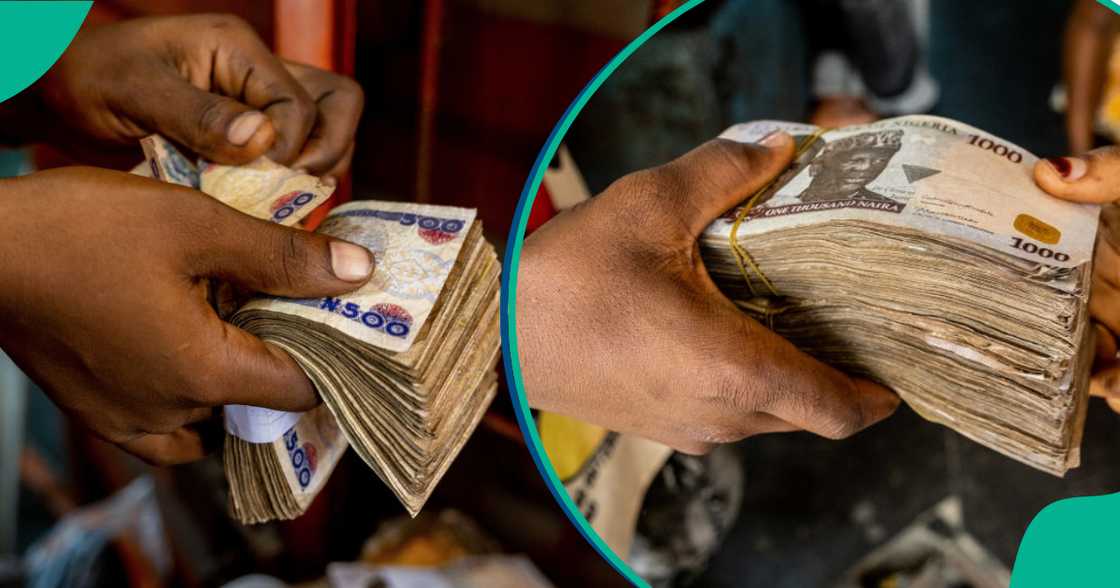
Nigeria’s money supply (M3) dropped to N107.66 trillion in October 2024, reflecting a 1.6% month-on-month (MoM) decline from N109.41 trillion in September, according to the Central Bank of Nigeria’s (CBN) latest money and credit statistics.
This marks the second decline in 2024 as the government’s tightening fiscal and monetary policies continue to reduce liquidity in the economy.
While the October contraction highlights the impact of stricter monetary policies, M3 still recorded a robust 45.7% year-on-year (YoY) growth compared to N73.91 trillion in October 2023.
Analysts attribute this annual growth to the recovery from the severe cash shortages experienced in early 2023 and higher banking sector deposits.
Nigeria’s money supply trends in 2024 have been characterized by significant volatility, driven by inflation-control measures and efforts to stabilize the naira.
M3 peaked at N109.41 trillion in September 2024 before the recent decline, while the steepest contraction occurred in March 2024, when M3 fell to N92.34 trillion.
Narrow money (M1), which includes the most liquid forms of money like currency in circulation and demand deposits, dropped by 3.4% MoM to N34.65 trillion in October, down from N35.86 trillion in September.
However, on a year-on-year basis, M1 grew by 31.0%, up from N26.43 trillion in October 2023, highlighting sustained demand for cash despite fiscal tightening.
READ ALSO: Naira declines across markets amid volatile forex dynamics
Similarly, broad money (M2), which encompasses M1 alongside savings deposits and quasi-money, fell to N107.65 trillion in October from N109.40 trillion in the previous month, representing a 1.6% MoM contraction.
On a YoY basis, M2 surged by 48.2%, up from N72.66 trillion in October 2023, reflecting rising deposits in the banking system amid higher interest rates.
Contrary to the broader decline in money supply, currency in circulation and currency outside banks increased in October.
Currency in circulation rose by 5.7% MoM to N4.55 trillion, up from N4.31 trillion in September. Year-on-year, it recorded a sharp 51.2% growth compared to N3.01 trillion in October 2023, signaling improved cash availability post-2023 currency shortages.
Currency outside banks climbed by 6.8% MoM to N4.29 trillion, up from N4.02 trillion in September. On a YoY basis, it surged by 58.9%, from N2.70 trillion in October 2023, indicating rising public cash usage even as digital transactions gain traction.
Analysts note that the growth in cash demand, especially with the holiday season approaching, could further increase currency outside banks and circulation figures in the coming months.
The contraction in money supply underscores the CBN’s tightening stance, which includes higher interest rates to curb inflation.
READ ALSO: Lawmakers urge CBN to address lingering scarcity of naira notes
While these measures aim to stabilize the economy, the reduced liquidity is raising borrowing costs, discouraging credit uptake, and posing challenges for businesses and consumers.
Small and medium enterprises (SMEs), heavily reliant on affordable credit, face increased financing costs that could slow down operations and stifle growth. Likewise, lower liquidity may dampen activity in sectors like manufacturing, trade, and services—key drivers of Nigeria’s GDP.
Conversely, the rising interest rate environment is incentivizing savings, as banks offer higher returns to attract deposits.
While this could stabilize the financial system, the shift from spending to saving may suppress aggregate demand, prolonging sluggish economic activity in the short term.
With the holiday season approaching, demand for cash is expected to rise, which could reverse the downward trend in money supply, particularly for currency in circulation and currency outside banks.
Analysts warn that balancing inflation control with the need for economic growth remains a challenge for the CBN as fiscal policies continue to tighten liquidity across sectors.


-

 Featured1 week ago
Inside INEC’s race to prepare for Nigeria’s 2027 elections
-

 Featured1 week ago
2027: APC unveils nationwide campaign timetable, Tinubu to rally in 12 states
-
 Business4 days ago
Naira faces exchange rate gap as Dollar hits N1,380 on parallel market
-
 Business1 week ago
Court dismisses ₦170m Trade Fair contract claim, says Zenith Bank was not a party
-

 Latest1 week ago
Breaking: NNPCL raises petrol price to ₦1,405 per litre amid discount controversy
-

 Featured1 week ago
From kitchen to Supreme Court: Nigerian’s fight over alleged support for terrorists
-

 Football1 week ago
Maresca reveals Guardiola’s reaction to Man City’s 4-2 defeat to PSG
-

 Business7 days ago
NCC launches Internet Governance Working Group to tackle AI risks, boost online safety