
Crime
Fear, grief grip Syrian Christians after deadly church bombing in Damascus
The attack, one of the deadliest targeting Christians since the country’s leadership change, has renewed fears over the safety of minority groups under Syria’s new Islamist-led government.

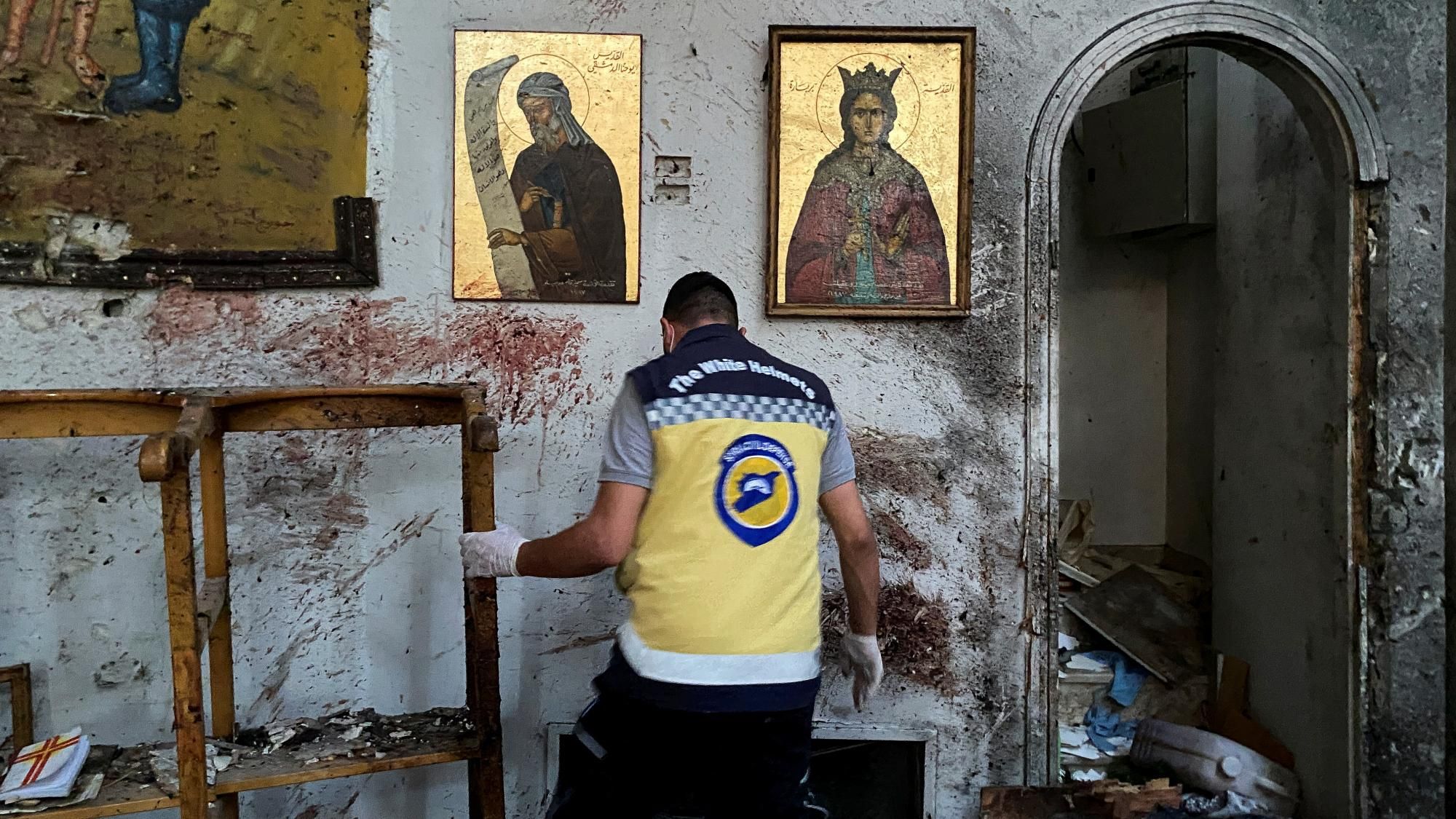
Syria’s Christian community was plunged into mourning and uncertainty on Monday following a brutal suicide bombing at Mar Elias Church in the Dweila neighborhood of Damascus, which left 25 people dead and more than 60 others injured.
The attack, one of the deadliest targeting Christians since the country’s leadership change, has renewed fears over the safety of minority groups under Syria’s new Islamist-led government.
According to the Syrian Interior Ministry, the attacker—identified as a member of the Islamic State (IS)—opened fire inside the church during a Sunday service before detonating an explosive vest.
Although no group has officially claimed responsibility, authorities insist the tactics point to IS involvement.
On Monday morning, funeral notices were posted on the blood-streaked church doors, as armed security forces were deployed to protect other Christian places of worship across the capital.
Streets near Mar Elias were lined with mourners clutching rosaries, candles, and photographs of loved ones lost in the blast.
“I wonder why they target us,” said Bassim Khoury, a Christian resident of Damascus. “We’ve had no involvement in the unrest. We don’t seek power. All we want is peace for Syria.”
The bombing has heightened tensions in a country already grappling with widespread instability. Since the Islamist-backed ousting of former President Bashar al-Assad in December, incidents of violence against minority communities—particularly Christians and Alawites—have surged.
In March, hundreds of Alawites were reportedly massacred in Syria’s coastal provinces, and in May, a string of violent incidents, including armed raids on nightclubs and public targeted killings, forced the closure of several nightlife establishments. Christian residents say they have been increasingly harassed by religious extremists.
READ ALSO: Massacre in DRC: 70 Christians beheaded in brutal Church attack by suspected ADF militants
“We’ve seen clerics come to our neighborhoods urging us to convert to Islam, telling us to stop drinking alcohol,” said Nibras Youssef, a resident of Dweila.
“The situation is so tense now, with teenage boys parading around with guns, claiming to be from the security forces. It’s terrifying.”
The bombing has raised serious doubts about the ability of President Ahmed al-Sharaa, a former Al Qaeda figure turned transitional leader, to control the various armed factions now operating under the umbrella of the new government.
Although Sharaa has pledged to form an inclusive administration and protect all religious and ethnic groups, critics say the government lacks full control over security forces, many of whom operate autonomously.
“This government promised us protection, but what we see is lawlessness,” said Jean Bahri, another Christian resident. “This bombing is not just against Christians—it’s an attack on all Syrians and our right to coexist.”
President Sharaa swiftly condemned the attack as a “criminal act that hurt the whole Syrian people,” and ordered a full investigation. But his assurances have done little to calm nerves in Christian communities, many of whom are now contemplating emigration or internal relocation.
“The fear is real. There’s a growing feeling that we no longer have a place in this new Syria,” said Father Elias Ghattas, a priest who conducted emergency prayer services for the victims.
The attack sparked an outpouring of condemnation both domestically and internationally. Church leaders, government ministers, and foreign embassies issued statements denouncing the violence and expressing solidarity with the victims.
Across Syrian cities on Monday night, candlelight vigils and mass services were held as communities called for peace and unity amid a backdrop of sectarian fear.
Political analyst Leila Hariri of the Syrian Institute for Peace and Policy warned that the new government must act swiftly to reassure minority groups or risk plunging the country into a deeper sectarian crisis.
“This attack is a symptom of a broader failure in security sector reform,” she said. “If minority communities feel they are unprotected, we may see an exodus that will change Syria’s demographic makeup permanently.”
Hariri added that groups like IS may be exploiting the power vacuum created by the transitional government to reignite old fault lines, especially in mixed cities like Damascus and Aleppo.
As Mar Elias Church begins the slow process of healing, Syria’s Christian community is left grappling with the painful question of whether they can survive in a country they have called home for centuries.
With security still fragile and political leadership uncertain, Sunday’s bombing stands as a grim reminder that true stability in post-Assad Syria remains elusive, especially for its most vulnerable communities.


-

 Business6 days ago
Abuja gears up for Jetour T2’s rugged-luxury experience
-

 Business7 days ago
Nigeria Business Outlook: Dangote IPO, markets, inflation and naira in focus this week
-

 Business7 days ago
Dangote IPO rush crashes Bamboo login as investors flood platform
-

 News4 days ago
UK, Canada pledge closer cooperation on trade, defence and AI
-

 Business5 days ago
Tinubu’s economic reforms face public confidence test as cost-of-living crisis persists
-

 Business5 days ago
Dangote: Petrol price gap fuels smuggling as Nigeria faces fresh pump price surge
-

 Latest1 week ago
Hamzat meets Pastor Chris Oyakhilome, hails Christ Embassy’s community impact
-

 Latest5 days ago
Court sets 7-day window for Atiku to serve Tinubu in 2027 suit