
Crime
Nigeria’s kidnap-for-ransom industry drains N2.56bn in one year

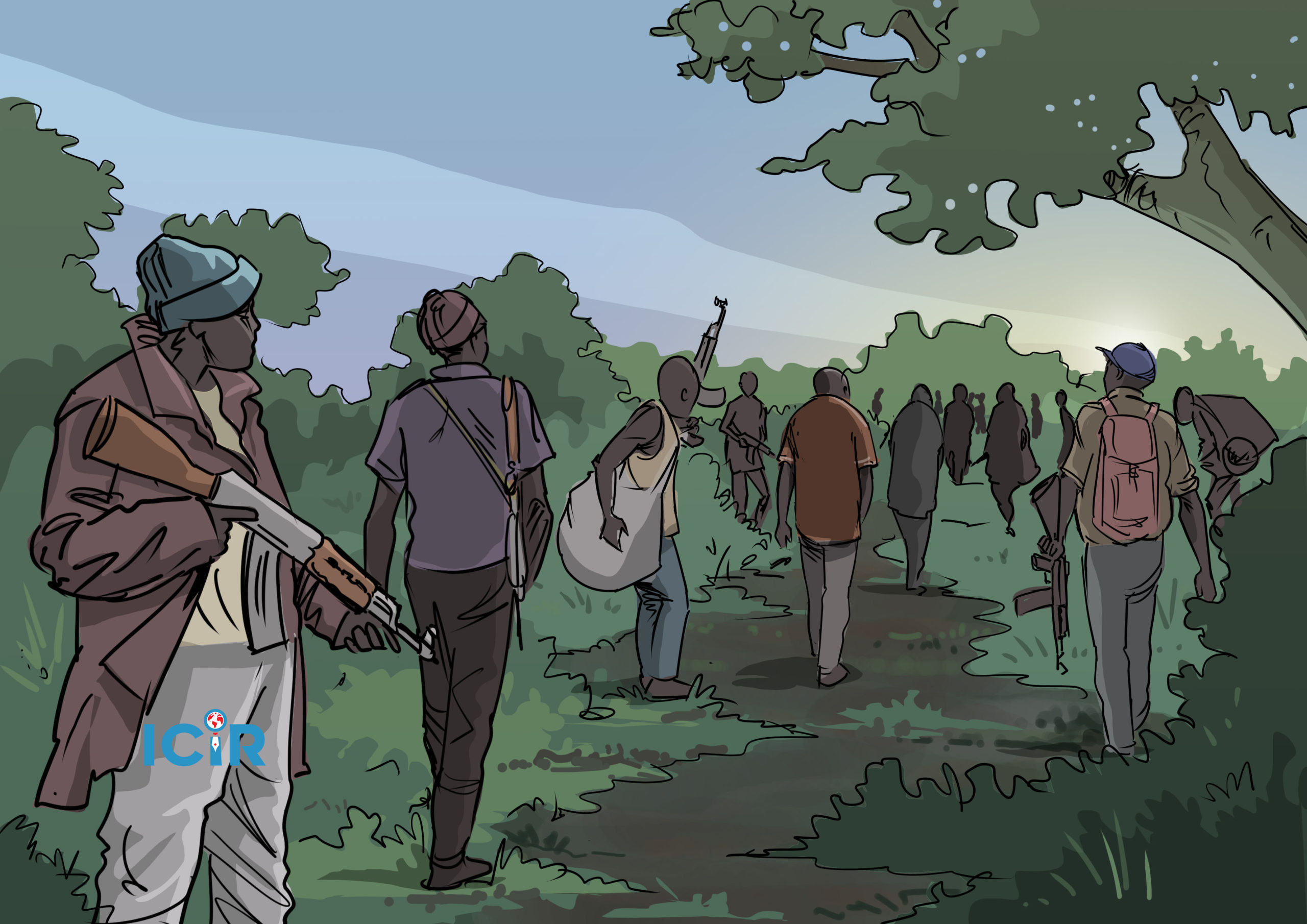
Nigeria’s kidnap-for-ransom economy has ballooned to unprecedented levels, with families and communities paying at least N2.56 billion between July 2024 and June 2025 to secure the release of abducted relatives, according to a new report by Lagos-based research firm, SBM Intelligence.
The figure represents a 144% year-on-year increase compared to the N1.05 billion paid in the corresponding period a year earlier.
SBM’s findings show that kidnappers demanded a staggering ₦48 billion in ransom during the 12-month review period, but victims’ families were only able to meet about 5.35% of these demands.
The surge in payments reflects the deep entanglement between Nigeria’s security crisis and its fragile economy.
In 2024, the N1.05 billion ransom total was equivalent to roughly $655,000 due to currency depreciation. By 2025, ransom payouts had climbed to N2.56 billion, but the dollar equivalent rose only marginally to $1.66 million.
Analysts note that the mismatch underscores how inflation and exchange rate pressures are shaping criminal behavior.
Kidnappers now demand significantly higher sums in naira to cushion themselves against the currency’s free fall, forcing families to part with more money at a time when double-digit inflation is eroding household income.
READ ALSO: Police apprehend 2 suspected kidnappers in A’Ibom
Negotiations often begin with astronomical demands. In one Delta State case, abductors demanded N30 billion for three family members — a single incident that accounted for 62.5% of all ransom demanded nationwide.
Although such demands are usually negotiated down, victims’ families frequently pay in cash supplemented by food or basic goods when liquidity is scarce.
A major case that skewed national totals occurred in Borno State, where the abduction of Justice Haruna Mshelia resulted in a ransom payout of N766 million, almost 30% of all ransom collected nationwide.
The Northwest remains the epicenter of Nigeria’s kidnapping crisis, accounting for 62% of all abductions. Zamfara: 1,203 victims; Kaduna: 629 victims; Katsina: 566 victims.
Katsina also recorded the highest civilian fatalities, underscoring the deadly nexus between abductions and violence in the region.
Beyond criminal gangs, Islamist insurgent groups such as Boko Haram and its affiliates are reaping significant benefits, accounting for nearly one-third of ransom proceeds.
The trend highlights the convergence of organized crime and ideology, making kidnapping not just a law-and-order challenge but also a crucial financing model for insurgency.
For many Nigerian families, ransom payments are financially ruinous. Victims’ relatives often exhaust life savings, fall into debt, or rely on crowdfunding within their communities. This creates a cycle of informal financial drain that further erodes social safety nets.
“Each payment is not just a transaction with criminals; it’s a transfer of wealth from struggling communities into an economy of violence,” SBM noted in the report.
With ransom payouts rising sharply against a backdrop of worsening poverty, Nigeria’s kidnap-for-ransom industry has become one of the most devastating by-products of the country’s economic and security crises.


-

 Football7 days ago
UEFA threatens FIFA World Cup boycott over proposed private investment plan
-

 Business5 days ago
Information Minister, VON DG to lead ARCON’s 2026 Advertising Industry Colloquium
-

 Education3 days ago
University of Ibadan releases 2026/2027 post-UTME screening results
-

 Business6 days ago
Cooking gas dealers slash prices amid intensifying market competition
-

 Latest1 week ago
ADC petitions Judge after Appeal Court overturns deregistration ruling
-

 Aviation5 days ago
Canada issues 10 key tips to help immigration applicants avoid processing delays
-

 Business3 days ago
Breaking: NNPCL reduces pump price of petrol as competition intensifies
-

 Energy7 days ago
Dangote Refinery offers fresh hope for Nigeria’s industrial transformation