
Featured
Nigeria’s war on terror takes heavy toll on military leadership

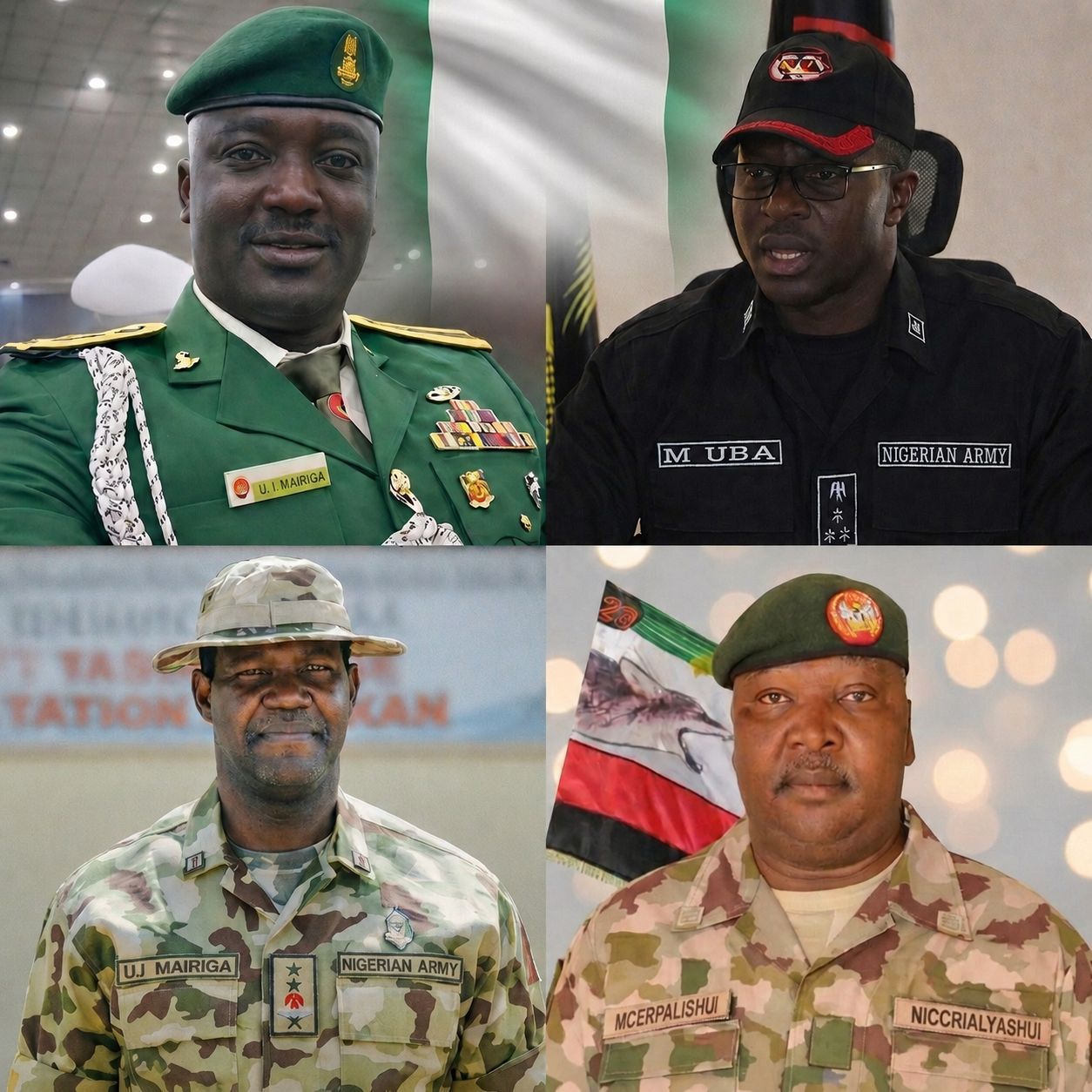
Nigeria’s long-running counter-insurgency operations against insurgent and armed criminal groups have come at a significant leadership cost, with at least 16 senior military officers killed in action between 2016 and 2026.
The casualties, drawn from the upper ranks of the armed forces, highlight what security analysts describe as a growing strain on institutional military memory in the fight against Boko Haram, the Islamic State West Africa Province, and armed bandit groups operating across northern Nigeria.
Military records show that the fatalities include three brigadier generals, two colonels, ten lieutenant colonels, and one major — all killed during active combat operations or insurgent ambushes in the North-East and North-West theatres.
Unlike conventional warfare structures where senior officers operate from secured command centers, Nigerian battlefield commanders have frequently led from forward positions, placing them within range of improvised explosive devices (IEDs), coordinated ambushes, and direct assaults on military formations.
Senior officers killed in action
Operational records of the Nigerian Armed Forces identify several of the senior officers killed in combat:
Brigadier Generals
- Brig. Gen. Dzarma Zirkusu (2021) — Commander, 28 Task Force Brigade; killed during operations against ISWAP fighters in Chibok, Borno State.
- Brig. Gen. Musa Uba (2025) — Ambushed along the Damboa–Wajiroko axis in Borno State and later killed during captivity following an ISWAP attack.
- Brig. Gen. Oseni Braimah (2026) — Commander, 29 Brigade; killed during a coordinated overnight insurgent assault on a military base in Benisheikh.
Colonels and Lieutenant Colonels
- Col. I.A. Mohammed (2026) — Commander, 242 Battalion, Monguno; killed after an IED struck his convoy during Operation HADIN KAI operations.
- Col. Rabe Abubakar (2026) — Senior defence communications officer; killed during a field operation raid.
- Lt. Col. Muhammad Abu Ali (2016) — Commander, 272 Task Force Tank Battalion; killed in a Boko Haram ambush in Mallam Fatori, Borno State.
- Lt. Col. O.K. Adegoke (2017) — Killed during an insurgent attack on a military base in Magumeri.
- Lt. Col. Ibrahim Sakaba (2018) — Killed during the ISWAP overrun of the 157 Task Force Battalion base in Metele.
- Lt. Col. Emeka Onyekachi Alabar (2020) — Killed in an ambush along the Maiduguri–Damaturu highway.
- Lt. Col. O.C. Okolo (2025) — Killed during frontline engagement in the North-East theatre.
- Lt. Col. Manu (surname only recorded) — Killed in a bandit ambush during operations in Katsina State.
Security analysts say the repeated loss of senior commanders has created gaps in operational continuity, particularly in regions where officers spend years developing intelligence networks, understanding terrain dynamics, and coordinating local security partnerships.
According to defence observers, each loss represents not only a battlefield casualty but also the erosion of institutional knowledge built over decades of service.
The absence of experienced commanders, analysts argue, can temporarily slow operational momentum as new officers are deployed, briefed, and integrated into complex theatres of conflict.
The Nigerian military’s operational doctrine, which often places senior officers close to active combat zones, has been credited with improving battlefield coordination but also increasing exposure to targeted attacks.
Brigadier generals and lieutenant colonels remain particularly vulnerable during troop movements, convoy operations, and base reinforcement missions, moments frequently exploited by insurgent groups.
A defence analyst in Abuja noted that many of the fallen officers were “not desk-based administrators but frontline commanders directly involved in planning and executing high-risk operations across the Sambisa Forest, Mandara Mountains, and other conflict zones.”
As Nigeria continues its multi-front security operations, defence planners face the dual challenge of sustaining operational effectiveness while preserving experienced leadership.
Experts say strengthening intelligence preservation systems, improving command succession planning, and enhancing force protection for senior officers will be critical to maintaining long-term counter-insurgency effectiveness.
Despite the losses, military authorities maintain that operations against insurgent and criminal networks remain ongoing, with continued efforts to restore stability across affected regions in the North-East and North-West.


-
 Comments and Issues3 days ago
Can President Tinubu Revive Nigeria’s Moribund Refineries?
-
 Business4 days ago
Tinubu knocks Atiku’s subsidy plan, says proposal shows ‘ignorance’ of economy
-

 Business3 days ago
TikTok, ByteDance agree to $400m settlement in US children’s privacy case
-

 Entertainment6 days ago
Poco Lee faces rape allegation as unverified UK arrest report spreads online
-

 Latest7 days ago
Tinubu files: US Judge grants four-day extension in FOIA disclosure battle
-
 Featured7 days ago
Beyond Osun 2026: What Adeleke’s re-election reveals about Nigeria’s road to 2027
-

 Featured4 days ago
Economic Reality vs Party Machinery: What will drive Nigeria’s 2027 election?
-

 Football4 days ago
EPL 2026/27: Experts back Arsenal for title as Haaland, Rice lead individual award picks