
Business
NCC calls for unified African telecom policies to boost global digital influence

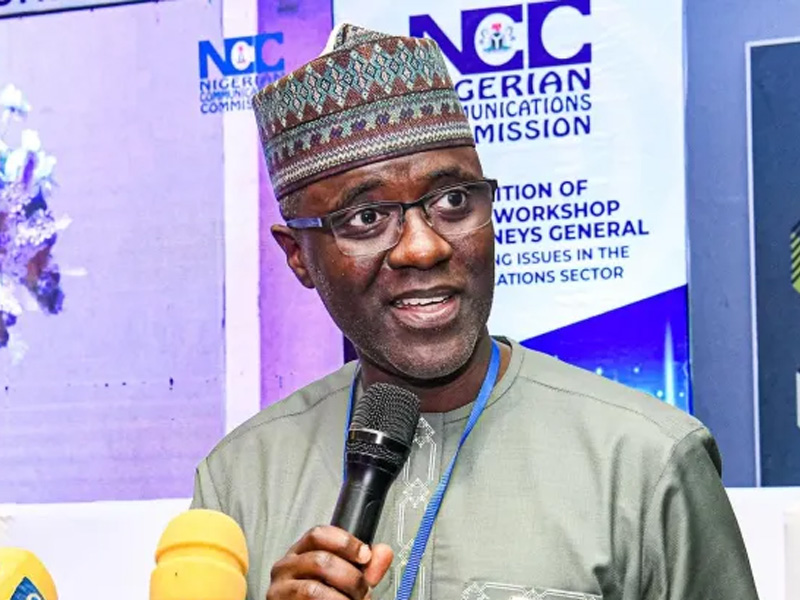
The Nigerian Communications Commission (NCC) has called on African countries to strengthen regulatory cooperation and adopt coordinated telecommunications and digital policies, saying a united continental approach is critical to shaping global digital standards and accelerating Africa’s digital economy.
The appeal was made by the Executive Vice Chairman of the NCC, Dr. Aminu Maida, during the opening of the 7th Ordinary Session of the Conference Preparatory Committee of the African Telecommunications Union (ATU) held in Abuja.
Addressing delegates from across the continent, Maida stressed that Africa’s ability to influence global telecommunications policies would depend not on the size of its delegations but on the quality of its technical preparations and the consistency of its collective positions.
“Africa’s influence in international forums does not depend simply on the size of our delegations or the number of interventions we make. It depends on the quality of our preparation, the coherence of our positions and the consistency with which we advance them,” he said.
The preparatory committee is tasked with developing common African proposals ahead of the African Telecommunications Union Conference of Plenipotentiaries and the 2026 International Telecommunication Union (ITU) Plenipotentiary Conference, where member states will determine the strategic direction and leadership of the global telecommunications body.
READ ALSO: NCC chief highlights trust as key to Nigeria’s digital transformation
Maida urged African governments to engage more proactively in international digital policy discussions, noting that the continent must move from reacting to global decisions to actively shaping them.
He identified several priority areas requiring stronger regional collaboration, including cross-border spectrum harmonisation, artificial intelligence governance, cybersecurity, data protection and universal broadband connectivity.
According to him, the growing complexity of digital technologies means no African country can effectively address these issues independently.
“Our regulatory cooperation must therefore become more continuous, more technical and more institutionalised,” Maida said, calling for sustained collaboration through regular technical engagements, knowledge exchange and joint regulatory initiatives beyond periodic conferences.
He reaffirmed Nigeria’s commitment to supporting the African Telecommunications Union through technical cooperation, regulatory knowledge-sharing and peer learning aimed at strengthening telecommunications governance across the continent.
Also speaking at the event, the Permanent Secretary of the Federal Ministry of Communications, Innovation and Digital Economy, Nadungu Gagare, said closer cooperation among African countries would accelerate digital integration, promote innovation and drive sustainable economic growth.
Gagare noted that harmonised digital policies and stronger partnerships would position Africa to better harness emerging technologies while improving connectivity and expanding digital opportunities for millions of people across the continent.
The Secretary-General of the African Telecommunications Union, John Omo, described the preparatory meeting as crucial to building consensus among member states before formal proposals are presented at the Conference of Plenipotentiaries.
Omo disclosed that the ATU’s membership has expanded significantly over the past four years, growing from 49 to 52 member states, while associate membership increased from 50 to 56 organisations.
He also revealed that the union recently introduced academia as a new membership category, with 18 academic institutions already participating in its activities.
According to Omo, the ATU has broadened its work in key areas including broadband spectrum management, satellite communications, internet governance, internet exchange points and digital infrastructure resilience.
However, he urged member states to ensure more predictable and sustainable financial contributions to enable the organisation to effectively implement its programmes and advance Africa’s digital transformation agenda.
The Abuja meeting is expected to produce a unified African position on major telecommunications and digital policy issues ahead of the 2026 ITU Plenipotentiary Conference, where critical decisions on the future of global telecommunications governance will be made.


-

 Business6 days ago
Abuja gears up for Jetour T2’s rugged-luxury experience
-

 Business1 week ago
Nigeria Business Outlook: Dangote IPO, markets, inflation and naira in focus this week
-

 Business7 days ago
Dangote IPO rush crashes Bamboo login as investors flood platform
-

 News4 days ago
UK, Canada pledge closer cooperation on trade, defence and AI
-
 Business5 days ago
Tinubu’s economic reforms face public confidence test as cost-of-living crisis persists
-

 Business5 days ago
Dangote: Petrol price gap fuels smuggling as Nigeria faces fresh pump price surge
-

 Latest1 week ago
Hamzat meets Pastor Chris Oyakhilome, hails Christ Embassy’s community impact
-

 Latest5 days ago
Court sets 7-day window for Atiku to serve Tinubu in 2027 suit