
Business
Middle East tensions lift oil prices, boost Nigeria’s revenue outlook

By Arthur Eriye
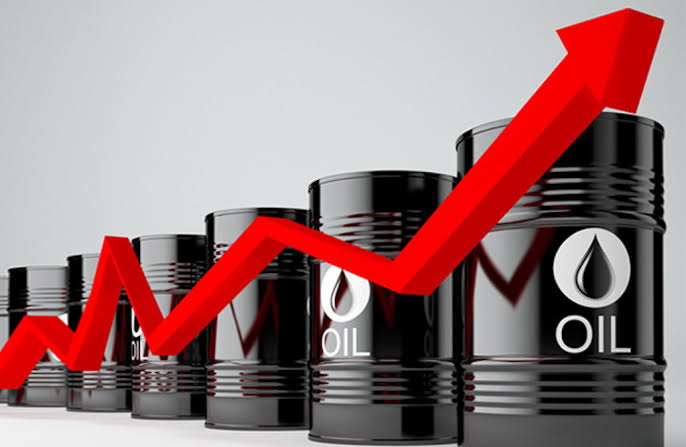
Recent geopolitical tensions in the Middle East have once again unsettled global energy markets, resulting in an increase in crude oil prices and enhancing Nigeria’s revenue prospects. However, economists caution that a prolonged conflict could exacerbate global inflation, disrupt trade, and hinder economic growth.
The latest escalation involving the United States, Iran, and Iran-aligned groups has reignited concerns over potential supply disruptions through the Strait of Hormuz, one of the most critical energy corridors in the world. This narrow waterway is responsible for approximately 20 percent of global crude oil and liquefied natural gas (LNG) trade, making it an essential conduit for international energy supplies. Any interruption to shipping in this route typically leads to a significant rise in global oil prices. These apprehensions have already been felt across international oil markets.
Brent crude, which serves as the benchmark for pricing Nigeria’s Bonny Light and other export grades, has surged past $88-$90 per barrel, significantly exceeding the Federal Government’s budget benchmark of approximately $65 per barrel for 2026. This increase has been primarily fueled by concerns that further military escalation may disrupt supplies from the Gulf, despite ongoing diplomatic initiatives aimed at achieving a ceasefire.
For Nigeria, Africa’s largest oil producer, this situation presents substantial fiscal opportunities, but it also carries considerable economic risks.
The country derives over half of its government revenue and the majority of its foreign exchange from crude oil exports. As a result, persistent rises in international oil prices enhance government revenues, increase foreign exchange inflows, bolster external reserves, and strengthen fiscal shields.
READ ALSO: US-Iran conflict pushes Nigerian crude past $93 per barrel
With crude oil prices exceeding the budget benchmark by over $20, analysts suggest that the country may experience oil revenues that surpass expectations if these price levels persist.
Increased revenue would enhance the allocations to the three tiers of government via the Federation Account Allocation Committee (FAAC), while also providing additional fiscal capacity for infrastructure and capital projects.
Nevertheless, economists warn that elevated oil prices do not necessarily lead to an increase in national income.
Nigeria has faced ongoing challenges in fulfilling its OPEC production quota, primarily due to crude oil theft.pipeline vandalism, underinvestment and ageing infrastructure. As a result, the country’s ability to maximise the benefits of higher oil prices depends largely on improving production volumes and export capacity.
Data from the Nigerian Upstream Petroleum Regulatory Commission (NUPRC) indicates that crude oil production has gradually improved in recent months, yet it still falls short of Nigeria’s long-term production capabilities.
In the meantime, OPEC+ is continuously adjusting its production levels in response to evolving market dynamics. Recently, seven members of the coalition reached an agreement to increase their collective output by approximately 188,000 barrels per day, aiming to stabilize global supplies and mitigate price surges caused by geopolitical tensions.
Energy analysts suggest that the market remains in a precarious state, balancing between rising geopolitical risks and the anticipation of increased supply from OPEC+.
Several global investment banks have forecasted that crude oil prices could exceed $100 per barrel if military conflicts significantly disrupt exports through the Strait of Hormuz or other critical shipping lanes. On the other hand, successful diplomatic efforts could alleviate supply concerns and help stabilize prices.
Dr. Muda Yusuf, Chief Executive Officer of the Centre for the Promotion of Private Enterprise (CPPE), stated that while rising crude prices provide Nigeria with short-term fiscal relief, policymakers should not lose sight of the need to tackle persistent structural issues.
READ ALSO: Gulf tensions soar as Trump declares US-Iran ceasefire dead(Video)
He emphasized that higher oil prices would enhance government finances and boost foreign exchange liquidity; however, Nigeria must substantially increase crude production to fully capitalize on these advantages.
“Higher oil prices are good news for government revenue, but Nigeria’s real challenge is production. Without higher output, the country cannot fully maximise the benefits of the current price rally,” he said.
In a similar vein, Bismarck Rewane, the Managing Director of Financial Derivatives Company, pointed out that while the increase in oil prices enhances Nigeria’s external financial standing, it simultaneously escalates global inflationary pressures. This situation could potentially postpone interest rate reductions by major central banks and hinder economic growth on a global scale.
He further remarked that ongoing geopolitical instability might lead to higher costs for freight, insurance, and logistics, thereby exacerbating inflation in both developed and developing economies.
The International Energy Agency (IEA) has also cautioned that extended interruptions in oil supply from the Gulf could constrict global availability and amplify market volatility, identifying geopolitical tensions as one of the most significant threats to the global energy sector.
In Nigeria, the rise in international crude prices may yield mixed outcomes for consumers. While elevated oil prices boost government revenues, they also raise the cost of imported refined petroleum products, which could lead to increased domestic petrol prices in a deregulated market. Additionally, surging transportation and logistics expenses may contribute to food inflation and elevate the overall cost of living.
Investors are closely monitoring the situation in the Middle East.
Financial markets have shown heightened sensitivity to geopolitical events, with crude prices responding sharply to news of military escalations or diplomatic advancements. Although oil prices experienced a slight decline following reports of renewed ceasefire negotiations, traders remain vigilant due to ongoing threats to maritime security in the Gulf.
For Nigeria, the immediate outlook remains favourable from a fiscal standpoint.
Given that crude prices are significantly higher than the government’s budget projections, the nation is poised to gain from increased oil revenues amidst heightened fiscal challenges. However, analysts emphasize that enduring economic success cannot rely solely on geopolitical turmoil.
They contend that Nigeria needs to expedite initiatives to boost crude production, combat oil theft, enhance domestic refining capabilities, diversify its export income, and lessen its historical reliance on crude oil revenues. It is only through these measures that short-term oil price surges can lead to sustainable economic development and fiscal stability.


-

 Business5 days ago
Abuja gears up for Jetour T2’s rugged-luxury experience
-
 Business7 days ago
Nigeria Business Outlook: Dangote IPO, markets, inflation and naira in focus this week
-
 Business7 days ago
Dangote IPO rush crashes Bamboo login as investors flood platform
-

 News4 days ago
UK, Canada pledge closer cooperation on trade, defence and AI
-

 Business5 days ago
Tinubu’s economic reforms face public confidence test as cost-of-living crisis persists
-
 Business5 days ago
Dangote: Petrol price gap fuels smuggling as Nigeria faces fresh pump price surge
-

 Latest1 week ago
Hamzat meets Pastor Chris Oyakhilome, hails Christ Embassy’s community impact
-

 Latest5 days ago
Court sets 7-day window for Atiku to serve Tinubu in 2027 suit