
Comments and Issues
The Cardinal Onaiyekan Debate: Can Nigerians Ever Be Satisfied?

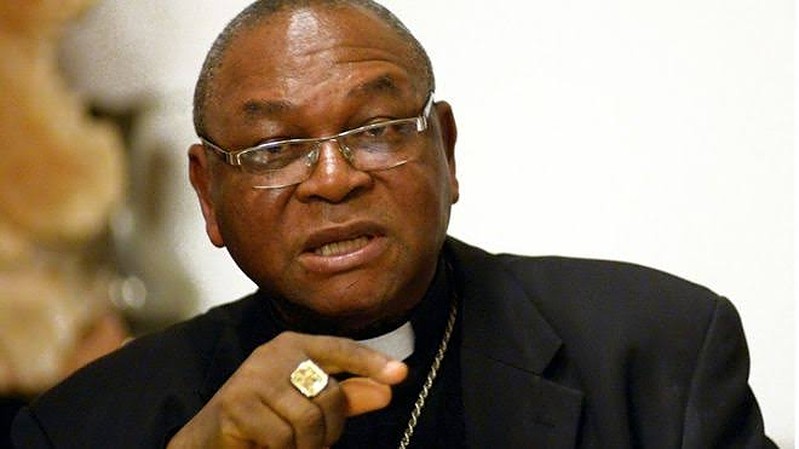
“Do Nigerians truly deserve voices like Cardinal Onaiyekan’s? Judging by the reactions to his recent comments, one might be inclined to answer in the negative. We often demand honesty from our religious leaders, yet too often reject uncomfortable truths when they are voiced. We call on them to denounce injustice, corruption, insecurity, and economic hardship. However, when they answer that call, we tend to question their motives, accuse them of bias, or dismiss their messages without engaging with their substance.”
In Nigeria, it is rare for a week to pass without calls for religious leaders to take a definitive stance on the nation’s most pressing issues. Whenever crises unfold—be it the alarming rise in insecurity leading to tragic losses, an economic downturn that impacts the livelihoods of countless citizens, or public policies that spark widespread controversy—many Nigerians grow increasingly frustrated by the perceived silence or inadequate response from religious leaders. They turn to social media to ask questions such as “Why are they quiet?” “Are they afraid?” or “Why won’t they defend the people?” This frustration often stems from the belief that religious leaders, wielding significant moral authority, can play a vital role in guiding public discourse, fostering unity, and providing comfort during turbulent times. However, when some of these leaders respond, a contrasting narrative emerges. Their statements are scrutinized, politicized, and frequently misrepresented. This paradox raises a pressing and uncomfortable question: Can Nigerians ever be satisfied?
The recent appearance of John Cardinal Onaiyekan on Arise TV has sparked a contentious debate, particularly over his discussion of the meeting between the Catholic Bishops’ Conference of Nigeria and President Bola Ahmed Tinubu. Rather than engaging in a meaningful dialogue about the economic improvements claimed under this administration, the presidential media aides resorted to disparaging the Cardinal for stating what is undeniably apparent. A more constructive response would have been to address the Cardinal’s observations with verifiable facts, evidence, and well-reasoned arguments. If the economy is indeed improving, if security concerns are being effectively managed, and if government policies are yielding tangible benefits for ordinary Nigerians, these accomplishments should be substantiated with clear evidence, rather than by undermining the credibility or intentions of a respected religious figure. This reaction prompts a fundamental question: When did the meeting between the Catholic Bishops’ Conference and the President become a secret? Was this a secret cult meeting in the first place?
The meeting was conducted openly and transparently, with all details readily available in public records and widely covered by the media. Such interactions are not unusual; they have occurred even during periods of military rule, underscoring the importance of dialogue in governance. For instance, during President Ibrahim Babangida’s administration, the Bishops frequently discussed national issues, demonstrating their commitment to the country’s moral and ethical discourse. Likewise, General Sanni Abacha, despite the controversies surrounding his regime, met with the Bishops on multiple occasions, especially in the lead-up to significant events such as Pope John Paul II’s second visit to Nigeria in 1998. We all remember what happened after that visit.
Furthermore, the Bishops have upheld this tradition by engaging with other political leaders, including Presidents Goodluck Jonathan and Muhammadu Buhari, to discuss the nation’s challenges. Their recent meeting with President Bola Ahmed Tinubu fits within this historical context, reinforcing the idea that such engagements are a fundamental aspect of the relationship between the Church and the State in Nigeria.
Anyone familiar with John Cardinal Onaiyekan will readily affirm his integrity, independence, and forthrightness. Over the years, he has openly challenged successive governments on issues such as corruption, insecurity, bad governance, electoral integrity, religious freedom, and social justice. His critiques have focused not on individuals based on their political affiliations but on the policies and actions that, in his view, undermine the common good. Whether under military rule or civilian administrations, his message has remained steadfast: those entrusted with public office must govern with justice, accountability, and a commitment to respecting the dignity of every Nigerian. For instance, during his tenure as President of the Catholic Bishops’ Conference of Nigeria (CBCN) around Nigeria’s return to democracy, Onaiyekan took a firm stand on political neutrality. When President Obasanjo sought to amend the constitution to extend his term, Onaiyekan and the Catholic episcopacy unlawfully played a pivotal role in opposing the attempt, calling it a direct assault on democracy.
When the Boko Haram insurgency intensified during the Goodluck Jonathan Administration (2010–2015), Onaiyekan did not shield the administration from criticism, even though he maintained a positive personal rapport with the President. He consistently condemned systemic corruption that left Nigerian soldiers inadequately equipped to combat terrorism, characterizing the misappropriation of security funds as a profound betrayal of public trust. During the Muhammadu Buhari Administration (2015–2023), while many religious leaders chose to tread lightly, Cardinal Onaiyekan consistently highlighted the government’s failures, particularly regarding insecurity and accountability. In 2018, during a homily in Kwara State, he publicly declared that Nigeria’s Catholic bishops had completely lost faith in the Buhari administration because of rampant killings and poor governance.
These examples make it clear that Cardinal Onaiyekan has a long history of speaking truth to power. It would be unjust to characterize his recent comments as politically motivated or partisan. His reputation for applying consistent moral standards across all governments remains intact. His credibility rests on this unwavering consistency. Rather than altering his principles to align with the current administration, he has remained true to the Church’s enduring mission to advocate for the voiceless, defend the vulnerable, and remind those in power that leadership is a sacred trust, not a mere license for authority.
In established democracies like the United States, it is common for governments to engage with faith leaders on matters of national importance. Similarly, religious institutions—including the Catholic bishops of America—often issue public statements urging the US President and other elected officials to uphold justice, protect human dignity, defend the vulnerable, and govern in accordance with the Constitution and the common good. Such interventions are not always universally welcomed and are sometimes criticized for the positions they take. However, their participation in public debate is generally regarded as a legitimate contribution to democratic discourse rather than an improper intrusion into politics. They are criticized for the substance of their views, not merely for speaking.
However, in contemporary Nigeria, the statements of Catholic bishops on issues that affect the poor, the vulnerable, and the nation at large often elicit mixed reactions. While many Nigerians commend these leaders for their moral courage and willingness to speak truth to power, others swiftly accuse them of bias, political partisanship, or unwarranted interference in governance. The dilemma, however, does not stop there. When the Bishops choose silence in the face of societal suffering, they may also encounter significant backlash. Critics might interpret their silence as complicity or indifference, suggesting a failure to uphold their ethical responsibility to advocate for justice and compassion. This contradiction raises a profound question that resonates within Nigerian society: What do Nigerians truly expect from their religious leaders?
The mission of the Catholic bishops is not to endorse political parties or seek public office; rather, it is to proclaim moral truth, defend human dignity, promote justice, and give voice to those often overlooked. When the bishops address issues such as insecurity, corruption, economic hardship, or human rights violations, they are not engaging in partisan politics; they are fulfilling their prophetic duty to hold society—and those in positions of authority—to the ethical standards of justice, compassion, and accountability. Thus, in a thriving democracy, institutions that command public trust have both the right and the obligation to engage in national conversations. To label every uncomfortable truth as political simply because it challenges those in power is to conflate moral leadership with political opposition. A nation that suppresses its moral voices risks losing one of its most vital sources of conscience.
Thus, many who condemn Cardinal Onaiyekan for explaining the bishops’ meeting with the President would likely be the first to accuse the bishops of secrecy if they had chosen not to speak. This contradiction has become all too common in Nigeria’s public discourse. Silence is interpreted as complicity, while openness is met with suspicion. We often urge respected leaders to speak truth to power, yet when they recount meetings with those in authority, they are accused of revealing too much or of legitimizing the government. Of course, every public statement must be scrutinized. Citizens are entitled to agree or disagree with the Cardinal’s views, question the bishops’ approach, or debate the effectiveness of the meeting’s outcomes. This kind of discourse is healthy in a democracy. What is less constructive is shifting attention from the issues raised to attacking the messenger.
Meeting with the President does not imply agreement with every government policy, just as explaining the content of a meeting does not amount to exposing confidential discussions. Religious leaders can engage constructively with political leaders while maintaining their independence. In fact, such engagement is often essential to effectively advocate for justice, peace, and the common good. Nigeria requires more honest conversations, not fewer. It needs institutions willing to engage with the government while still having the courage to criticize when necessary. It also needs religious leaders who will evaluate public interventions based on their content rather than on assumptions about hidden motives. Thus, the pertinent question is not why Cardinal Onaiyekan spoke after an officially known meeting, but whether Nigerians are ready to hold their leaders accountable or whether we have reached a stage where silence is celebrated, and transparency is viewed with skepticism.
Democracy flourishes when institutions—including religious communities, civil society, the media, and professional organizations—are free to engage with the government, offer constructive criticism, and advocate for the common good. Speaking truth to power is not an abuse of authority; rather, it is a fundamental exercise of moral responsibility. The core issue is not whether Cardinal Onaiyekan chose to speak after he met with the President. Rather, the question is whether his remarks were truthful, constructive, and rooted in the public interest. If his observations are true, they should be judged on their merits rather than resorting to personal attacks or questioning a speaker’s right to comment on matters of public concern. In a democracy, ideas must be challenged with reason and evidence, not with prejudice or suspicion.
One cannot help but ask: Do Nigerians truly deserve voices like Cardinal Onaiyekan’s? Judging by the reactions to his recent comments, one might be inclined to answer in the negative. We often demand honesty from our religious leaders, yet too often reject uncomfortable truths when they are voiced. We call on them to denounce injustice, corruption, insecurity, and economic hardship. However, when they answer that call, we tend to question their motives, accuse them of bias, or dismiss their messages without engaging with their substance. It seems that what many Nigerians seek is not the truth but falsehoods, not constructive criticism but distorted narratives that reinforce their preconceived opinions.
Perhaps the uncomfortable reality is that we are not yet ready for the candid national dialogue that genuine progress requires. For Nigeria to advance, we must learn to appreciate those who speak with integrity, even when their words make us uncomfortable. While we may not always agree with Cardinal Onaiyekan—or any other public figure—we should have the maturity to engage with their arguments rather than resort to personal attacks. A society that persistently silences or vilifies its most principled voices risks losing its moral compass. Thus, the pressing question is not merely whether Cardinal Onaiyekan should have spoken out, but whether we, as a nation, are prepared to listen. Until we embrace honest dialogue over comforting narratives, prioritize truth over sentiment, and uphold principle over partisanship, we will continue to grapple with the very challenges we profess to want to resolve.
Rev. Ma, S.J., is a Jesuit priest and public policy analyst. He currently writes from Abuja, Nigeria.


-
 Latest1 day ago
Pastor Chris Oyakhilome announces mother’s passing at 88 [VIDEO]
-

 Football4 days ago
Saka: England still carry World Cup scar
-
 Comments and Issues6 days ago
Sometimes, goodwill finds us through the people we love
-
 Business5 days ago
CBN reduces MPR by 350bps to 23% in major monetary policy shift
-

 Latest2 days ago
Arsenal eye €70-80m move for Real Madrid star
-

 Business1 week ago
Jetour takes T1 adventure SUV experience to Abuja, targets growing Nigerian market
-

 Football1 week ago
Nigeria vs Colombia: Falconets battle for U-20 World Cup semi-final ticket
-
 Crime2 days ago
Police arrest suspect, launch manhunt for 2 others over Delta Education Director’s death