
Business
Naira opens week stable as gap between official and parallel dollar markets narrows

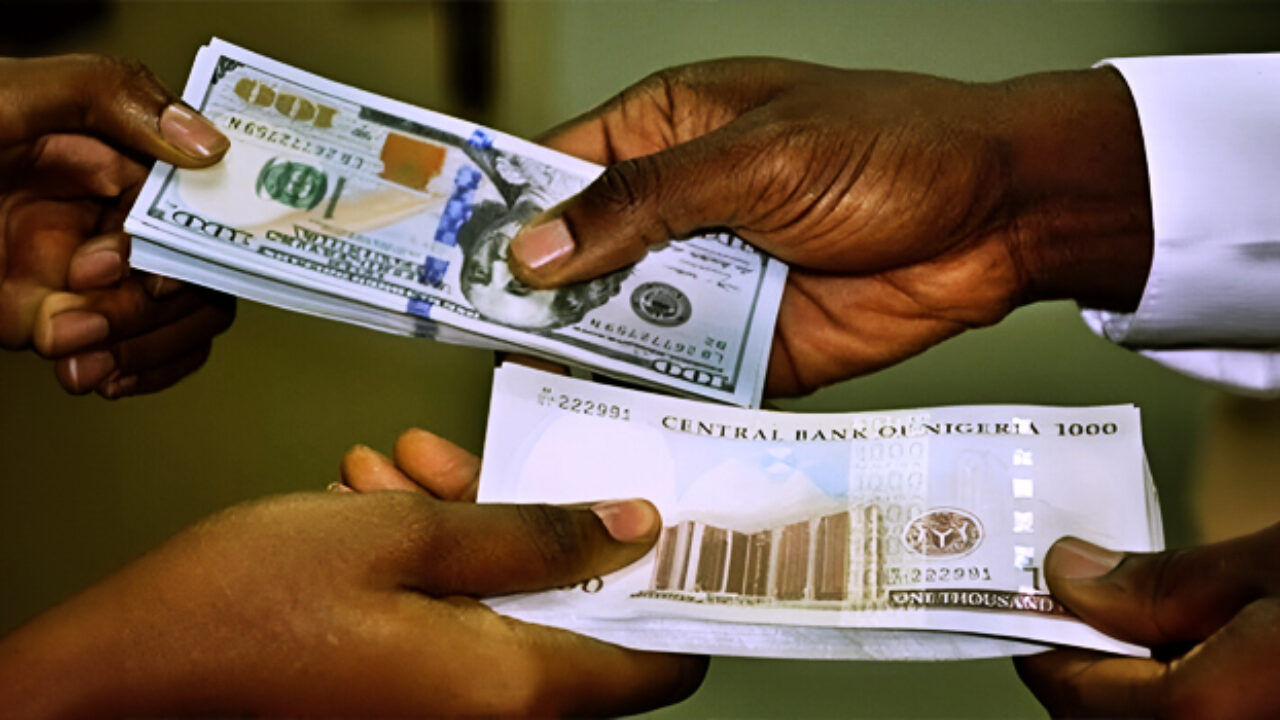
The Nigerian naira began the week on a relatively stable note against the United States dollar, with the gap between the official foreign exchange market and the parallel market continuing to narrow.
Data from the Nigerian Foreign Exchange Market (NFEM) indicated that the naira traded around ₦1,368.22 per dollar at the official window, while parallel market operators in Lagos and other commercial centres quoted the dollar at about ₦1,410 for buying and ₦1,425 for selling.
The difference between the two rates, estimated at between ₦40 and ₦55, represents a significant reduction from previous periods when wide disparities between official and street exchange rates fuelled speculation and uncertainty in the foreign exchange market.
Financial analysts said the relatively stable movement reflects improved market liquidity, increased reliance on official channels and efforts by the Central Bank of Nigeria (CBN) to address foreign exchange demand pressures.
The official NFEM rate has remained within a narrow range in recent sessions, fluctuating between approximately ₦1,363 and ₦1,368 per dollar, suggesting reduced volatility in corporate foreign exchange transactions.
The narrowing spread has provided some relief for businesses that depend heavily on foreign exchange for imports, raw materials and international payments.
Manufacturers and importers are expected to benefit from improved predictability in pricing, while retailers may experience slower transmission of exchange-rate pressures into the prices of imported goods.
Businesses involved in overseas payments, including education and international services, may also benefit from reduced reliance on more expensive parallel market transactions.
Trade analysts noted that a smaller gap between official and parallel rates could discourage speculative activities, as businesses have greater confidence in accessing foreign exchange through regulated channels.
“When businesses can reliably source foreign exchange through official channels within a predictable range, price volatility across consumer markets begins to reduce,” analysts said.
Market participants are expected to closely monitor developments that could affect the naira’s performance in the coming days.
Key factors include continued foreign exchange supply from the CBN, foreign portfolio investment flows driven by Nigeria’s high interest rates, and increased demand from importers.
Analysts also warned that seasonal demand pressures and global currency movements could still influence exchange rate direction.
For now, the naira’s relative stability and the shrinking gap between official and parallel market rates signal a calmer foreign exchange environment compared with periods of severe volatility, although traders and businesses remain cautious about future market conditions.


-

 Football1 week ago
Premier League releases 2026/27 festive fixtures, 7 matches set for Boxing Day
-

 Crime7 days ago
Anambra Police arrest mother over alleged child sexual exploitation
-

 Business6 days ago
Jetour Nigeria, dealers take dashing, other models to Abuja Experience
-

 Business7 days ago
Dangote Refinery IPO shifts spotlight to corporate governance, investor protection
-

 Business3 days ago
Abuja gears up for Jetour T2’s rugged-luxury experience
-

 Business4 days ago
Dangote IPO rush crashes Bamboo login as investors flood platform
-

 Business4 days ago
Nigeria Business Outlook: Dangote IPO, markets, inflation and naira in focus this week
-

 Business7 days ago
Naira gains ground as Euro holds around N1,548, reserves hit 18-year high