
Latest
2027 Elections: Why electoral integrity is bigger than INEC

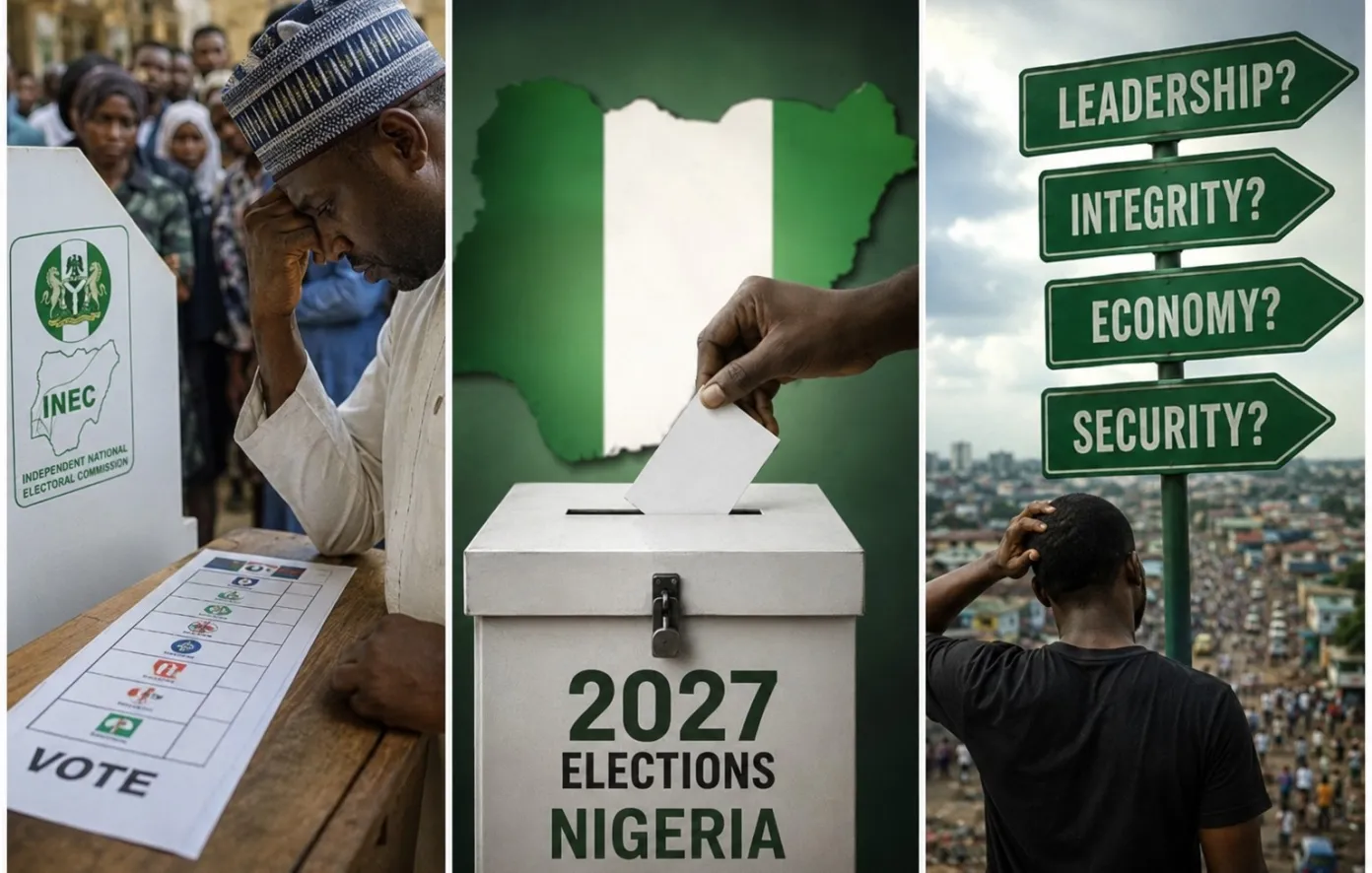
As Nigeria moves closer to the 2027 general elections, attention is increasingly turning to the institutions and political actors whose actions could shape public confidence in the electoral process.
The Independent National Electoral Commission (INEC), state governors, political parties, security agencies, the media, civil society organisations and voters all have distinct responsibilities under Nigeria’s electoral framework. The question, therefore, is not simply who is responsible for protecting the integrity of the 2027 elections, but how each institution will discharge its role.
The debate has gained renewed relevance following recent discussions among political and media stakeholders about the credibility of the electoral process and the challenges likely to confront the country ahead of the polls.
At the 22nd All Nigeria Editors Conference in Enugu, the Vice President, Kashim Shettima, INEC officials and governors were among those who addressed issues surrounding the 2027 elections. Shettima urged journalists to strengthen fact-checking and verification as artificial intelligence makes it easier to create and circulate convincing false information. Governors Peter Mbah of Enugu and Umar Namadi of Jigawa also stressed the importance of responsible journalism to the electoral process.
The INEC chairman, Professor Joash Amupitan, represented at the conference by the Resident Electoral Commissioner for Enugu State, said both the electoral commission and the media must remain above suspicion as the country approaches the election.
The comments highlight an important reality: electoral integrity extends beyond what happens at polling units on Election Day.
INEC has the constitutional responsibility to organise elections and is therefore at the centre of the process.
The commission has already fixed February 20, 2027 for the presidential and National Assembly elections and March 6, 2027 for governorship and State House of Assembly elections, subject to the applicable constitutional and legal framework.
INEC has also said it intends to deepen the use of technology, maintain and update the voters’ register, strengthen engagement with security agencies and expand voter education.
The commission’s responsibility includes ensuring that election officials follow established procedures, electoral materials reach their intended locations, results are properly collated and announced, and complaints are handled within the framework of the law.
Recent developments have also underscored the importance of legal certainty. On September 24, the Supreme Court upheld provisions of the Electoral Act 2026 concerning political-party membership registers and candidate nomination procedures after an earlier Court of Appeal decision had invalidated them.
For INEC, consistency, transparency and strict adherence to the law will therefore be important to maintaining confidence in the process.
Governors do not conduct federal elections, and INEC remains the constitutionally empowered election management body. However, governors operate within the political and security environment in which elections take place.
State governments control significant public resources and have substantial political influence within their states. They also work alongside federal security and administrative institutions during elections.
This makes the conduct of state governments relevant to the broader electoral environment.
The issue is particularly important because Nigeria’s electoral history includes concerns about the use of state resources, political intimidation, vote buying, violence and attempts by political actors to influence electoral processes.
Such concerns have also featured in recent discussions surrounding the 2027 elections. Civil society organisations have raised questions about alleged diversion of public funds for political purposes, while INEC has continued to emphasise the need for political parties and candidates to comply with electoral laws. These remain allegations or areas of public debate rather than established findings against every governor or political actor.
Governors therefore have a role in ensuring that state institutions operate within the law and that political competition does not undermine citizens’ ability to participate freely.
An election cannot be considered fully credible if voters, candidates, journalists or election officials cannot participate without fear.
INEC Chairman Amupitan recently said adequate funding was important for election security and logistics. He also identified coordination between INEC and security agencies through the Inter-Agency Consultative Committee on Election Security as an important component of preparations for 2027.
Security agencies, particularly the police, will therefore have responsibilities that extend from protecting polling units and election officials to responding impartially to threats and violations.
The challenge will be ensuring that security interventions protect the electoral process without becoming instruments of political influence.
Political parties also carry significant responsibility.
The integrity of an election begins before voters arrive at polling stations. Candidate selection, internal party democracy, campaign financing, political messaging and the behaviour of supporters can all affect the quality of an election.
INEC has repeatedly called on political parties to conduct peaceful primaries, avoid inflammatory rhetoric and comply with the law. (INEC Nigeria)
The signing of a national peace accord by presidential candidates and political parties in August was another attempt to establish expectations for peaceful and issue-based electioneering.
Whether such commitments translate into conduct on the ground will depend largely on the willingness of political actors and their supporters to respect the rules.
The 2027 election will also take place in an information environment significantly different from previous elections.
Social media, artificial intelligence, deepfakes and rapidly circulated videos can make false claims difficult to distinguish from genuine information.
At the editors’ conference, stakeholders specifically warned about AI-generated misinformation and called for stronger verification standards.
This places additional responsibility on news organisations to verify claims before publication, distinguish allegations from established facts and avoid presenting unverified social-media material as news.
The media’s role is not to determine electoral outcomes but to provide citizens with reliable information with which they can assess candidates, parties and events for themselves.
Ultimately, voters are the holders of the electoral mandate.
Citizens have responsibilities that include registering to vote, collecting their permanent voter cards where applicable, participating peacefully, rejecting violence and reporting electoral violations through appropriate channels.
But asking voters to protect electoral integrity cannot substitute for institutional responsibility. Citizens can only exercise their democratic rights effectively when the institutions responsible for administering and securing elections perform their own duties.
INEC itself has described the success of the 2027 elections as a collective responsibility involving government institutions, security agencies, political parties, the media, civil society organisations and Nigerians generally.
That approach is important because no single institution controls every factor that determines whether an election is credible.
INEC can administer the vote, but it cannot independently control the behaviour of political parties or supporters. Security agencies can protect polling locations, but they must operate impartially. Governors can influence the political environment in their states, but they do not replace INEC’s constitutional role. The media can expose wrongdoing and provide information, but it cannot substitute for election administration. Voters ultimately decide through their ballots, but their choices must be protected from intimidation and manipulation.
The 2027 election will therefore test not only INEC’s preparedness but also the ability of Nigeria’s political and state institutions to respect the boundaries established by law.
With the presidential and National Assembly elections scheduled for February 20, 2027 and the governorship and State Assembly elections for March 6, the period ahead provides an opportunity for institutions to demonstrate that electoral integrity is more than a campaign promise. (INEC Nigeria)
The central issue is consequently less about which single actor should bear the blame when problems arise and more about whether every institution involved will fulfil the responsibility assigned to it by law.
For Nigerian voters, the ultimate measure will be whether they can participate freely, whether their votes are properly counted and whether the institutions responsible for the process can command public confidence through transparency, accountability and adherence to the law.


-

 Latest1 day ago
Pastor Chris Oyakhilome announces mother’s passing at 88 [VIDEO]
-

 Football5 days ago
Saka: England still carry World Cup scar
-

 Comments and Issues6 days ago
Sometimes, goodwill finds us through the people we love
-

 Latest3 days ago
Arsenal eye €70-80m move for Real Madrid star
-

 Business6 days ago
CBN reduces MPR by 350bps to 23% in major monetary policy shift
-

 Business1 week ago
Jetour takes T1 adventure SUV experience to Abuja, targets growing Nigerian market
-

 Football1 week ago
Nigeria vs Colombia: Falconets battle for U-20 World Cup semi-final ticket
-

 Crime3 days ago
Police arrest suspect, launch manhunt for 2 others over Delta Education Director’s death