
Latest
Dalung claims ‘message from Buhari’s grave’ urges Nigerians to vote Atiku in 2027

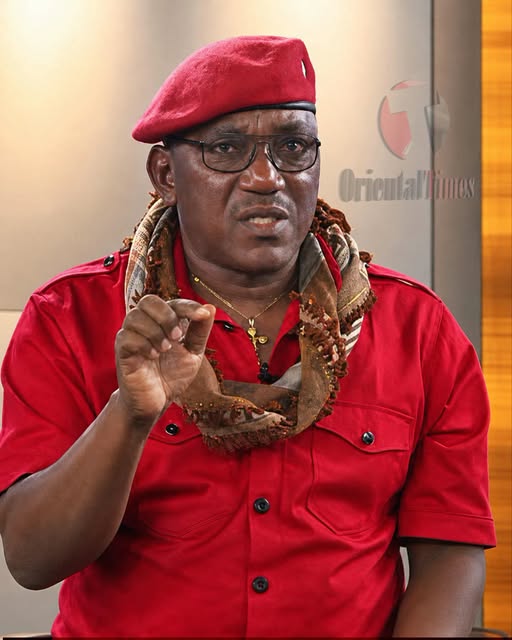
Former Minister of Youth and Sports Development and chieftain of the African Democratic Congress (ADC), Solomon Dalung, has claimed that supporters of the party have received what he described as a “phone call from the grave” of former President Muhammadu Buhari, urging Nigerians to vote for former Vice-President Atiku Abubakar in the 2027 presidential election.
Dalung made the controversial remark on Thursday while appearing on Channels Television’s Politics Today, where he expressed confidence that Atiku would defeat incumbent President Bola Tinubu despite the political and legal challenges confronting the opposition party.
The former minister linked his claim to what he described as the transfer of Buhari’s political support base to Atiku, following a visit by the late president’s wife, Aisha Buhari, to the former vice-president’s residence in Abuja.
According to Dalung, the visit, which took place in September, should be interpreted as a significant political signal that the votes historically associated with Buhari were now available to Atiku.
“The message she took for any politician to know is that the 12 million votes have been successfully transferred. We have had a phone call from the grave of Buhari that we should vote Atiku,” Dalung said.
He argued that Atiku possesses a nationwide political structure capable of mobilising voters across different regions, adding that the former vice-president had inherited the political networks associated with the late General Shehu Musa Yar’Adua and former President Buhari.
Dalung maintained that the strength of Atiku’s political machinery goes beyond the large crowds often displayed at political rallies, which he dismissed as rented supporters rather than evidence of genuine electoral backing.
Dalung Says Atiku Has Inherited Buhari’s Political Support Base
Explaining his confidence in Atiku’s chances, Dalung recalled Buhari’s electoral performance in previous presidential elections, arguing that the former president commanded a substantial nationwide support base that could now benefit the ADC candidate.
READ ALSO; 2027: INEC vows to obey court decision on Atiku’s presidential ambition
Buhari secured approximately 12.2 million votes in the 2011 presidential election when he contested under the Congress for Progressive Change (CPC).
He subsequently polled about 15.4 million votes in 2015 and 15.2 million in 2019, when he contested under the All Progressives Congress (APC).
Dalung believes the political networks responsible for those electoral performances could become part of Atiku’s support base ahead of the next presidential election.
The former minister specifically referenced Aisha Buhari’s visit to Atiku’s Abuja residence on September 17, 2026.
Atiku had publicly acknowledged the visit, describing his meeting with the former First Lady as warm and deeply appreciated.
In a statement following the meeting, the former vice-president highlighted the need for political leaders to prioritise the welfare of Nigerians amid economic difficulties.
However, neither Aisha Buhari nor Atiku publicly announced any transfer of Buhari’s electoral support to the ADC candidate. Dalung’s interpretation of the visit as a political endorsement therefore remains his personal claim.
Dalung also expressed strong confidence that President Tinubu would be unable to defeat Atiku in the 2027 election, even if the ruling party succeeded in disrupting the ADC’s political activities.
He argued that Atiku’s political influence and nationwide structure give him an advantage over other contenders.
“I am confident that as events are unfolding, Tinubu, even if he would take over the ADC secretariat and stop ADC from campaigning, he cannot defeat Atiku Abubakar in 2027,” he said.
The ADC chieftain further questioned the significance of the large crowds attracted by politicians during rallies, arguing that such gatherings do not necessarily translate into votes at the polling stations.
According to him, Atiku’s political strength lies in an established network of supporters across the country rather than the number of people assembled at campaign events.
Dalung, who served as Minister of Youth and Sports Development under Buhari between November 2015 and May 2019, was part of the former president’s administration and remains associated with the political legacy of the late leader.
Dalung’s confidence in Atiku’s electoral prospects comes against the backdrop of an internal leadership crisis threatening the ADC’s preparations for the 2027 general election.
Only a day before his television appearance, the former minister criticised the party’s leadership, particularly its National Secretary, Rauf Aregbesola, over the alleged unilateral appointment of caretaker committees across the states.
READ ALSO; 2027: ‘Judge disappeared with judgment nullifying Atiku’s ticket’ – Amaechi
He accused Aregbesola of taking decisions without adequate consultation and argued that the appointments undermined a matter already pending before the Supreme Court.
Dalung also questioned the commitment of some party leaders to the ADC’s ambition of winning the 2027 presidential election, suggesting that internal disagreements could weaken its organisational capacity.
His criticism highlights the contradictions within the opposition party, with the former minister projecting confidence in Atiku’s electoral strength while simultaneously raising concerns about the party’s internal administration.
The ADC’s difficulties have also extended to the courts, where a Federal High Court in Abuja, on November 5, nullified the emergence of the David Mark-led leadership structure and the process that produced Atiku as the party’s presidential candidate.
Justice Peter Lifu ruled that the process through which the party leadership emerged was invalid, consequently setting aside decisions taken by the affected leadership, including Atiku’s nomination.
The ruling followed a suit instituted by Nafiu Bala Gombe, a former deputy national chairman of the party, who challenged the legitimacy of the leadership structure.
The ADC and Atiku have rejected the judgment and initiated legal steps to challenge it, insisting that the former vice-president remains in the presidential race.
INEC Chairman, Professor Joash Amupitan, has also said the commission will comply with any binding court judgment concerning Atiku’s eligibility to contest the election.
The legal dispute has introduced another layer of uncertainty into the ADC’s preparations, particularly as the party seeks to consolidate opposition support ahead of the election.
Meanwhile, Buhari, who ruled Nigeria as military Head of State between 1983 and 1985 before returning as an elected president from 2015 to 2023, died at a London clinic on July 13, 2025.
Although Dalung’s reference to a telephone call from the former president’s grave appeared to be a political expression of the support he believes Atiku has inherited, his remarks have introduced Buhari’s political legacy into the growing debate over the 2027 presidential contest.
For the ADC, the challenge will be translating the political support claimed by its chieftains into an effective electoral structure while resolving the leadership and legal disputes threatening its preparations.


-

 Features1 week ago
How ADC leadership crisis put Atiku’s 2027 ambition at risk
-
 Energy1 week ago
NNPC plans 5–10% stock market listing, targets 2027 for IPO preparations
-
 Business5 days ago
DisCos urge Minister to end blame game, apologise to Nigerians over blackouts
-
 Latest1 week ago
2027: No Court rulings can keep me off the ballot, Atiku insists
-

 Health6 days ago
Study links Pfizer COVID-19 vaccine to higher death rates than Moderna shot
-

 Latest1 week ago
How internal party disputes could shape the 2027 elections
-
 Business7 days ago
Power supply to improve in 72 hours as FG moves to restore generation – Tegbe
-

 Business4 days ago
Fuel price: Our eyes on you, FCCPC tells oil marketers