
Featured
N11.2 Trillion pipeline security: NDC demands answers over pipeline security costs

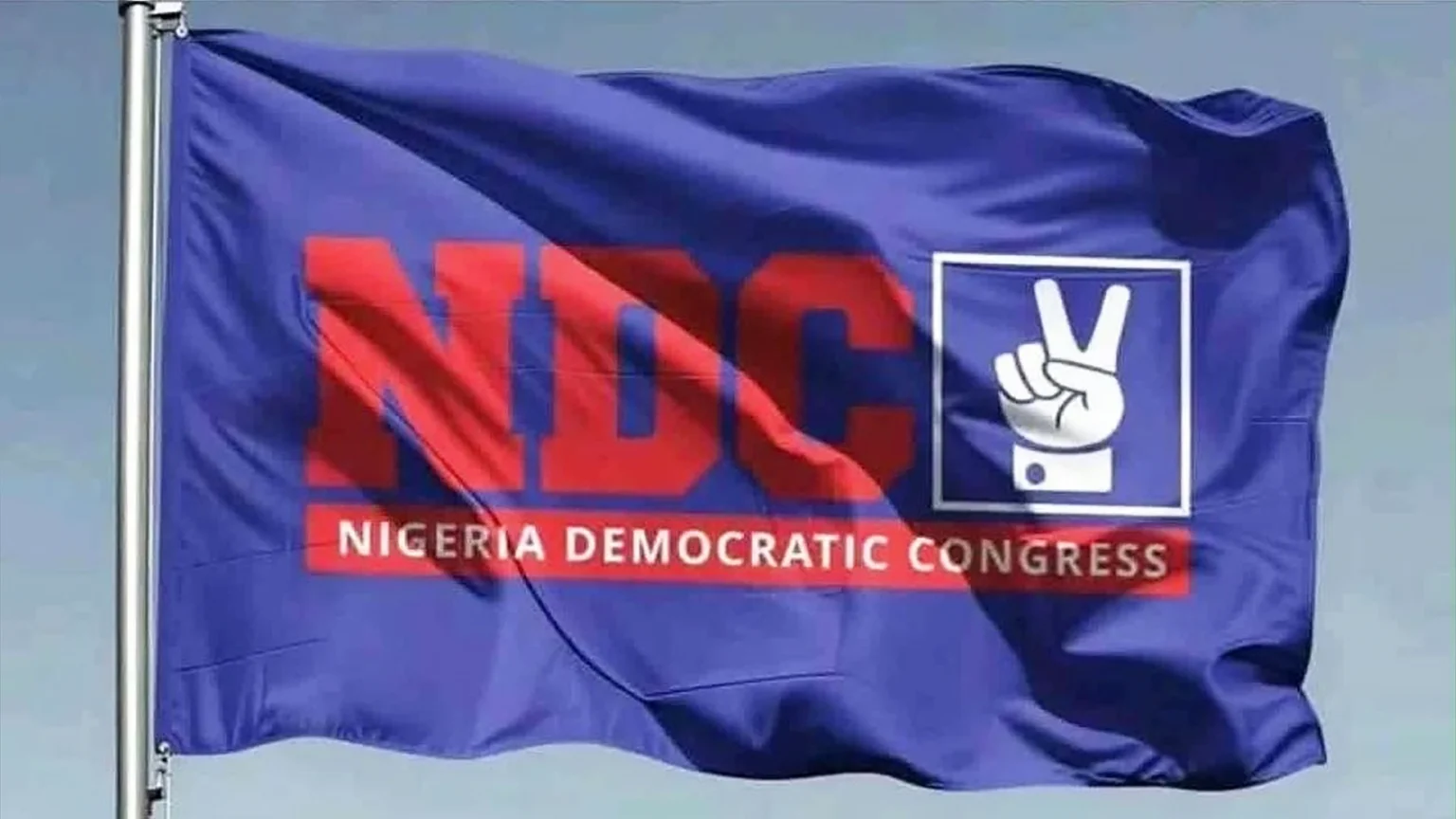
The Nigeria Democratic Congress (NDC) has called for a forensic audit of ₦11.2 trillion recorded in the Nigerian National Petroleum Company Limited’s (NNPC) 2025 audited financial statements as other receivables from the Federation, demanding a detailed account of how much was spent on protecting the country’s oil and gas infrastructure.
The opposition party said the financial disclosure raised questions about the management of petroleum revenues, particularly the scale of funds associated with energy security operations at a time when Nigeria continues to grapple with insecurity and competing demands for public resources.
In a statement issued on Tuesday, November 17, 2026, by its National Campaign Council spokesperson, Dr Chiogo Constance Ikokwu, the NDC questioned the transparency of the expenditure and demanded disclosure of payments made to private contractors, the services provided and the results achieved.
The party argued that the ₦11.2 trillion figure was more than twice the ₦4.91 trillion allocated to all defence and security agencies in the 2025 budget and more than three times the ₦3.10 trillion allocated to the Ministry of Defence for the Army, Navy and Air Force combined.
It described the financial arrangement as inadequately explained and called for a forensic examination of the accounts to establish the purpose and beneficiaries of the funds.
The NDC also demanded disclosure of funds released for military equipment and troop welfare in 2025 and 2026, as well as an end to what it described as off-budget deductions from oil revenues.
However, an examination of NNPC’s audited financial statements shows that the ₦11.2 trillion figure requires a more precise explanation.
NNPC’s 2025 audited financial statements, released in September 2026, recorded ₦11.201 trillion under the category of ‘Other Receivables from Federation’ as of December 31, 2025.
The amount represented an increase from ₦8.84 trillion recorded under the same category in 2024, a rise of approximately ₦2.36 trillion, or 26.7 per cent.
According to Note 24.2 of the financial statements, the receivables relate to advances to the Federal Government and costs incurred by NNPC in protecting the country’s oil and gas assets under an approved arrangement between the company and the government.
The distinction is important because the ₦11.2 trillion is a balance recorded as money owed to NNPC by the Federation. It should not automatically be interpreted as ₦11.2 trillion in fresh cash payments to pipeline surveillance companies during 2025.
The accounts do not provide a separate breakdown showing how much of the balance represents advances to the government and how much relates specifically to oil and gas security operations.
This absence of a detailed breakdown is at the centre of the transparency concerns raised by the opposition.
The financial statements also contain a separate disclosure concerning energy security costs, which has contributed to confusion surrounding the figures.
NNPC recorded approximately ₦8.67 trillion in outstanding energy security cost receivables at the end of 2024.
The company explained that the balance was subsequently reconciled against royalties, taxes and dividends due to the Federation. The reconciliation exercise was completed in September 2025.
Consequently, NNPC recognised no new energy security expense in 2025, compared with ₦7.13 trillion recognised in 2024.
The reconciliation reduced the total receivables from the Federation from approximately ₦17.51 trillion in 2024 to ₦11.20 trillion in 2025.
The figures show why the different categories must not be combined or presented as separate payments to contractors.
They also raise questions about the accounting arrangements through which the national oil company incurs expenses on behalf of the Federation and subsequently recovers them.
While NNPC has explained the general framework behind the arrangement, the published figures do not establish the individual transactions, contractors, payment dates and specific services responsible for the ₦11.2 trillion balance.
Nigeria has relied on private security contractors and other arrangements to protect oil pipelines and petroleum infrastructure against crude oil theft, vandalism and production disruptions.
One prominent arrangement is the pipeline surveillance contract awarded to Tantita Security Services Nigeria Limited, a company linked to Government Ekpemupolo, popularly known as Tompolo, in 2022.
The contract attracted public attention because of its reported financial value and the involvement of private contractors in protecting strategic national assets.
However, the existence of the Tantita contract does not establish that the entire ₦11.2 trillion recorded in NNPC’s accounts was paid to the company or other pipeline surveillance contractors.
The available audited figures do not provide a comprehensive contractor-by-contractor breakdown of the receivables.
Establishing the actual beneficiaries would require access to the relevant contracts, payment records, invoices, procurement approvals and performance assessments.
The government and NNPC would also need to clarify how contractors are selected, how their services are evaluated and what procedures are used to verify that public funds correspond to work delivered.
The financial disclosures come as Nigeria continues efforts to increase crude oil production and reduce losses associated with illegal bunkering, pipeline vandalism and other disruptions.
NNPC has previously defended its integrated security programme, arguing that improved protection of petroleum infrastructure has contributed to increased production and the recovery of previously disrupted oil assets.
The company’s 2025 financial statements reported average crude oil and condensate production of approximately 1.77 million barrels per day, its highest level in five years.
It also reported profit after tax of ₦7.2 trillion, compared with ₦5.4 trillion in 2024.
These improvements provide an important context for evaluating the security arrangements. However, increased production alone does not establish whether the amount spent on security represents value for money.
A proper assessment would require comparing expenditure with measurable results, including reductions in crude oil theft, pipeline attacks, production interruptions and losses across the petroleum value chain.
It would also require determining whether alternative technologies and more transparent procurement arrangements could deliver similar or better results at lower costs.
The NDC has outlined three major demands in response to the disclosures.
First, it wants an immediate forensic audit of the ₦11.2 trillion receivables, including full disclosure of payments to private contractors and an explanation of outstanding financial claims.
Second, it wants the Federal Government to publish details of funds released for military capital equipment and troop welfare in 2025 and 2026.
Third, it is demanding an end to what it describes as off-budget deductions, insisting that oil revenues should be remitted to the Federation Account and subjected to the appropriate budgetary and legislative oversight.
The party acknowledged that protecting oil pipelines and other petroleum infrastructure is essential to Nigeria’s economic security but argued that the scale of expenditure requires stronger accountability.
It also advocated greater use of fibre-optic sensors, surveillance drones, satellite radar and transparent host community security arrangements to improve monitoring and reduce the cost of protecting oil assets.
Questions NNPC and the government must answer
Beyond the political disagreement, the financial disclosure raises important questions about public accountability and the management of Nigeria’s petroleum resources.
How much of the ₦11.2 trillion represents actual expenditure on pipeline and oil infrastructure protection, and how much relates to advances made to the Federal Government?
Which private companies and contractors received payments under the security arrangements, how much did each receive and what specific services were delivered?
What procurement processes were followed in awarding the contracts, and which government agencies independently verified the work before payments were approved?
How much has the security programme reduced crude oil theft, pipeline vandalism and production losses, and what independent evidence supports the claimed improvements?
NNPC and the Federal Government also need to explain the reconciliation of the earlier ₦8.67 trillion energy security receivable against royalties, taxes and dividends, including the agencies involved and the underlying documentation.
These questions are particularly important because petroleum revenues remain a major source of funding for government activities across the federation.
While securing oil and gas infrastructure is a legitimate national priority, the scale of public financial claims associated with such operations makes transparency indispensable.
The NDC’s demand for an audit has therefore brought renewed attention to an issue that extends beyond party politics: whether Nigerians can independently establish how much is being spent to protect the country’s oil assets, who receives the money and whether the expenditure delivers measurable benefits.
Until a detailed breakdown of the receivables, contractor payments and security results is made public, the ₦11.2 trillion disclosure will continue to raise questions about the management of Nigeria’s petroleum resources.


-

 Featured5 days ago
Nigeria’s youth unemployment paradox: Graduates struggle as millions survive in informal jobs
-
 Business1 week ago
Fuel price: Our eyes on you, FCCPC tells oil marketers
-

 Business5 days ago
Nigerian Banks earn N521.8bn from E-banking, card fees in nine months
-
 Business1 week ago
Petrol import cost drops to N1,164 per litre as crude oil prices decline
-

 Latest1 week ago
2027 elections: Former INEC commissioner warns against ‘Rig and Die’ slogan, says violence undemocratic
-

 Latest5 days ago
Dalung claims ‘message from Buhari’s grave’ urges Nigerians to vote Atiku in 2027
-
 Latest1 week ago
2027: Donald Duke offers to step down for consensus opposition candidate
-

 Energy5 days ago
Nigeria’s power crisis deepens as ₦639bn unpaid gas debt threatens electricity supply