
Crime
Delta campaign killings: Four dead as political violence threatens Nigeria’s 2027 elections

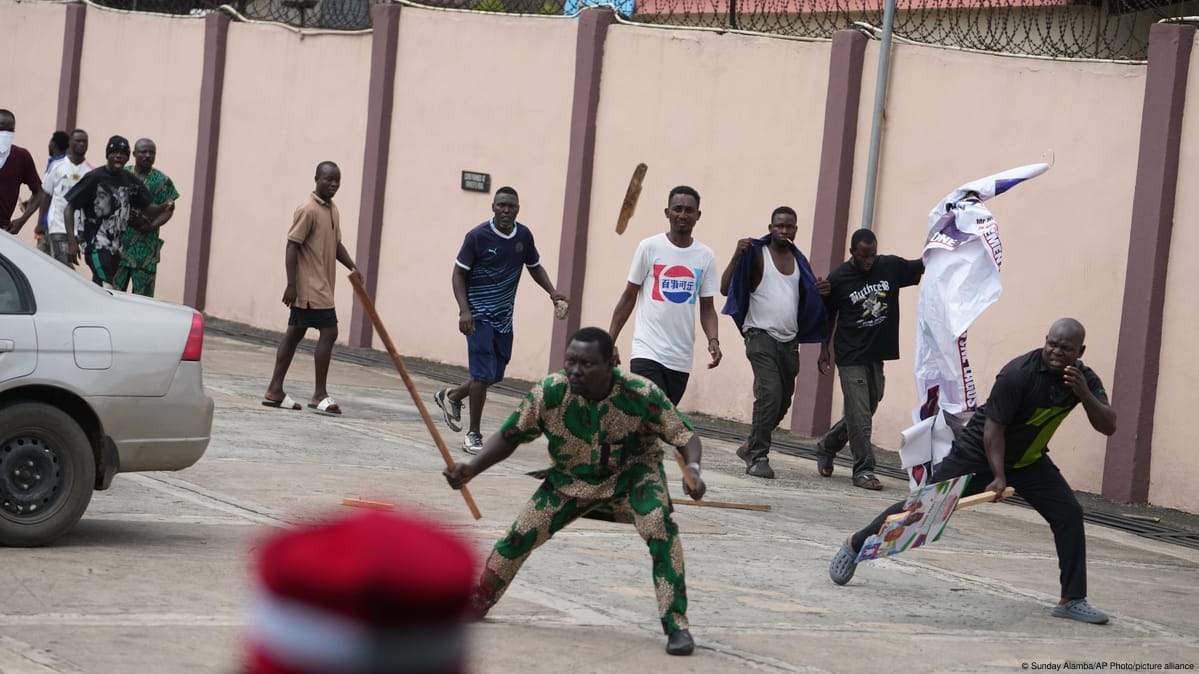
Omo-Agege escapes attack as gunmen target campaign entourage; INEC’s ‘rig and die’ warning exposes growing dangers ahead of polls
The killing of four people during an attack on the campaign entourage of former Deputy Senate President, Ovie Omo-Agege, in Delta State has brought the dangers of escalating political hostility into sharp focus, raising fresh concerns about the safety of political actors and voters ahead of Nigeria’s 2027 general elections.
The attack, which occurred on Monday, November 23, at Uduere community in Ughelli North Local Government Area, was not merely another violent incident in a country struggling with insecurity. It was a disturbing indication of how political competition can become deadly when intolerance, intimidation and unresolved rivalries are allowed to flourish.
Omo-Agege, who is seeking election to the Delta Central Senatorial District under the Nigeria Democratic Congress (NDC), reportedly escaped unhurt when gunmen opened fire on his supporters during a campaign visit. Four people were killed, while several others sustained gunshot injuries.
Among the deceased was Moses Anaughe, a former member of the Delta State House of Assembly and a member of the campaign organisation.
The circumstances surrounding the attack, particularly the identities of the perpetrators, their motives and whether the incident was politically motivated, remain subjects for investigation. However, the scale of the casualties and the fact that a political campaign gathering was targeted should concern every stakeholder in Nigeria’s democratic process.
Political rivalry and the danger of unchecked hostility
More troubling are allegations by Omo-Agege’s camp that the assailants were shouting his name and threatening to kill him during the attack.
READ ALSO; Delta Killings: Falana blames political violence on culture of impunity
The former deputy Senate president reportedly credited his security escorts with saving his life. His campaign organisation has also made allegations involving political figures in Delta State.
These claims, however, must be subjected to independent investigation. Allegations against individuals or political groups cannot be treated as established facts without credible evidence. Equally, political influence must not be allowed to shield anyone found to have participated in planning, financing or executing the attack.
The responsibility of the police is to establish what happened, identify those behind the killings and determine whether the attack was connected to political disagreements, communal tensions or other criminal motives.
The Delta State Government has responded by imposing a dusk-to-dawn curfew across Ughelli North Local Government Area, while the police have announced investigations into the incident.
Although the government’s condemnation and assurances that perpetrators will be brought to justice are welcome, Nigerians have witnessed similar reactions following previous political killings.
The critical question is whether this investigation will produce arrests, credible evidence and successful prosecution, or whether the incident will eventually disappear into the country’s familiar cycle of condemnation without accountability.
INEC’s warning: Is Nigeria heading towards another violent election?
The Delta killings have also assumed greater significance because they occurred on the same day the Independent National Electoral Commission (INEC) raised concerns about threatening political rhetoric ahead of the 2027 general elections.
INEC National Commissioner, Mohammed Kudu Haruna, warned against the use of the slogan “rig and die”, cautioning that such language could create an atmosphere of hostility capable of endangering voters, electoral officials, party agents and observers.
His warning highlighted a dangerous dimension of Nigerian electoral politics: the tendency of political actors and their supporters to interpret every disagreement, delay in announcing results or technical challenge as evidence of electoral manipulation.
When such perceptions are amplified by inflammatory statements, angry crowds can become difficult to control. Rumours can trigger violence, while innocent citizens may become targets simply because they are associated with a particular political party or candidate.
READ ALSO; Two teachers killed, 13 abducted in separate Zamfara attacks
INEC’s position is that electoral grievances must be addressed through established legal channels rather than violence.
This is an important message that political parties, candidates and their supporters must take seriously. Elections are constitutional exercises through which citizens choose their leaders. They are not declarations of war between rival political camps.
Security agencies must act before the next attack
One of the major weaknesses in Nigeria’s response to political violence has been the tendency to concentrate on investigations after lives have already been lost.
The Delta incident raises questions about intelligence gathering, threat assessment and security arrangements for political campaigns, particularly in areas where political tensions may be heightened.
Security agencies must develop effective strategies for identifying potential flashpoints, monitoring threats and ensuring adequate protection for candidates, campaign officials and ordinary supporters.
Political rallies and campaign movements should not be treated as routine gatherings where security arrangements are left to chance. The police and other relevant agencies must work with political parties to assess risks and prevent confrontations before they escalate.
The investigation into the Uduere attack must also be transparent and insulated from political interference. Those responsible, whether directly involved in the shooting or involved in planning and financing the operation, must face the law if sufficient evidence establishes their culpability.
Political leaders cannot escape responsibility
Beyond the security agencies, political parties and their leaders have an equally important responsibility.
Political leaders must understand that the language they use, the conduct they tolerate and the behaviour of their supporters can influence the atmosphere surrounding elections.
READ ALSO; Beyond APC convoy attack: Nigeria’s troubling history of political violence [VIDEO]
No political ambition justifies intimidation, threats or attacks against opponents. Parties must take disciplinary action against members who promote violence and publicly distance themselves from individuals who seek to turn political disagreements into physical confrontations.
The Federal Government, state governments, INEC and security institutions must also demonstrate that protecting citizens’ constitutional rights takes precedence over political interests.
The courts, for their part, must ensure that electoral and political offences are handled promptly and fairly, without regard to the status or connections of those involved.
Four deaths must not become another forgotten statistic
Nigeria’s democratic journey has been repeatedly undermined by election-related violence, political intimidation and the use of criminal elements to settle political disputes.
The approach of the 2027 elections makes the latest incident particularly concerning. Political competition is expected to intensify as parties begin positioning candidates, mobilising supporters and seeking control of elective offices.
But the right to contest an election, campaign for a candidate or support a political party is guaranteed under the Constitution. Citizens must be able to exercise these rights without fearing that their political choices could cost them their lives.
The deaths in Ughelli North should therefore serve as a national warning rather than remain a Delta State security incident.
The four victims deserve more than expressions of sympathy. Their families deserve justice, the injured deserve support, and the public deserves answers about how the attack happened and who was responsible.
The 2027 general elections must provide an opportunity for Nigerians to freely choose their leaders, assess competing political programmes and hold public office seekers accountable. They must not become an avenue for political score-settling, intimidation or bloodshed.
Democracy loses its meaning when citizens are afraid to participate in the political process. The measure of a credible electoral system is not simply the ability to organise elections, but also the ability to guarantee that people can participate freely and safely.
Nigeria must not wait for another campaign entourage to be attacked or more innocent citizens to be killed before taking preventive action.
The message from the Delta killings is unmistakable: the battle against electoral violence must begin before the campaigns intensify, not after the next tragedy.


-
 Crime6 days ago
Kwara bandit deal under scrutiny as footage shows security operatives negotiating with terrorists [VIDEO]
-

 Business4 days ago
NGX loses N3trn in three days as Dangote Cement, Aradel, Banks lead sell-off
-

 Latest4 days ago
Tinubu’s 2027 re-election bid: New promises, old questions and an unfinished record
-
 Latest4 days ago
2027: Dele Momodu predicts Peter Obi will defeat Soludo’s Tinubu mobilisation in Anambra
-

 Entertainment1 week ago
2027 Grammys: Asake, Wizkid, Tems, Ayra Starr lead Nigerian nominees in African music category
-

 Football6 days ago
Argentine teen footballer Abel Nunez dies after suffering head injury during match
-

 Latest7 days ago
2027 Elections: 66% of Nigerians feel no connection to political parties, 89% fear vote-buying – Survey
-

 Football4 days ago
Infantino hails Oborevwori over Warri Stadium remodelling, eyes major FIFA events