
Business
Nvidia shares surge over 30% as Jensen Huang returns as CEO

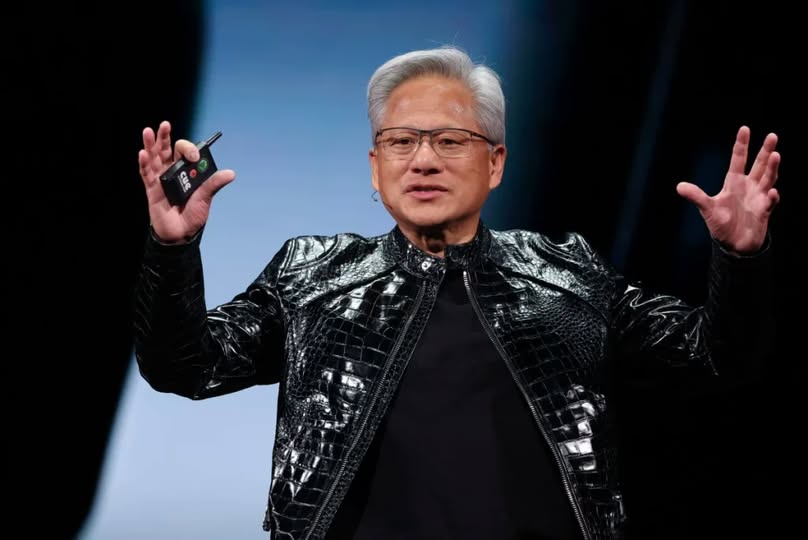
Shares in US technology giant Nvidia surged more than 30 per cent on Monday after its board reinstated co-founder Jensen Huang as president and chief executive officer, following intervention by President Donald Trump.
The company’s stock rose about 33 per cent at the opening bell, reaching $165.57, as investors responded to Huang’s return after an 11-day absence from the top position. The rally marked one of Nvidia’s strongest trading sessions, although the share price remained below its record high of $239.24 reached the previous month.
Nvidia announced on November 23 that its board had unanimously approved Huang’s immediate reinstatement as president, CEO and board director. The decision followed discussions with Huang, with the board saying it was satisfied with his candour and ability to lead the company.
In its announcement, Nvidia said the board had received input from senior US government officials and was confident that Huang’s return did not pose a national security risk.
Huang stepped down on November 12 following revelations about his relationship with Chinese businesswoman Alice Huang, who has been suspected by US officials of having links to Chinese intelligence. The allegations triggered scrutiny of Nvidia’s dealings and concerns about the possible diversion of advanced artificial intelligence chips to China.
The US Justice Department has been investigating potential export-control violations involving Megaspeed, a Singapore-based cloud computing company where Alice Huang was an executive. However, the department has not publicly concluded that she was a Chinese spy or that Jensen Huang committed any offence.
The Nvidia board had initially indicated that it did not intend to reinstate him, but reversed its position after further discussions and pressure from Trump.
The US president publicly acknowledged his role in the decision, saying he had spoken directly with Nvidia’s board and helped secure Huang’s return. Trump argued that losing an executive with Huang’s expertise would be a greater risk to American technological competitiveness, particularly as the United States competes with China in artificial intelligence.
He welcomed the board’s decision, describing it as the correct move for the company and the American economy.
Huang, in a statement following his reinstatement, said he was honoured to return and would approach the responsibility with renewed commitment.
Despite the market’s positive reaction, Huang’s return has intensified questions in Washington about national security, corporate governance and the administration’s influence over a major publicly traded technology company.
Lawmakers from both political parties have called for further explanations about the circumstances surrounding the reinstatement and the alleged movement of advanced Nvidia chips to China.
Republican Senator Tom Cotton said the controversy was not resolved by Huang’s return, arguing that Congress still needed answers about the alleged smuggling and diversion of Nvidia products for purposes linked to China’s military.
Several Republican committee leaders also said the board’s internal investigation and decision to reinstate Huang did not remove the need to examine national security concerns.
Democratic lawmakers questioned the extent of Trump’s involvement in the company’s decision-making. Representative Robert Garcia said the president’s intervention raised serious national security and corruption questions.
The Senate Banking Committee has scheduled a public hearing with Huang for December 3, while three House committees are expected to conduct interviews with him and other Nvidia officials in early December.
The scrutiny centres partly on whether advanced Nvidia chips reached Chinese companies in violation of US export restrictions and whether government officials adequately assessed the risks before supporting Huang’s return.
Nvidia’s reinstatement of its co-founder has therefore offered investors immediate reassurance about the company’s leadership, but it has not ended the political and regulatory controversy surrounding its business with China.
The coming congressional hearings are expected to bring further attention to the relationship between the technology industry, US national security policy and the government’s role in corporate decisions.


-

 Crime6 days ago
Kwara bandit deal under scrutiny as footage shows security operatives negotiating with terrorists [VIDEO]
-

 Business4 days ago
NGX loses N3trn in three days as Dangote Cement, Aradel, Banks lead sell-off
-
 Latest4 days ago
Tinubu’s 2027 re-election bid: New promises, old questions and an unfinished record
-

 Entertainment1 week ago
2027 Grammys: Asake, Wizkid, Tems, Ayra Starr lead Nigerian nominees in African music category
-
 Latest4 days ago
2027: Dele Momodu predicts Peter Obi will defeat Soludo’s Tinubu mobilisation in Anambra
-

 Latest7 days ago
2027 Elections: 66% of Nigerians feel no connection to political parties, 89% fear vote-buying – Survey
-

 Football6 days ago
Argentine teen footballer Abel Nunez dies after suffering head injury during match
-
 Football4 days ago
Infantino hails Oborevwori over Warri Stadium remodelling, eyes major FIFA events