
Business
Under Buhari, Nigeria’s debt portfolio increases by N9.61 trillion

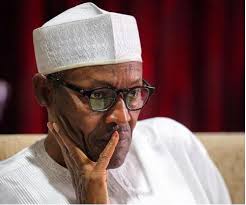
Nigeria’s debt increased by N9.61 trillion between mid-2015 and end of 2017, The Debt Management Office has said.
In a statement released by the DMO, Nigeria’s external debt stood at 26.64% as at the end of 2017 compared to the 20.04% that was recorded in 2016. Domestic debt, however, decreased, standing at 73.36% less than the 79.96% that was recorded in 2016.
This 79.25% increase occurred during President Muhammadu Buhari’s presidency. It should be recalled that Nigeria’s debt as at June 30th, 2015 was N12.12 trillion, a sharp contrast to the N21.73 trillion that was recorded by the end of 2017.
The Federal Government of Nigeria is single-handedly owing a total of N12.59 trillion in domestic debts, while the 36 states and the Federal Capital Territory also owe N3.35 trillion local debt. These figures, coupled with the N5.79 trillion jointly owed by the states, the FG and the FCT, put Nigeria’s total debt (as at December 31st, 2017) at N21.73 trillion.
According to the DMO, the increase in Nigeria’s foreign debt was deliberate in that it was aimed at restructuring the debt mix as a way of minimising the high-interest rates of local debts.
The key benefits of the restructuring of the portfolio are the reduction of the government’s debt service costs, lowering of interest rates in the domestic market and improved availability of credit facilities to the private sector.
Recall that Nigeria repaid N198 billion Nigerian treasury bills in December 2017 with the proceeds of Eurobond issuances. “We have continued further implementation of the strategy in 2018, with the issuance of the $ 2. 5bn Eurobonds in February 2018, the proceeds of which is being used to repay maturing domestic debt , starting with N130 billion ntbs repaid on march 1 , 2018,” the DMO said.
The Debt Management Office went further to state that Nigeria’s debt is within the sustainable threshold of 56% recommended for developing countries. More so, the borrowed monies were intended for developmental purposes, the DMO said. Asides helping to finance Nigeria’s budget, however, the debt also represented about 18.2% of Nigeria’s Gross Domestic Product in the past year.



-
 Latest6 days ago
Israel marks 3 years since October 7 Hamas attack amid Gaza strikes, election debate
-

 Energy6 days ago
Fuel Battle: Dangote, marketers and government clash over petrol imports
-

 Energy1 week ago
Petrol, diesel prices rise 86% in 2026 as costs hit fresh highs
-

 Football1 week ago
Nigeria’s World Cup exit under spotlight as FIFA’s DR Congo files emerge
-

 Latest1 day ago
Full List: Meet the 2026 Nobel Prize winners across six categories
-

 Energy1 week ago
Has Iran lost control of the Strait of Hormuz? Oil flows rebound as war disruptions persist
-

 Latest1 week ago
US Court set to rule on release of FBI, DEA records on Tinubu
-

 Business1 week ago
Nigerian investors at a crossroads as fixed-income yields slide