
Comments and Issues
The brouhaha about the trial of minors

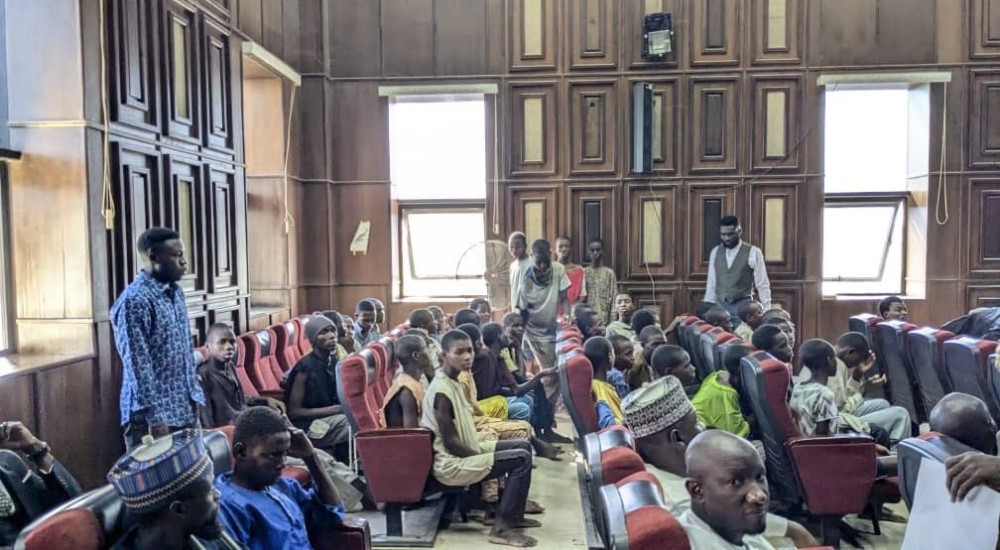
Was it right to try minors for waving the national flags of other countries? Was this an act that constitutes a criminal offence? Was there mens rea (intention) and actus reus (physical consummation of the intention)? These are some of the questions generated by the recent arraignment of minors that rightly generated national ruckus. Let us briefly interrogate these questions.
Treason is defined in section 410 of the Penal Code as “levying war against the State” with the intention of “over-awing the (President)”. It is punishable with death. Treasonable felony (or “crimes”), on the other hand (as defined in section 412 of the Penal Code), manifests in, amongst others, an overt act done with the intention of either compelling the government to effect a change of policy, to intimidate, or to overawe the Legislature or to instigate a foreigner to invade Nigeria. It is punishable with life imprisonment.
It must be noted that while the Penal Code applies in the Northern part of Nigeria, the Criminal Code (and it’s variants) applies in the South. Provisions similar to those under the Penal Code also exist in the South
It appears to me too far-fetched to charge a person with treason simply for merely waving a foreign flag in Nigeria, without more. There must be something overt, capable of igniting the intention, otherwise it will amount to criminalising a person’s right to freedom of speech and expression which is guaranteed under the 1999 Constitution. Instigating our military (or that of another country) to overthrow the government would clearly constitute such an act; but nothing of the sort was shown in the case of the minors.
ALSO READ: Freed minors recall harrowing detention experience after #EndBadGovernance protests
It must be pointed out that no law prohibits the prosecution of a person for violating any law – including treason or treasonable felony – unless he or she is less than 7 years old or if, between the ages of 7 and 12, he lacks the requisite maturity and capacity to understand the nature and consequences of his or her acts. See Section 50 of the Penal Code.
Subject to such express exceptions provided, such a person of less than 18 years of age should only be arraigned before a Family Court established under the Child Rights Act or Law (defined as a High Court judge or Magistrate sitting with 2 assessors); but certainly not while they are exercising their regular jurisdiction. All persons except court staff, the accused, their counsel and family members are excluded from such proceedings under sections 149, 150, 151, 152 and 162 of the Child Rights Act which is in force in Abuja. Similar provisions exist in the Child Rights Laws of various States that have domesticated the Act.
It therefore follows that the Police should have charged the ‘underage’ defendants in either Kaduna or Kano under the relevant laws of those States instead of dragging them to Abuja. The trial in Abuja was farcical and contrary to law. It was right and proper that same was discontinued.


-

 Latest7 days ago
US Immigration fees rise from October 16 as USCIS announces new charges
-
 Latest2 days ago
Israel marks 3 years since October 7 Hamas attack amid Gaza strikes, election debate
-

 Business6 days ago
Nigeria’s $55bn reserves raise fresh questions over naira value
-

 Health6 days ago
Florida sues Pfizer over deceptive COVID-19 vaccine marketing
-

 Business1 week ago
Tuoyo Erikowa wins digital marketing personality of the Year at 2026 EDGE awards
-

 Crime6 days ago
From camp to captivity: How kidnappers now target NYSC Corps members on highways
-

 Featured6 days ago
2027: Can Nigeria’s opposition still unite behind a single presidential candidate?
-
 Crime6 days ago
Fulani Militia leader linked to Christian killings arrested in Plateau