
Business
GTBank pays lowest interest rate to time depositors – CBN

By Odunewu Segun
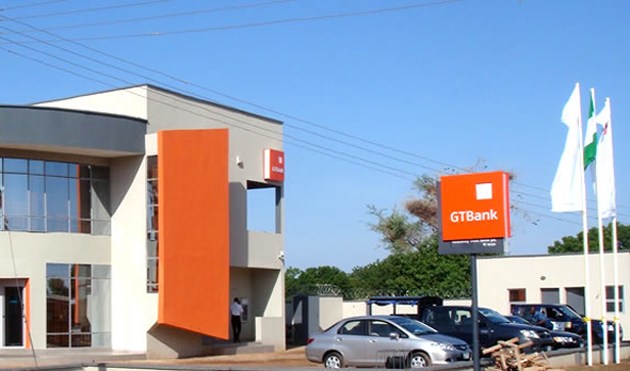
GTBank pays the lowest interest rate of 7.13 per cent per annum to depositors on time deposit, a report by the Central Bank of Nigeria has revealed.
The report titled: ‘Deposit and Lending Rates in the Banking Industry’ and obtained by National Daily, showed that while some banks lend cheaply to prime borrowers, their maximum lending rate to other category of borrowers went as high as 49.50 per cent per annum for the agricultural sector.
The CBN’s data showed that Unity Bank pays the highest average interest rate of 16 per cent per annum to depositors on time deposit.
Guaranty Trust Bank Pls’ average interest rate on demand deposit is 2.90 per cent; savings deposit at 4.20 per cent and time deposit at 7.713 per cent. The bank lends to agriculture at seven per cent, prime, 21 per cent maximum rate. Manufacturers borrow from GTBank at 12 per cent, prime, 25 per cent maximum.
Average rate for demand deposit at Union Bank is 0.50 per cent; 4.20 per cent for savings and 12.48 per cent for demand deposit. The bank however, lends to agriculture at 23.50 per cent, prime, and has 49.50 per cent as its maximum lending rate for the sector.
For FirstBank, its average interest rate on demand deposit is zero per cent; 4.20 per cent average interest rate for savings deposit and 7.50 per cent for time deposit. The bank lends to agriculture at nine per cent, prime, 27 per cent maximum; manufacturing borrows at 20 per cent, prime, and 28 per cent maximum.
For United Bank for Africa (UBA PLc), its average interest rate on deposit is 0.28 per cent; the lender pays 4.20 per cent on savings deposit, and 10.86 per cent for time deposit. The bank lends to agriculture at seven per cent, prime, and 25 per cent, maximum; manufacturing, 19 per cent, prime and 29 per cent maximum.
Access Bank’s average interest rate on demand deposit is 0.05 per cent; savings deposit is 4.20 per cent while time deposit is 11.84 per cent. The bank’s prime lending rate to manufacturing is 14 per cent; while 30.5 per cent is its maximum lending rate.
Speaking on the lending rates, Director-General, Lagos Chamber of Commerce and Industry, Muda Yusuf, said such rates further depresses investment and hurt the economy.
According to him, it further alienates and causes disconnection between the banks and their customers. “If you want the private sector to be engine of growth, you have to deal with interest rate. Lending to customers at such rates will further increase the level of default of borrowers because the higher the lending rate, the higher the default rate”.
On banks’ claims that their cost of operations is high, he said the apex bank can also reduce the Cash Reserve Ratio and Monetary Policy Rate (MPR) to reduce cost of funds for banks.














-

 News5 days ago
UK, Canada pledge closer cooperation on trade, defence and AI
-

 Business1 week ago
Abuja gears up for Jetour T2’s rugged-luxury experience
-

 Business6 days ago
Tinubu’s economic reforms face public confidence test as cost-of-living crisis persists
-

 Business6 days ago
Dangote: Petrol price gap fuels smuggling as Nigeria faces fresh pump price surge
-

 Business4 days ago
Dangote Refinery IPO: Can small investors really make money from the shares?
-

 Comments and Issues5 days ago
Wavy fuel prices and deepening cost-of-living crises in Nigeria
-

 Football4 days ago
FULL LIST: Eight stadiums to host 2027 Women’s World Cup in Brazil
-

 Latest6 days ago
Court sets 7-day window for Atiku to serve Tinubu in 2027 suit