
Business
Nigeria accounts for 30.5% of $50bn illicit financial flows in Africa – CISLAC

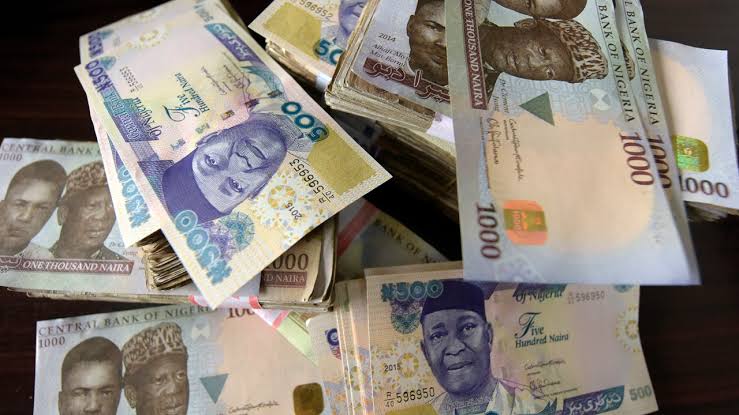
Nigeria is said to account for around 30.5 per cent of the $50bn lost every year in Africa due to Illicit Financial Flows (IFF).
Director of Legal for Civil Society Legislative Advocacy Centre (CISLAC) Adesina Oke, disclosed at a stakeholders’ meeting on Sunday in Lagos.
Oke explained that out of the 15.2 billion dollars losses, the oil-dominated extractive industry alone represented 95.2 per cent of the figure, amounting to 14.5 billion dollars (N4.44 trillion).
Oke regretted that bills that could have curbed and eventually stopped these loses had been pending before the National Assembly.
He listed some of the bills and policies to include: the Petroleum Industry Bill (PIB), Proceeds of Crime Bill, Whistle Blower Protection Bill and the policy to know the beneficial owners of registered companies.
“The truth is that there are so many problems confronting the extractive industry in Nigeria which has given birth to Illicit Financial flows. From the discussions there are so many gaps, even in terms of our laws; there are so many laws that could have assisted Nigeria in combating IFFs in the extractive sector.
“Laws like the PIB are yet to be passed, the Proceed of Crime Bill is yet to be passed, and we also have the Anti-money laundering and other anti-corruption bills.
Oke pointed out that those pushing for the bill to be passed might have to start afresh if the 8th National Assembly failed to pass the bills before it winds up in June.
He added that the Civil Society Groups and other stakeholders were already preparing to take on the 9th Assembly if the 8th Assembly adjourned without passing the bills.
“We had this dialogue to prepare us for the 9th Assembly so that we can immediately take off in ensuring that those bills are pushed and passed.
“The PIB has come a long way and we have been struggling to ensure these bills are passed, but it has been going front and back.
“It is not even as though what is contained in the bill is all that is desired, but it is better to have a law in place that you can amend than not to have any law at all.
“As it is now, those things that are primary are the ones that are being pushed so that we can have a PIB law in place then the amendments can come later.
“If these laws are in place, when something is not being done the way it ought to be done you can question; but when there are no laws, there is nothing you can do,” he said.
Oke also called for the use of technology to monitor and track the extraction and sale of oil, urging the Federal Government to emulate Saudi Arabia that invest in technology to track its oil.


-

 Latest4 days ago
Full List: Meet the 2026 Nobel Prize winners across six categories
-
 Featured1 week ago
103 Million Voters: What does INEC’s new register say about Nigeria’s population?
-

 Football3 days ago
Premier League Matchweek 7: Five Fixtures That Could Shape the Weekend
-

 Latest3 days ago
Umahi defends Lagos-Calabar highway route changes amid public outcry
-

 Business1 week ago
The Ministry of Commerce of Loveworld gets a $1 million boost for new investment fund at LTIF 2026 to promote Trade in Ghana
-

 Features1 week ago
Edo’s 2.5 million vote promise: Can the numbers match the politics?
-

 Business2 days ago
Dangote Refinery IPO Extension: Was the 70% subscription report overhyped?
-
Business2 days ago
Dangote Refinery IPO: 70% Subscription claim meets fourfold demand assertion as investors seek clarity