
Featured
103 Million Voters: What does INEC’s new register say about Nigeria’s population?

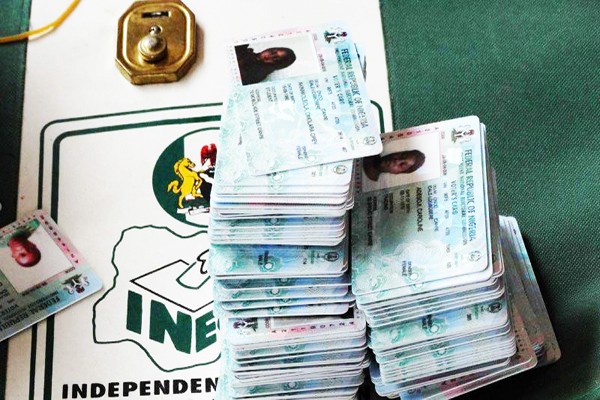
Nigeria’s electoral landscape has entered a new phase ahead of the 2027 general elections, with the Independent National Electoral Commission (INEC) announcing that the National Register of Voters has risen to 103,428,715.
The figure, disclosed by INEC Chairman Prof. Joash Amupitan following the completion of the Continuous Voter Registration exercise and biometric clean-up, represents a major expansion of Nigeria’s potential electorate. INEC said the three phases of the registration exercise produced 10,772,421 new registrations.
But behind the headline figure lies a more fundamental question:
How does 103 million registered voters compare with Nigeria’s actual population?
The answer is less straightforward than the headline suggests because Nigeria does not currently have a recent official population figure.
The 103 million figure
INEC’s latest register stands at 103,428,715 registered voters.
The commission said the figure followed the conclusion of its three-phase Continuous Voter Registration exercise and the final Automated Biometric Identification System clean-up. The new register includes 53,528,218 male voters, representing 51.75 per cent, and 49,900,497 female voters, representing 48.25 per cent.
The register is considerably larger than the approximately 93.5 million voters recorded for the 2023 general elections.
It also means Nigeria now has one of the world’s largest electoral populations.
But registered voters are not the same thing as the total population.
So, what percentage of Nigerians are registered voters?
This is where the numbers become complicated.
Nigeria’s last official population census was conducted in 2006. The National Population Commission’s historical records put the 2006 population at about 140 million. The NPC has acknowledged that the country has not conducted another completed national census since then.
If the 103,428,715 registered voters were compared directly with that 2006 official population figure of 140,003,542, the result would be approximately 73.9 per cent.
That would mean nearly three-quarters of Nigeria’s population was registered to vote.
But such a calculation would be highly misleading.
Nigeria’s population has grown substantially since 2006. Therefore, the 2006 census cannot reasonably be used as the denominator for a 2026 voter-population comparison.
Nigeria’s population is now estimated at more than 237 million
The World Bank’s latest population data put Nigeria’s population at 237,527,782 in 2025.
Using that figure as a reference:
103,428,715 ÷ 237,527,782 × 100 = 43.5 per cent.
In other words, the current voter register is equivalent to about 43.5 per cent of Nigeria’s estimated 2025 population.
A separate 2026 population estimate based on United Nations data puts Nigeria’s mid-year population at approximately 242.4 million. Using that estimate, the 103.43 million registered voters would represent about 42.7 per cent of the population.
| Population reference | Population | 103.43m voters as share |
|---|---|---|
| 2006 official census | 140.0m | 73.9% |
| World Bank 2025 estimate | 237.5m | 43.5% |
| 2026 UN-based estimate | 242.4m | 42.7% |
But there is an important catch
Neither 43.5 per cent nor 42.7 per cent means that roughly 43 per cent of Nigerians are eligible to vote.
Nigeria has one of the youngest populations in the world.
Millions of Nigerians are below the constitutional voting age of 18 and therefore cannot register as voters. Consequently, the more meaningful comparison would be between the 103.43 million registered voters and Nigeria’s adult population, rather than the entire population.
That calculation, however, requires reliable and sufficiently current age-disaggregated population data.
This is precisely where Nigeria’s population-data problem becomes significant.
The missing census problem
The 103 million voter register is based on a process designed specifically to identify eligible voters.
Population figures, meanwhile, are derived from census exercises or demographic estimates.
The two systems serve different purposes.
INEC knows how many people have registered to vote. The National Population Commission is responsible for determining the country’s population through census and demographic processes.
But Nigeria’s most recent completed national census remains the 2006 census. The NPC has been preparing for a new Population and Housing Census, but the country still lacks a new completed nationwide census that can provide an authoritative current population count.
This creates an unusual statistical situation: Nigeria now has a voter register containing more than 103 million people, but no equally recent official national headcount against which that figure can be directly measured.
Does 103 million look unusually high?
Not necessarily.
A voter register representing roughly 43 per cent of the total population is not inherently implausible because children make up a large proportion of Nigeria’s population.
The critical question is therefore not whether 103 million is 43 per cent of the population.
The more important question is:
How many Nigerians are actually 18 years or older, and how many of them are registered?
Without a recent census and comprehensive age-disaggregated population data, it is difficult to answer that question with the same level of certainty.
This distinction is particularly important as political parties begin interpreting the register as an indication of their potential electoral strength.
Registered voters are not the same as votes
There is another reason to be cautious about interpreting the 103 million figure.
Being registered does not necessarily mean that a person will vote.
Nigeria’s electoral history shows a substantial gap between registered voters and actual turnout. Voters may fail to collect their Permanent Voter Cards, relocate, remain absent on election day, face logistical or security challenges, or simply decide not to participate.
INEC itself has announced that nationwide PVC collection for the latest registration exercise will begin on October 9, 2026, as the commission continues preparations for the 2027 polls.
The presidential and National Assembly elections are scheduled for January 16, 2027, according to INEC’s official election calendar.
Consequently, the 103 million figure should be understood as the size of the potential electorate, not a prediction of the number of people who will cast ballots.
What the numbers really tell us
The new register is nevertheless politically significant.
Lagos alone has 7,488,633 registered voters, while Kano has 6,570,276 and Kaduna 4,662,640, according to INEC’s latest figures.
The geographical distribution of voters will influence campaign strategies, party mobilisation and presidential calculations ahead of 2027.
But the numbers should not be confused with guaranteed votes.
A candidate cannot claim 10 million votes simply because 10 million people are registered in a particular region. Registered voters can support different candidates, abstain or cast invalid ballots.
The same principle applies nationally.
The bigger question for Nigeria
INEC’s announcement has produced an impressive electoral statistic, but it has also exposed a longstanding weakness in Nigeria’s demographic data.
The country knows, with considerable precision, how many people are currently on its electoral register.
It does not, however, have a comparable, recent official census showing exactly how many people live in Nigeria today.
That gap matters beyond elections.
Accurate population data are essential for planning schools, hospitals, roads, housing, employment programmes, security, healthcare, federal allocations and political representation.
Until Nigeria conducts a new credible census, comparisons between the voter register and the country’s total population will continue to rely partly on projections and estimates.
So, while 103,428,715 registered voters is a legitimate INEC figure, describing it as a particular percentage of Nigeria’s “official population” requires caution.
The most defensible conclusion is that Nigeria has more than 103 million registered voters, while its current total population is estimated at roughly 237–242 million. That places the voter register at approximately 43 per cent of the total population—not because 43 per cent of Nigerians are necessarily eligible voters, but because the denominator includes children and other non-voting residents.
The unanswered question ahead of 2027 is therefore not simply “How many Nigerians are registered?”
It is “How many Nigerians are actually eligible to vote, and what proportion of that eligible population will ultimately turn up at the polling units?”
That is the figure that may matter most when Nigeria goes to the polls in January 2027.


-

 Latest1 week ago
US Immigration fees rise from October 16 as USCIS announces new charges
-
 Latest2 days ago
Israel marks 3 years since October 7 Hamas attack amid Gaza strikes, election debate
-

 Business7 days ago
Nigeria’s $55bn reserves raise fresh questions over naira value
-

 Health6 days ago
Florida sues Pfizer over deceptive COVID-19 vaccine marketing
-

 Crime6 days ago
From camp to captivity: How kidnappers now target NYSC Corps members on highways
-

 Featured7 days ago
2027: Can Nigeria’s opposition still unite behind a single presidential candidate?
-

 Crime6 days ago
Fulani Militia leader linked to Christian killings arrested in Plateau
-

 Energy2 days ago
Fuel Battle: Dangote, marketers and government clash over petrol imports