
Comments and Issues
If it is not milk, stop marketing it as “milk”

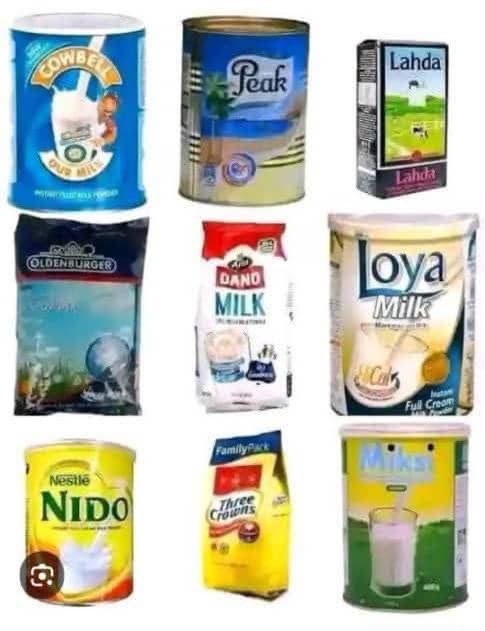
A few days ago, I read a post by a woman who called out all the multinationals “manufacturing” and marketing what we regard in Nigeria as milk, asking them pertinent questions on the drop in quality of what they sell, and also whether what obtains in Nigeria is similar to what obtains in their home countries.
Expectedly, some Nigerians jumped in vehemently defending the multinationals, a behavior that is not surprising to me any longer, having been involved in the thankless job of consumer products interrogations over the last decade.
In Nigeria, about 6 major multinational and commercial companies control the formal dairy market, with FrieslandCampina WAMCO holding a near monopoly of the largest single share of roughly 75%.
Leading with their Peak Full Cream & Instant Powder Milk which they claim is pure cow milk packed with proteins, vitamins, and minerals.
Then they have the Peak Evaporated Milk, Peak Filled Low Cholesterol & UHT Milk, Peak Dairy Creamer and the specialized Peak 4-5-6 targeted for ages 4–6 which they claim is fortified with DHA, and chocolate dairy blends.
They also own the Three Crowns Milk which they claim is endorsed by the Nigerian Heart Foundation (I do not know how some of these nutritional products get their endorsements from health professional bodies; there is an urgent need to investigate some of these claims).
Same company also owns Nunu, Olympic:, Coast, and Friso Milks all coming with various health claims.
They are followed by Chi Limited, makers of Chivita and Hollandia dairy products. Promasidor Nigeria Limited, makers of Cowbell Milk, TG Arla Dairy Products Limited, makers of Dano Milk, Nestlé Nigeria Plc, makers of NIDO, NAN, Carnation and Coffee Mate, then we have Fan Milk PLC makers of Danone.
The unfortunate thing about the Nigerian dairy market is that it is flooded with Fat-Filled Milk Powder (FFMP).
Legally and technically speaking, FFMP cannot and should not be called “Milk.” But we live in a country where anything goes, where these companies are selling, advertising, marketing, and promoting Fat-Filled Milk Powder as Milk.
I know that NAFDAC clarified on this via a press release two years ago, but clarification is not the same as addressing the issue. NAFDAC skirted around the issues some journalists raised.
That’s why I still maintain that Fat-Filled Milk Powder (FFMP) should not be marketed as real milk because it lacks natural dairy fat and is compositionally a processed substitute.
Again, if these European companies cannot market and sell such products as real milk in their countries of origin, why do they do so in Nigeria.
FFMP is made by skimming natural fat out of real milk and replacing it with vegetable oils, such as palm, coconut, or soybean oil. And with the level of adulteration in the system presently, who knows the authenticity of the replacement products being used by these companies.
Moreso, natural milk fats carry essential fat-soluble vitamins (like Vitamins A, D, E, and K); replacing them changes the nutritional profile unless heavily fortified. And under international definitions and European Union regulations, true milk must come solely from animal sources with nothing added or extracted, classifying FFMP instead as a “fat-filled powder” or industrial ingredient.
So when NAFDAC quotes the Codex Alimentaire as the basis for their inaction, the same Codex Alimentaire is being used in Europe to ensure that there is consumer transparency.
And that labeling FFMP loosely as “milk” misleads buyers into thinking they are purchasing whole dairy fat, whereas regulators classify it only as a milk derivative or alternative.
To me, this is not just a labeling quirk; it is a systemic failure that prioritises corporate profit over public health.
Genuine milk is defined as the mammary secretion of milking animals without addition or extraction. FFMP, however, is produced by extracting milk fat and replacing it with vegetable fat, typically palm or coconut oil.
While real milk contains essential milk fat (minimum 26%), FFMP contains at least 28% vegetable fat instead. In Europe, FFMP is not classified as milk and is sold only for industrial use in yogurt or ice cream production.
Agreed that FFMP is not toxic, but it is not nutritionally equivalent to milk. Real milk provides essential vitamins and minerals, whereas FFMP lacks these natural components.
But available research suggests consistent intake may contribute to higher cholesterol levels, increased weight, blood pressure, and cardiovascular issues.
Furthermore, repacked milk powder in Nigerian markets has shown contamination with pathogenic bacteria and fungi, posing serious public health threats.
Many traders mistakenly believe FFMP is healthier or designed for children. This non-disclosure is an indictment on regulators like NAFDAC, which acknowledges FFMP is approved but has failed to address its misleading marketing as “milk”.
In more serious societies, such marketing would be illegal. And advertisement regulators wouldn’t allow such blatant mislabeling and ingenious marketing gimmicks.
The EU strictly prohibits plant-based or substitute products from using dairy terms like “milk”. Even in the UK, the Supreme Court recently ruled that oat milk cannot be marketed using “milk” terminology.
Unfortunately, Nigeria’s lax enforcement creates a two-tier system where multinationals dump products deemed unfit for European labeling onto African markets.
Ekwuchaalam.
• Mr. Anyanwu is a celebrated Nigerian Journalist and Public Opinion influencer.


-

 Latest1 week ago
US Immigration fees rise from October 16 as USCIS announces new charges
-
 Latest2 days ago
Israel marks 3 years since October 7 Hamas attack amid Gaza strikes, election debate
-

 Business7 days ago
Nigeria’s $55bn reserves raise fresh questions over naira value
-

 Health6 days ago
Florida sues Pfizer over deceptive COVID-19 vaccine marketing
-

 Crime6 days ago
From camp to captivity: How kidnappers now target NYSC Corps members on highways
-

 Featured7 days ago
2027: Can Nigeria’s opposition still unite behind a single presidential candidate?
-

 Crime6 days ago
Fulani Militia leader linked to Christian killings arrested in Plateau
-

 Energy2 days ago
Fuel Battle: Dangote, marketers and government clash over petrol imports