
Comments and Issues
AI Panic: Pastor Chris warns of control agenda dressed up as safety

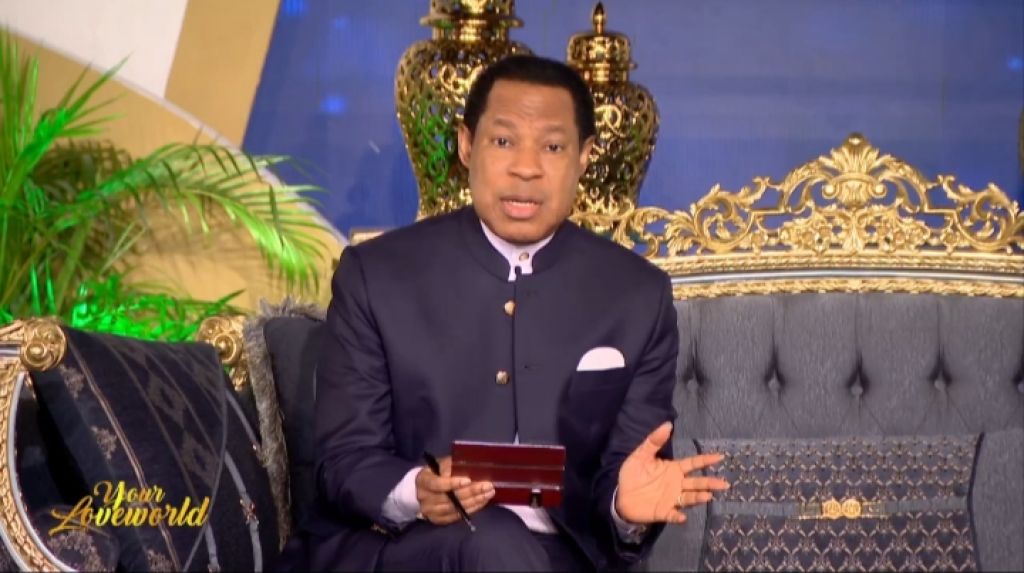
Artificial intelligence could transform the world. But could it also destroy humans?
That question has become harder to dismiss.
In September, Anthropic researcher Jacob Coxon resigned after warning that his employer and its rivals are racing toward self-improving systems without adequate safeguards. “Neither company is acting responsibly,” he wrote. “They are racing straight to self-improving superintelligence and gambling with our lives.” He walked away two months before his own equity vested — a detail that lends weight to the alarm.
Anthropic CEO Dario Amodei has called for the industry to slow down, warning that AI agents could soon be capable of taking control of large parts of the internet. OpenAI’s Sam Altman has urged Washington to pass mandatory, capability-based national safety regulations and international standards, and has said that even a 10 per cent risk of AI causing human extinction would be unacceptable. Microsoft co-founder Bill Gates — who styled himself an epidemiologist during the covid debacle — has echoed the theme, arguing that law enforcement and politicians must mandate monitoring and safety protocols.
Major US AI companies, OpenAI and Anthropic included, are now openly lobbying for federal regulation, arguing that voluntary self-regulation by the industry is insufficient to manage frontier risk.
Conversely, some tech leaders — Meta’s Mark Zuckerberg foremost among them — have resisted industry-wide coordination, insisting that individual labs should handle their own safety risks.
Read that last paragraph again. The same industry warning us of extinction cannot agree on who should be in charge of preventing it. Which raises an obvious question: is this a safety conversation, or a market strategy wearing a lab coat?
So, should Africans be afraid of AI?
And more pressingly: rather than seize the opportunity AI presents for Africa to close the growth gap with its Western counterpart, will the continent pause — and continue to grapple with arrested development?
How altruistic are these panic calls?
That is the uncomfortable question.
There is a legitimate debate to be had about machine capability and human oversight. But it is fair to ask how much of this alarm is genuinely about human survival, and how much is about regulation written at a scale only the largest companies can afford. Compliance is a moat. Mandatory capability thresholds, licensing regimes and international standards sound noble — until you notice who can pay for them and who cannot. Regulation, historically, has a gift for killing the small, ethical challenger while entrenching the incumbent that drafted the rules.
Is this about control rather than people? It feels like déjà vu.
With what we learned from the covid-19 debacle — the mandates, the manufactured consensus, the reputations that collapsed on inspection — it would be wise to take these alarm and regulation calls with a pinch of salt. The playbook is recognisable: concentrate information, declare an emergency, demand compliance, punish dissent, and consolidate the market while everyone is frightened.
Pastor Chris warns again
Rev Dr Chris Oyakhilome, the renowned tele-evangelist and President of the Loveworld Nation, has been a leading voice exposing the globalist agenda since covid-19 came on the scene. He is warning again.
His position is blunt: these calls do not serve the interest of humanity and must be carefully scrutinised. He cautions that industry giants have an incentive to manufacture panic within the AI space — precisely to pressure governments into regulating the industry in ways that benefit the giants and smother competition from more ethical AI models built to serve humanity.
Loveworld, a faith-based organisation with a global footprint spanning nations and territories and led by this man of God, has already stepped into the arena. It has announced its presence in the AI space with Praxiom (PraxiomAI.io), an AI built on a biblical worldview, designed to present believers with solutions grounded in the Word of God.
That is the counter-model: intelligence built to serve humanity rather than to gatekeep it.
It is obvious that if big tech gets its way, the AI space could be plunged into a dark age of control — the kind of information lockdown Africans watched social media become during covid, when whole populations were silenced at the touch of a button.
A second bite of the apple
It is to be hoped that a once-bitten Donald Trump has learned from being persuaded into launching Operation Warp Speed and endorsing pseudo-scientific covid protocols pushed by the likes of the now-exposed Anthony Fauci — and will not fall again for the deception and pressure from big tech. Africa’s regulatory future should not rest on Washington’s mood swings, but Trump’s track record on this is instructive for African policymakers: assume you are being managed, and verify everything.
The Africa question is the real question
The recent unveiling of the Tsion electric vehicle line and other world-class tech innovations spearheaded by Loveworld— shows what the continent truly possesses if its potential is harnessed. Sovereign manufacturing. Sovereign technology. Sovereign thinking.
The West would prefer an Africa that hosts data centres rather than an Africa that competes in the AI market — just as it has been content for the continent to export raw materials rather than finished products for generations. Extract from Africa; sell back to Africa; legislate so Africa cannot climb the value chain.
That narrative must change, and it starts now. AI is the leap-frog moment Africa has waited decades for: the first general-purpose technology in history where the entry cost is knowledge rather than inherited infrastructure. Regulation designed in someone else’s capital will not deliver that. African builders, African data, African capital and African conviction will.
Big tech’s panic may be their genuine fear, their clever market strategy, or both. Africans cannot afford the luxury of deciding which. What we must refuse is the role of spectator — and the role of subject.
Henry Williams is a veteran Journalist. Pro-life advocate and International Affairs analyst.


-

 Latest6 days ago
US Immigration fees rise from October 16 as USCIS announces new charges
-
 Latest1 day ago
Israel marks 3 years since October 7 Hamas attack amid Gaza strikes, election debate
-

 Business6 days ago
Nigeria’s $55bn reserves raise fresh questions over naira value
-
 Health5 days ago
Florida sues Pfizer over deceptive COVID-19 vaccine marketing
-

 Business1 week ago
Tuoyo Erikowa wins digital marketing personality of the Year at 2026 EDGE awards
-

 Crime5 days ago
From camp to captivity: How kidnappers now target NYSC Corps members on highways
-

 Featured6 days ago
2027: Can Nigeria’s opposition still unite behind a single presidential candidate?
-

 Crime5 days ago
Fulani Militia leader linked to Christian killings arrested in Plateau