
Business
AfDB secures $15.6bn investment for construction of Lagos-Abidjan highway

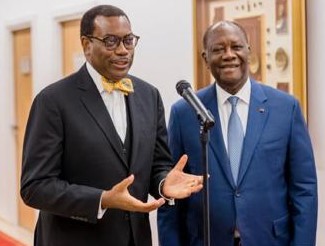
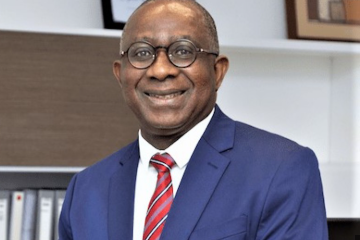
Dr Akinwumi Adesina, the president, African Development Bank (AfDB), says the bank has secured 15.6 billion dollars investment for the construction of the Lagos-Abidjan highway.
Adesina tweeted this on his twitter handle @akin_adesina obtained by the News Agency of Nigeria on Friday in Abuja.
He said that the investment would strengthen regional trade and integration in West Africa by linking the hinterlands of different Participating Member Countries (PMCs).
The president said that the investment would include providing sea port access to landlocked countries and some transition states of West Africa to the vibrant seaports.
NAN reports that the Lagos-Abidjan highway interconnects the capital cities of five Western African States, covering approximately 1,028 km and eight border crossings.
They are Cote d’Ivoire, Ghana, Togo, Benin and Nigeria.
The Abidjan-Lagos Corridor is a flagship project of the Programme for Infrastructure Development in Africa (PIDA).
It forms part of the wider Dakar-Lagos Corridor and a major part of the Trans African Highway Network within the ECOWAS region.
The corridor’s current alignment traverses all major economic centres of the five PMCs starting from “Bingerville”, a suburb of Abidjan and ending at Mile 2 (Eric Moore), in Lagos.
In a statement issued by AfDB recently said the Abidjan Lagos project is a key regional trade and transport corridor that interconnects some of the largest and most economically dynamic cities in Africa, Abidjan, Accra, Cotonou, Lomé and Lagos.
It also said that the corridor links other corridors along the north-south axis and interconnects the landlocked countries of Burkina Faso, Mali, Niger and Chad.
“The corridor interconnects the most densely populated and economically active parts of the sub-region –it intersects with a rail network and major ports/airports.
“The transport sector in West Africa plays a key role in the economic development of the region and generates about five to eight per cent of its Gross Domestic Product (GDP).
“This remains cognisant of the fact that an efficient regional transport network is an enabling infrastructure required to promote regional trade and socio-economic development, inter alia.
“ECOWAS and WAEMU member states have consistently committed themselves to the financing of designated regional transport corridors.
“The Abidjan –Lagos transport corridor currently supports approximately 75 per cent of sub-regional trade activities.
“However, a combination of hard and soft infrastructure deficiencies negates its optimal contribution to regional economic growth,’’ the Bank said.










-

 Latest4 days ago
US Immigration fees rise from October 16 as USCIS announces new charges
-

 Football1 week ago
How David Beckham made $51.1m from 2026 World Cup, surpassing winners’ prize
-

 Health1 week ago
COVID-19 Hospital care under scrutiny as US Senate hears patient, family testimonies
-

 Business1 week ago
OpenAI shelves GPT-6.1 astra release over safety concerns
-

 Business4 days ago
Nigeria’s $55bn reserves raise fresh questions over naira value
-
 Latest1 week ago
ADC’s 2027 Strategy: Who are the key players and what are their roles?
-
 Latest1 week ago
El-Rufai continued detention revives debate over opposition, detention, political power
-

 Health3 days ago
Florida sues Pfizer over deceptive COVID-19 vaccine marketing