
Football
Brazil fight back to beat Japan, reaches World Cup last 16 with

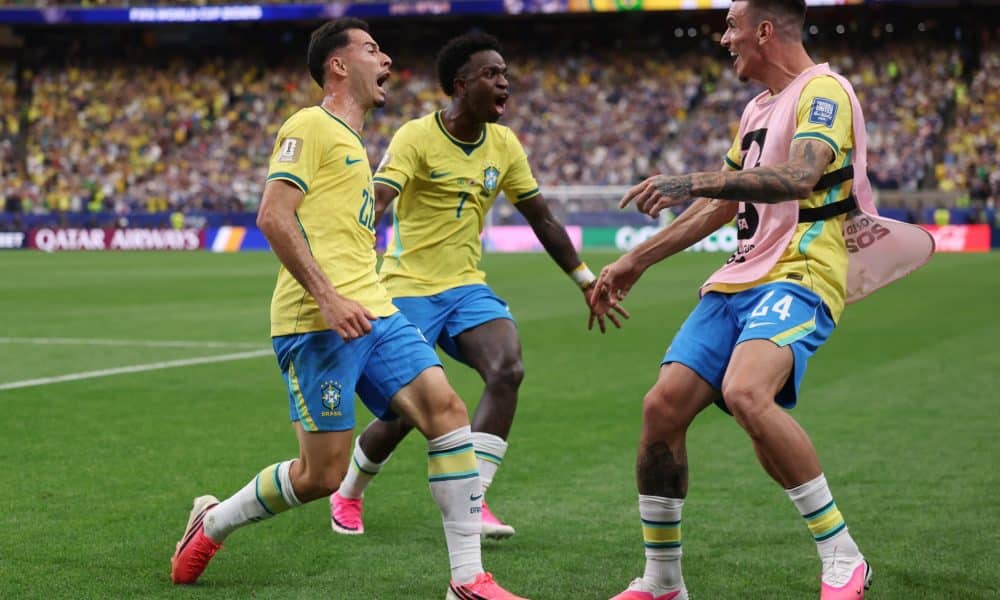
Brazil produced a spirited second half display to overturn an early deficit and defeat Japan 2-1 in a thrilling FIFA World Cup Round of 32 encounter at NRG Stadium in Houston on Monday, booking their place in the last 16 of the global football showpiece.
The five time world champions looked to be heading for a disappointing exit after Japan struck first before halftime through Kaishu Sano. However, experience and resilience eventually prevailed as veteran midfielder Casemiro restored parity before substitute Gabriel Martinelli netted a dramatic stoppage time winner to complete the comeback.
The result extends Brazil’s quest for a record sixth FIFA World Cup title, while bringing Japan’s impressive campaign to an end after another spirited display against one of football’s traditional powerhouses. Blueprint reports
The encounter began at a frantic pace with both teams showing attacking intent. Japan displayed remarkable confidence against the South American giants, pressing aggressively and refusing to be intimidated by Brazil’s star studded lineup.
Coach Hajime Moriyasu’s tactical approach paid dividends midway through the opening half as the Asian side capitalized on sustained pressure.
Their persistence was rewarded in the 29th minute when midfielder Kaishu Sano found the back of the net to give Japan a deserved lead. The goal sparked celebrations among Japanese supporters and briefly placed Brazil under serious pressure.
Japan continued to defend with discipline after taking the lead, frustrating Brazil’s attacking trio while limiting the clear scoring opportunities available to Carlo Ancelotti’s side.
The first half also witnessed several physical challenges, with referee issuing yellow cards to Sano, Daichi Kamada and Brazil’s Casemiro as both teams battled fiercely for control of midfield.
READ ALSO; Netherlands to face Morocco, Brazil draw Japan in 2026 World Cup round of 32
Trailing at the interval, Brazil emerged for the second half with renewed urgency and greater attacking purpose.
Coach Carlo Ancelotti made tactical adjustments that transformed the flow of the contest. His side increased the tempo, controlled possession and began creating sustained pressure around Japan’s penalty area.
Brazil’s dominance eventually produced the equaliser in the 56th minute when Casemiro arrived at the right place to convert from close range after an incisive attacking move. The experienced midfielder, who had earlier been booked, demonstrated his leadership by dragging his team back into the contest. FIFA.com
The goal shifted momentum decisively in Brazil’s favour as the South Americans continued to dictate proceedings while Japan gradually retreated deeper into their own half.
Despite Brazil’s sustained pressure, Japan remained organised defensively and looked capable of forcing extra time.
Goalkeeper Zion Suzuki produced several impressive saves to deny Brazil, while defenders Takehiro Tomiyasu and Hiroki Ito worked tirelessly to repel repeated attacks.
However, Brazil’s persistence finally paid off deep into added time.
In the 95th minute, Bruno Guimarães delivered a perfectly weighted pass into the path of substitute Gabriel Martinelli, who calmly finished beyond Suzuki to send Brazilian players and supporters into wild celebrations.
The dramatic late strike completed a memorable comeback and ensured Brazil avoided what would have been one of the tournament’s biggest upsets.
Although Japan enjoyed a dream start, Brazil gradually asserted their technical quality as the match progressed.
The South Americans finished with an impressive 68 percent possession compared to Japan’s 32 percent, underlining their dominance in controlling the rhythm of the game.
Brazil also registered 16 total shots, including six efforts on target, while Japan managed only five attempts with two on target.
Their passing accuracy was equally impressive, completing 588 passes at a success rate of 92 percent compared to Japan’s 273 passes with an 84 percent completion rate.
The statistics reflected Brazil’s growing authority after halftime as they patiently wore down Japan’s disciplined defensive structure.
One of the defining moments of the contest came through Carlo Ancelotti’s tactical management.
The introduction of Lucas Paquetá added greater creativity in midfield and allowed Brazil to increase the supply of quality passes into attacking areas.
The Italian tactician also benefited from the impact of Gabriel Martinelli, whose fresh legs and intelligent movement ultimately produced the decisive goal in stoppage time.
His substitutions proved far more influential than those made by Japan, whose attacking changes failed to relieve the relentless Brazilian pressure during the closing stages.
Their performances throughout the tournament further reinforced Japan’s growing reputation as one of Asia’s strongest football nations capable of competing with the world’s best.
Brazil’s victory ensures they remain firmly in contention for World Cup glory as attention now turns to the Round of 16.

-
 Latest5 days ago
Alleged xenophobic attack claims life of Malawian street vendor in South Africa
-

 Football3 days ago
Africa breaks World Cup record with seven teams in knockout stage
-

 Football3 days ago
Netherlands to face Morocco, Brazil draw Japan in 2026 World Cup round of 32
-

 Comments and Issues4 days ago
Norway’s Rowing Celebration Captures The Spirit Of The World Cup
-
 Aviation7 days ago
Heading through the storm: Multiple taxes, complex leasing drag on Nigerian carriers
-

 Energy5 days ago
Leaked court documents allege Shell ignored pipeline safety warnings in Niger Delta
-

 Latest1 week ago
Troops close in on forest hideout as search continues for abducted Oyo schoolchildren
-

 Energy1 week ago
Global oil prices fall after U.S.–Iran talks