
News
Bribery exposure among Nigerians dealing with prosecutors, judges surges – Report

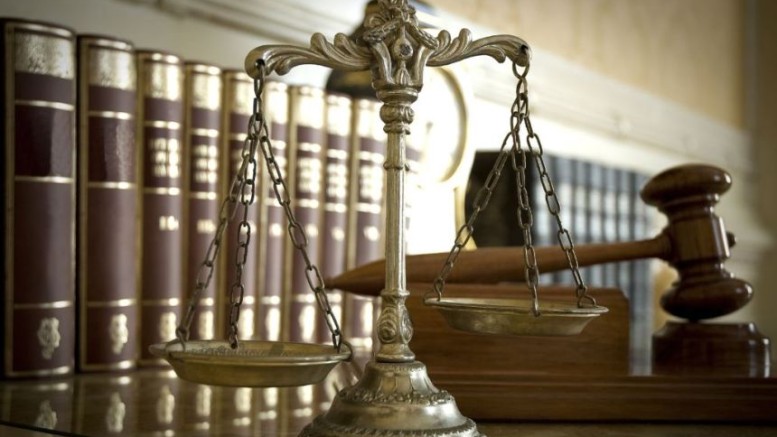
Bribery involving prosecutors and judges in Nigeria has increased sharply, with the prevalence of bribery requests and payments involving the two categories of judicial officials rising significantly between 2019 and 2023, according to a new report by the Platform to Protect Whistleblowers in Africa (PPLAAF).
The report, titled Judicial Corruption in Nigeria: Causes and Consequences, released on November 10, 2026, cited findings from a National Bureau of Statistics (NBS) and United Nations Office on Drugs and Crime (UNODC) survey showing that bribery prevalence involving prosecutors reached 67 per cent in 2023, while the figure for judges and magistrates stood at 52 per cent.
The figures include instances in which citizens were asked to pay bribes but refused. When refusals are excluded, the corresponding rates were 62 per cent for prosecutors and 50 per cent for judges, compared with 23 per cent and 19 per cent respectively in 2019.
The figures measure the proportion of people who had contact with the relevant public officials and experienced bribery, rather than the percentage of prosecutors or judges personally established to have collected bribes.
According to PPLAAF, prosecutors recorded the highest bribery prevalence among the categories of public officials covered by the survey.
The report examines how bribery, political interference, external pressure and manipulation of court procedures affect the administration of justice in Nigeria.
It also draws attention to a 2020 survey by the Independent Corrupt Practices and Other Related Offences Commission (ICPC), in which 11 of 124 judges interviewed reportedly disclosed receiving bribes totalling ₦3.7 billion over a two-year period.
The report further cited findings by the Auditor-General of the Federation that ₦4.8 billion was misappropriated or remained unaccounted for by federal courts between 2012 and 2015.
PPLAAF warned that corruption and procedural irregularities could weaken the prosecution of politically exposed persons, frustrate efforts to recover unexplained wealth and undermine public confidence in the justice system.
It argued that the situation risks creating unequal access to justice, allowing wealthy litigants to obtain favourable treatment while ordinary citizens struggle to pursue their cases.
Speaking at the virtual presentation of the report, governance and anti-corruption researcher Matthew Page urged investigative journalists to examine the wealth and assets of judicial officers, particularly senior judges.
He suggested that journalists should investigate properties, foreign assets and lifestyles that appear inconsistent with the legitimate earnings of public officials.
Page argued that unexplained wealth could provide an avenue for identifying possible corruption, even where direct evidence or whistleblower disclosures are unavailable.
He also called for stronger enforcement of existing laws, including the Administration of Criminal Justice Act 2015, which was introduced to reduce unnecessary delays in criminal proceedings.
According to him, inadequate enforcement of the law has contributed to prolonged court cases, including proceedings involving survivors of sexual and gender-based violence.
PPLAAF Executive Director Jimmy Kande said corruption and undue external pressure had continued to undermine the independence of Nigeria’s judiciary, with consequences for democracy and the rule of law.
The organisation called for comprehensive reforms, including greater financial independence for the judiciary, stronger accountability mechanisms and transparency in judicial appointments, budgets, expenditure and procurement.
It also recommended the publication and independent verification of asset declarations by judges and other judicial personnel, as well as sanctions for procedural abuses.
Another recommendation was an independent vetting process for serving judges and prosecutors, potentially conducted under international oversight.
The organisation said restoring public confidence in the judiciary would require sustained efforts to address corruption, strengthen institutional accountability and ensure equal access to justice.
Established in 2017, PPLAAF is a non-governmental organisation that supports whistleblowers, advocates for their protection and pursues strategic litigation in matters affecting the public interest.


-
 Comments and Issues1 week ago
2027 Poll and the vote peddlers of Nigeria
-

 Features6 days ago
How ADC leadership crisis put Atiku’s 2027 ambition at risk
-
 Energy6 days ago
NNPC plans 5–10% stock market listing, targets 2027 for IPO preparations
-

 Business6 days ago
LoveWorld Expo 2026 to showcase global innovations, emerging technologies in Lagos
-
 Latest1 week ago
El-Rufai mobilises supporters for ADC ahead of 2027 elections
-
 Business3 days ago
DisCos urge Minister to end blame game, apologise to Nigerians over blackouts
-
 Latest6 days ago
2027: No Court rulings can keep me off the ballot, Atiku insists
-

 Latest6 days ago
2027: Wike declares Obi’s political wave dead, dismisses chances of presidential victory