
Latest
Concerns grow over Putin’s nuclear threat, U.S likely responses

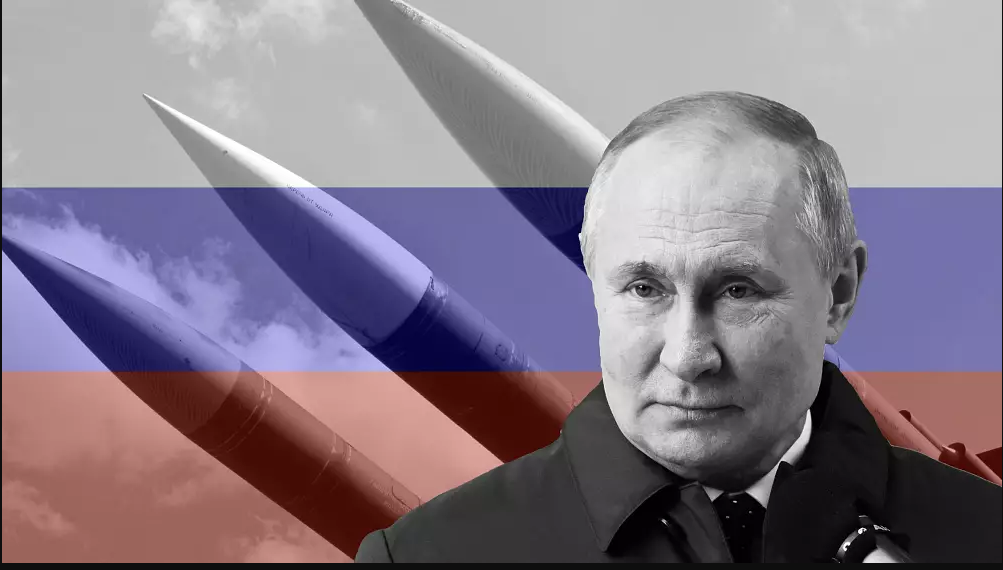
As concerns grow over Russian President Vladimir Putin’s nuclear saber-rattling amid continued losses in Ukraine, what a U.S. response would look like has become an increasingly urgent question.
Putin threatened on Aug. 21 that Moscow would deploy its massive nuclear arsenal to protect Russian territory or its people — which could now include the four Russian-occupied Ukrainian regions. However, both Kyiv and Washington have said they will not be deterred from continued fighting to take back those regions.
Fears were further stoked this week when an online video emerged of a train in Russia appearing to carry equipment from a Kremlin military unit that handles nuclear weapons.
The video, which Pentagon officials could not confirm, shows military vehicles allegedly from the secretive 12th Main Directorate of the Russian ministry of defense being transported on the train, according to Konrad Muzyka, an aerospace and defense analyst focused on Russia and Belarus.
U.S. officials since the start of Russia’s attack on Ukraine have stressed there are plans being developed to counter a range of moves by Moscow but have kept specifics under wraps.
READ ALSO: Iran denies sending drones to Russia for war in Ukraine
While the administration says there are no signs that the Kremlin has made moves toward a nuclear strike — and that Washington has not changed its own nuclear position — experts say the potential U.S. options could turn into a very real scenario given Russia’s floundering military campaign and an increasingly frustrated Putin.
Mark Cancian, a former Pentagon official-turned-defense expert at the Center for Strategic and International Studies, said a U.S. response to a major Russian attack would be twofold — one military and one diplomatic.
“If the Ukrainians kept fighting, we would continue our flow of aid and we’d probably take the gloves off” in terms of weapons provided to Kyiv, he said.
However, should Moscow use a tactical nuclear weapon on Ukrainian troops or civilians, or even detonate such a device away from populated areas, Cancian predicted the administration would finally allow Kyiv to have ATACMS or “anything else they wanted” to go after Russian targets.
READ ALSO: Nuclear war looms as Putin signs bills to annex four regions in Ukraine
On the diplomatic side of things, meanwhile, Russian use of nuclear weapons could very well prompt countries such as India, China and Turkey — the latter a NATO ally — to put pressure on Putin economically, according to Cancian.
“A nuclear strike would really, I think, put them under a lot of pressure to go along with the sanctions and take a tougher line towards Russia, so Russia would lose these lifelines that they’ve been clinging to and nurturing,” he said.
National security adviser Jake Sullivan last week said there would be “catastrophic consequences” should Moscow deploy nuclear weapons and said a more specific ultimatum had been delivered to Moscow privately.
President Biden has said since the start of the war that U.S. troops will not be sent to Ukraine, and experts warn that a nuclear response to a nuclear attack could quickly escalate into a nuclear world war.


-
 Latest6 days ago
Israel marks 3 years since October 7 Hamas attack amid Gaza strikes, election debate
-

 Energy5 days ago
Fuel Battle: Dangote, marketers and government clash over petrol imports
-

 Energy7 days ago
Petrol, diesel prices rise 86% in 2026 as costs hit fresh highs
-
 Energy1 week ago
Has Iran lost control of the Strait of Hormuz? Oil flows rebound as war disruptions persist
-

 Football6 days ago
Nigeria’s World Cup exit under spotlight as FIFA’s DR Congo files emerge
-

 Latest6 days ago
US Court set to rule on release of FBI, DEA records on Tinubu
-

 Business6 days ago
Nigerian investors at a crossroads as fixed-income yields slide
-

 Business1 week ago
LoveWorld Trade and Investment Forum to Convene Business Leaders in Accra