
Business
How Finance Minister, Ahmed, misinformed Presidency on Nigeria’s fragile economy, real recession status

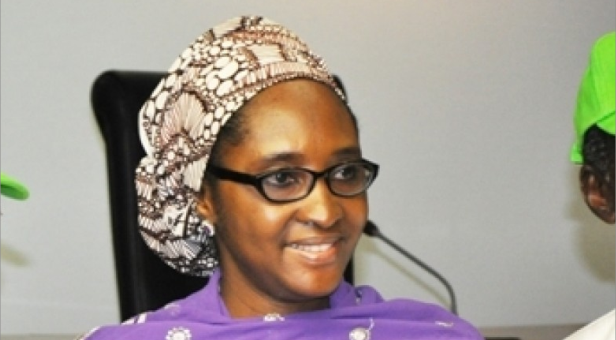
The Minister of Finance, Budget and National Planning, Zainab Ahmed, had at the Presidential Communication Team maiden briefing at the State House, Abuja, said that the Implementation of Economic Sustainability Programmes contributed largely to Nigeria’s successful exit from second recession, which government officials claimed was achieved within a short time.
The Finance Minister disclosed that the Federal Government secured funds from DFIs – IMF, AfDB, IDB and other international financial institutions – to reflate the Nigerian economy caused by the Coronavirus pandemic. He stated that the government is committed to lowering the inflation rate in the country, adding that food inflation is the highest.
The Finance Minister declared: “We have a major target to bring down inflation to single digits. We are working with the Presidential Economic Advisory Council, PEAC, and the Central Bank of Nigeria to achieve this.
“When you decouple it, you find that transport costs are the largest contributor hence the decision to reduce import duties on Tractors and other vehicles.
“We have approval from the President to submit a supplementary budget to NASS to fund Additional Covid vaccines – to complement the ones arriving soon.
“Nigeria’s debt is still very much within sustainable limits. We need to roll out infrastructure now, and grow the economy now, not later. Our focus is on growing our revenues.”
Some stakeholders in the country questioned the veracity of the Finance minister’s statement, arguing that Ahmed may have misinformed the presidency on the real situation of recession in Nigeria.
They noted that even the 0.11% the federal government is celebrating as recovery growth rate is clear statistics of an underperforming national economy. They challenged the Finance Minister to clarify the growth or recovery ratio of the economy to the unemployment rate which is on the rise. They further questioned the NBS statistics which was rolled out at time of increasing hardship and deteriorating standard of living of Nigerian citizens, questioning if the 0.11% GDP growth is capable of sustaining the estimated 150 million population of Nigeria.
The stakeholders also disputed the Finance Minister’s claim that Nigeria’s debt is within limit, implying that the government can still go for more debts.
However, Ahmed also said that the government achieved 97% budget performance in 2020.







-
 Latest6 days ago
Israel marks 3 years since October 7 Hamas attack amid Gaza strikes, election debate
-

 Energy5 days ago
Fuel Battle: Dangote, marketers and government clash over petrol imports
-
 Energy7 days ago
Petrol, diesel prices rise 86% in 2026 as costs hit fresh highs
-

 Energy1 week ago
Has Iran lost control of the Strait of Hormuz? Oil flows rebound as war disruptions persist
-

 Football6 days ago
Nigeria’s World Cup exit under spotlight as FIFA’s DR Congo files emerge
-
 Latest6 days ago
US Court set to rule on release of FBI, DEA records on Tinubu
-

 Business6 days ago
Nigerian investors at a crossroads as fixed-income yields slide
-

 Business1 week ago
LoveWorld Trade and Investment Forum to Convene Business Leaders in Accra