
Featured
IMF reveals how Nigeria’s recovering economy may de truncated

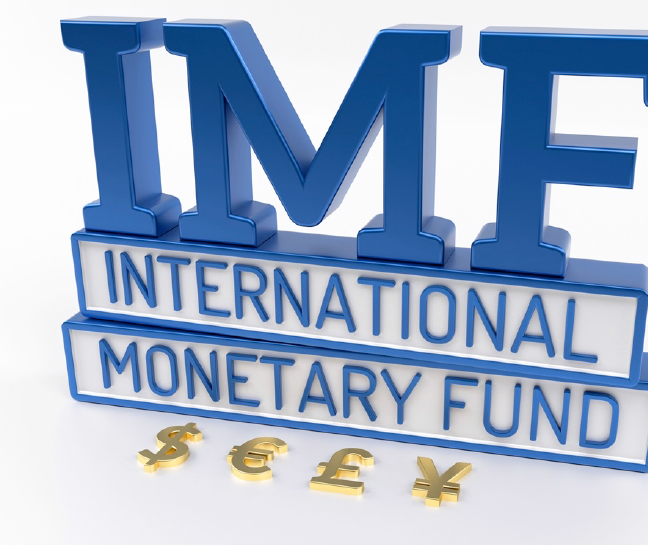
International Monetary Fund (IMF) says the Nigerian economy is recovering from a historic downturn benefitting from government policy support, rising oil prices and international financial assistance.
IMF disclosed this in a statement issued from its headquarters in Washington D.C. on Monday.
The organisation said Nigeria exited the recession in fourth quarter 2020 and output rose by 4.1 per cent (year-on-year) in the third quarter, with broad based growth except for the oil sector, which is facing security and technical challenges.
“Growth is projected at 3 per cent for 2022.
“Headline inflation rose sharply during the pandemic reaching a peak of 18.2 per cent year-or-year in March 2021 but has since declined to 15.6 per cent in December, helped by the new harvest season and opening of land borders.
“Reported unemployment rates (end 2020) are yet to come down but more recent COVID-19 monthly surveys show employment back at its pre-pandemic level,’’ it stated.
Despite the recovery in oil prices, the general government fiscal deficit is projected to widen in 2021 to 5.9 per cent of Gross Domestic Product (GDP), reflecting implicit fuel subsidies and higher security spending, according to IMF.
Moreover, it stated that the consolidated government revenue-to-GDP ratio at 7.5 per cent remained among the lowest in the world.
“After registering a historic deficit in 2020, the current account improved in 2021 and gross FX reserves have improved, supported by the IMF’s SDR allocation and Eurobond placements in September 2021.
“Notwithstanding the authorities’ proactive approach to contain COVID-19 infection rates and fatalities and the recent growth improvement, socio-economic conditions remain a challenge.
“Levels of food insecurity have risen and the poverty rate is estimated to have risen during the pandemic.’’
The international body, however, said that the outlook faced balanced risks, saying that on the downside, low vaccination rates expose Nigeria to future pandemic waves and new variants, including the ongoing Omicron variant.
It stated that higher debt service to government revenues (through higher U.S. interest rates and/or increase borrowing) poses risks for fiscal sustainability.
“A worsening of violence and insecurity could also derail the recovery.
“On the upside, the non-oil sector could be stronger, benefitting from its recent growth momentum, supportive credit policies, and higher production from the new Dangote refinery.
“Nigeria’s ratification of the African Continental Free Trade Agreement could also yield a positive boost to the non-oil sector while oil production could rebound, supported by the more generous terms of the Petroleum Industry Act.
According to the statement, under Article IV of the IMF’s Articles of Agreement, the IMF holds bilateral discussions with members, usually every year.
A staff team visits the country, collects economic and financial information, and discusses with officials the country’s economic developments and policies
On return to headquarters, the staff prepares a report, which forms the basis for discussion by the Executive Board.













-
 Featured5 days ago
Inside INEC’s race to prepare for Nigeria’s 2027 elections
-
 Featured5 days ago
2027: APC unveils nationwide campaign timetable, Tinubu to rally in 12 states
-

 Latest1 week ago
UCTH faces morgue crisis as 50 unclaimed corpses await mass burial
-
 Business7 days ago
President Tinubu and the Low Transport Fares Fiasco
-
 Business1 week ago
BREAKING: Nigeria’s Inflation Rate Drops to 14.63% in September
-
 Business5 days ago
Court dismisses ₦170m Trade Fair contract claim, says Zenith Bank was not a party
-
 Latest7 days ago
Global excitement builds as Healing Streams Live Services returns October 23
-
 Business3 days ago
Naira faces exchange rate gap as Dollar hits N1,380 on parallel market