
Business
Naira devaluation: Lagos, Kaduna lead as States debts hit N3.46trn

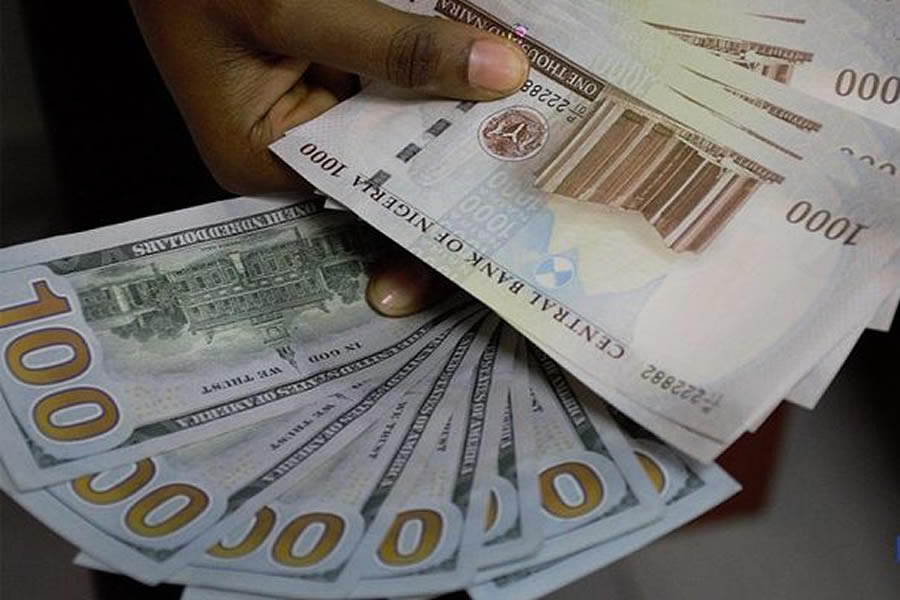
The floating of the Naira on the foreign exchange market by the Central Bank of Nigeria (CBN) has shot up the debt burden of States in Nigeria with Lagos, Kaduna and Edo experiencing significant increases in their debt valuation.
After unification, the external debt stock of the 36 states and the FCT have increased by 41.9 per cent to N3.46 trillion, from N2.01 trillion using the new exchange rates of over N700 to a Dollar.
Before the apex bank’s new policy, the external debt burden of the 36 states and the FCT stood at $4.56 billion according to data from the Debt Management Office (DMO). Using the former CBN’s fixed rate of $1/471, the debt valuation in naira stood at N2.01 trillion.
However, using the new daily exchange rate monitor of N758/$1, the external debt stock has risen to N3.46 trillion- a 41.9 per cent increase since the unification.
READ ALSO: Naira hits N815/$ at official window, highest since 2018
Lagos state which has seen the naira equivalent of its $1.25 billion external debt increase from N588 billion to N947 billion. This was followed by Kaduna state whose $573 million debt increased from N269 billion to N434 billion. Others are an Edo state with $209m (N98.4 billion) and now N158 billion.
Furthermore, the naira equivalent of the Federal government’s external debt of $37 billion has risen from N17.5 trillion to N28.1 trillion.
The implication of this is that states will have to source more naira to meet the debt servicing of these loans and pay up these loans in a time of already strangled government revenues and ballooning government expenditure.
Professor of capital market, Prof Uche Uwaleke said devaluation of the Naira has increased the opportunity cost of servicing external loans in dollars when considered in naira terms.
“Following naira devaluation, the cost of servicing external debt in naira terms will surge. Overall, naira devaluation will increase the size of the country’s debt stock in naira terms, given that the rate of converting the external debt component to the naira is now higher.”
READ ALSO: Naira devaluation: MAN expects import costs to rise, economic uncertainties
Also, Paul Alaje, Senior Economist with SPM Professionals in his analysis said: “Looking at the foreign component of Nigeria’s debt and the conversion to naira, Nigeria devalued and borrowed in dollars that itself will make our debt profile to increase,” he said.
“Interestingly, Nigeria will still service this debt at the same dollar rate it borrowed the money because the rate of servicing has not reduced.” He added.
Experts and investors have consistently called on the CBN to unify the foreign exchange market as the multiple exchange rate regime breeds corruption, discourages investment etc.
This came to an end on the 14th of June when the apex bank said in a statement “Abolishing the segmentation of the FX market into different windows. All transactions will now be done through the Investors and Exporters (I&E) window, where the exchange rate will be determined by market forces.


-

 Latest5 days ago
US Immigration fees rise from October 16 as USCIS announces new charges
-

 Business5 days ago
Nigeria’s $55bn reserves raise fresh questions over naira value
-

 Health4 days ago
Florida sues Pfizer over deceptive COVID-19 vaccine marketing
-
![Edo Special Court sentences four kidnappers to death over woman’s abduction [VIDEO]](https://nationaldailyng.com/wp-content/uploads/2026/09/828831764_1099651439663438_3480600082081067427_n-400x240.jpg)
![Edo Special Court sentences four kidnappers to death over woman’s abduction [VIDEO]](https://nationaldailyng.com/wp-content/uploads/2026/09/828831764_1099651439663438_3480600082081067427_n-80x80.jpg) Crime1 week ago
Crime1 week agoEdo Special Court sentences four kidnappers to death over woman’s abduction [VIDEO]
-

 Crime4 days ago
From camp to captivity: How kidnappers now target NYSC Corps members on highways
-

 Business6 days ago
Tuoyo Erikowa wins digital marketing personality of the Year at 2026 EDGE awards
-

 Crime1 week ago
Police arrest security guardover alleged rape, death of 11-year-old girl
-

 Featured5 days ago
2027: Can Nigeria’s opposition still unite behind a single presidential candidate?