
Business
Naira strengthens to N1,520/$1 in parallel market amid rising reserves


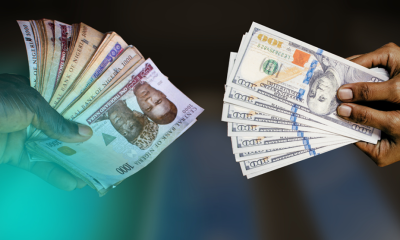
The Nigerian naira ended the week on a high in the parallel market, appreciating to N1,520 per dollar on Friday, July 25, 2025 — its strongest level in recent days and a significant gain compared to earlier in the week.
This marks a N14 difference from the official exchange rate of N1,534/$1 posted by the Central Bank of Nigeria (CBN) as of market close on Thursday.
This consistent upward trend in the unofficial market began earlier in the week, with the naira trading at N1,550/$1 on Tuesday, improving to N1,530/$1 on Wednesday, then N1,535/$1 on Thursday, and eventually settling at N1,520/$1 on Friday.
In contrast, the official exchange market experienced relatively modest fluctuations. The naira closed at N1,536/$1 on Tuesday, dipped slightly to N1,537/$1 on Wednesday, and appreciated marginally to N1,534/$1 on Thursday. Data from the CBN also indicated that during intra-day trading on Thursday, the currency peaked at N1,538/$1 and dipped to a low of N1,520/$1.
Notably, the gap between the official and parallel market rates has narrowed significantly.
Just last week, the naira traded at N1,535/$1 in the parallel market, barely N1 different from the N1,536/$1 official rate—an unusual convergence that market watchers attribute to strengthening confidence and increased forex liquidity.
Supporting this optimistic trend, Nigeria’s foreign exchange reserves recorded a weekly increase of 1.77%, rising to $38.45 billion from $37.78 billion. Analysts see this growth as a critical boost to the CBN’s capacity to defend the currency, finance import obligations, and attract foreign investment.
During a press conference in Abuja on Tuesday, July 22, following the conclusion of the 301st Monetary Policy Committee (MPC) meeting, CBN Governor Dr. Olayemi Cardoso credited the steady gains to improving macroeconomic fundamentals.
“The MPC also notes the sustained stability in the foreign exchange market, accentuated by improved capital flows, earnings from increased crude oil production, rising non-oil exports, and significant investments,” Cardoso said.
He added, “Very importantly, Nigerians are having greater confidence in their own currency. The foreign exchange market is working a lot better and more smoothly — the result of which has encouraged inflows into that market.”
Cardoso also highlighted that the removal of costly fuel subsidies and other reform measures, though painful, have laid the groundwork for improved forex stability and enhanced investor confidence.
On the monetary policy front, the MPC voted unanimously to retain the Monetary Policy Rate (MPR) at 27.5%, reflecting a unified stance by all 12 members in light of ongoing inflationary concerns and exchange rate volatility.


-

 Featured3 days ago
BREAKING NEWS: Shouts of joy rock the world as Pastor Chris opens final Healing Streams edition for 2026
-

 Football4 days ago
Man United shortlist Emery, Nagelsmann as potential replacements for Carrick
-

 Business4 days ago
Hoodlums raid JED Benue office, abduct 10 staff over power dispute
-

 Football4 days ago
Aston Villa ready to freeze out Garnacho to avoid £43m Chelsea transfer
-
 Business1 week ago
Naira faces exchange rate gap as Dollar hits N1,380 on parallel market
-

 Business4 days ago
EV adoption: Roxettes seeks cheaper financing, local manufacturing incentives
-

 Latest4 days ago
Akpabio tasks Tompolo-backed movement with spreading Tinubu’s renewed hope message
-

 Business3 days ago
How Ethiopian Airlines is challenging Africa’s aviation narrative through self-reliance