
Latest
Nepali Prime Minister resigns as deadly protests over social media ban, corruption escalate

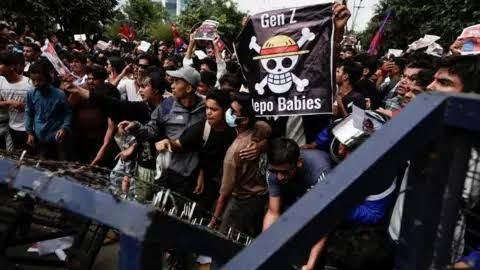
Nepal’s Prime Minister K.P. Sharma Oli has resigned amidst escalating and deadly protests that have plunged the nation into political chaos. The resignation follows a week of mounting public anger, sparked by a government ban on popular social media platforms and fueled by deep-seated frustration over corruption.
At least 19 people were killed on Monday after security forces cracked down on protestors in Kathmandu. The demonstrations, led primarily by young people and dubbed the “Gen Z protests,” initially began as a stand against the government’s move to ban several social media apps, including Facebook and Instagram, on September 4. Authorities claimed the platforms had failed to register with the Ministry of Communication and Information Technology.
However, the ban was widely seen as an attempt to stifle a growing online movement that had been exposing the lavish lifestyles of political elites and their families, contrasting sharply with the struggles of ordinary Nepalis. This “Nepo Kid” campaign on social media became a powerful catalyst for the wider anti-corruption movement that has since taken over the streets.
Despite the government’s swift reversal of the social media ban and the resignation of several ministers, including the home minister, the unrest intensified. On Tuesday, protesters defied curfews, setting fire to government buildings, including the parliament and the homes of senior politicians. Videos and reports from the scene showed widespread destruction and violent clashes.
Faced with a complete breakdown of order, Prime Minister Oli announced his resignation on Tuesday, stating that he was stepping down to allow for a “constitutional and political resolution” to the crisis. His resignation, however, has not brought calm to the streets, as demonstrators continue to demand broader systemic change and the dissolution of the government.
The current crisis highlights the deep discontent that has been brewing in Nepal for years, with many citizens feeling that a political elite, seen as corrupt and out of touch, has failed them. The country now faces a political vacuum, with no clear path forward. Analysts warn that the fragile democracy, established in 2008, is at a critical turning point.


-
 Latest6 days ago
Israel marks 3 years since October 7 Hamas attack amid Gaza strikes, election debate
-
 Energy5 days ago
Fuel Battle: Dangote, marketers and government clash over petrol imports
-
 Energy7 days ago
Petrol, diesel prices rise 86% in 2026 as costs hit fresh highs
-
 Energy1 week ago
Has Iran lost control of the Strait of Hormuz? Oil flows rebound as war disruptions persist
-

 Football6 days ago
Nigeria’s World Cup exit under spotlight as FIFA’s DR Congo files emerge
-
 Latest6 days ago
US Court set to rule on release of FBI, DEA records on Tinubu
-

 Business6 days ago
Nigerian investors at a crossroads as fixed-income yields slide
-

 Business1 week ago
LoveWorld Trade and Investment Forum to Convene Business Leaders in Accra