
Business
Nigeria’s electricity grid suffers over 200 system collapses in 10 years

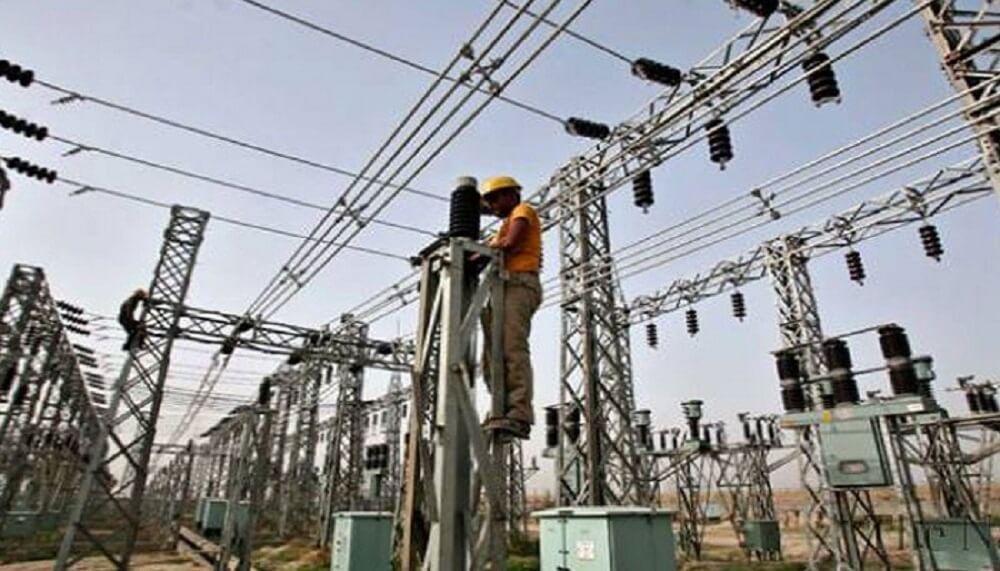
Analysis of industry data — mostly from the Nigerian Electricity Regulatory Commission (NERC) — from January 2010 to September 2021 showed that the grid suffered 216 system collapses.
It added that information relating to the crashes was not officially available from September 2021 to June 2022. The grid collapsed in February, May, July, and August 2021.
Last month, it experienced collapse for the seventh time in 2022.
Review of the data showed that in 2010, Nigeria experienced 42 total and partial crashes; 19 in 2011; 24 in 2012 and 2013, respectively; 13 in 2014; and 10 in 2015.
In 2016, the number of cases rose to 28; it came to 21 in 2017; 13 in 2018; 11 in 2019 and four in 2020.
READ ALSO: Senate passes bill for states, individuals to supply electricity
“As a background, the national power grid, a network of electricity transmission lines connecting generating stations to loads across the entire country, is designed to operate within certain stability limits in terms of voltage (330kV+5 per cent) and frequency (50Hz+5 per cent). Whenever the grid operates out of these stability ranges, it becomes unstable; power quality decreases and leads to wide-scale supply disruptions, resulting in grid collapse and blackouts,” the report reads.
“While maintaining a stable grid frequency of 50Hz requires a sustained balance between the amount of electricity fed into the electricity grid and the amount of electricity off-taken by end-users since it is not economically optimal to store electricity in large quantities over a long period, the System Operator (SO) ensures that the frequency is sustained at all times within a tolerance threshold.
READ ALSO: Darkness envelop Nigeria as electricity generation drops, fuel scarcity persists
“When supply exceeds demand, the electrical frequency increases, and in extreme cases some power plants that are unable to tolerate excessive frequency variation may shut down, thereby causing a sudden drop in the available generation on the grid. This exacerbates the frequency imbalance, potentially leading to a full/partial system collapse.
“It is the same when demand exceeds supply and the frequency drops. Unless the SO immediately brings in additional supply or sheds off some load, it could lead to a complete collapse of the grid.”
To sustain the improvement in grid stability in subsequent years, NERC had assured that it would continue to intensify monitoring of strict compliance with the SO’s directives to generators on free governor and frequency control mode in line with the provisions of the subsisting operating codes in the industry.
The commission added that it was exploring options for the enforcement of an under-frequency load shedding scheme that had been put in place to provide an added layer of security for the grid in the case of a sudden loss of generation.
To reduce the rate of grid failures, the ministry of power said the federal government would fast-track the purchase and installation of a supervisory control and data acquisition (SCADA) system.


-

 Business1 week ago
Dangote Refinery IPO: 70% Subscription claim meets fourfold demand assertion as investors seek clarity
-

 Featured4 days ago
Inside INEC’s race to prepare for Nigeria’s 2027 elections
-

 Latest6 days ago
UCTH faces morgue crisis as 50 unclaimed corpses await mass burial
-

 Featured4 days ago
2027: APC unveils nationwide campaign timetable, Tinubu to rally in 12 states
-

 Business6 days ago
BREAKING: Nigeria’s Inflation Rate Drops to 14.63% in September
-

 Aviation1 week ago
Germany opens online application route for student, EU Blue Card and other long-stay visas
-
 Business4 days ago
Court dismisses ₦170m Trade Fair contract claim, says Zenith Bank was not a party
-

 Business5 days ago
President Tinubu and the Low Transport Fares Fiasco