
Energy
Senate to review 2013 power privatization process

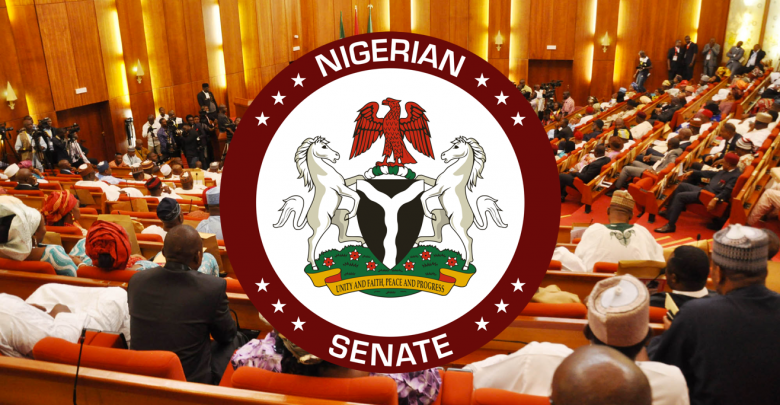
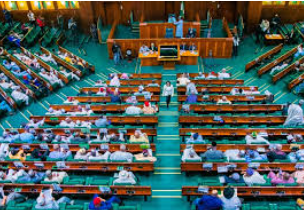
The Senate has asked its Committee on Power to review the agreement signed in 2013 on the privatization of the power sector.
Senate President, Ahmad Lawan, who disclosed this on Monday, while declaring open an Investigative public hearing by the Senate Committee on Power, explained, via his Twitter handle, that the public hearing was on Power Sector Recovery Plan and the impact of COVID-19 pandemic.
He further explained that the overall expectation of the Nigerian government and the citizens was that the power sector, after privatisation, would be far better, but it is disappointing that the expectation was yet far from being fulfilled.
“What are the responsibilities and the obligations of the Federal government in the Share Purchase Agreement. What is BPE (Bureau of Public Enterprises) supposed to do? And equally and very important, what are the successful investors who are given 11 DISCOs and Six GENCOs supposed to do and within which time framework.”
According to him, Government should not be given free money. N1.8 trillion has been given to DISCOs maybe in their books. The actual money might have been given to the GENCOs.
“N1.8 trillion is a huge amount of money. Is it part of the Share Purchase Agreement that we should be given this kind of money or what are we supposed to do as a government. What is our obligation? Government cannot afford to just spend money that you hardly understand why it is given and I will advise the Executive here, next time, if there will be any next time, to give such money, bring it to the National Assembly for approval.
“We want to be very critical on how funds are given to privatized enterprises. We expect that by now, our level of generation, transmission and distribution would have been far better,” he said.
Lawan, however, said he would rather call for a review of the privatisation deal and not for an outright cancellation of the deal.
He added, “Why I will not call for an outright reversal of the privatization that was done in 2013, I believe the time has come for us to review it.
“If those who are in charge now don’t have the financial muzzle, please let’s admit that we should look for partners who will come in with more funds. If government cannot fulfill its obligations because it holds 40 percent, let it divest so that we don’t hold this sector unnecessarily stagnant.”
The Senate President said Nigeria could not have made any serious, meaningful and sustainable progress without power.
The Power holding Company of Nigeria was in 2013 unbundled to pave way for the emergence of six Generating Companies(GENCOs), 11 Distribution Companies(DISCOs) and one Transmission Companies of Nigeria. Both the GENCOS and DISCOs are fully privatised outfits.








-
 Featured1 week ago
The cost of Renewed Hope: How Nigeria’s economic reforms are reshaping everyday family life
-

 Crime4 days ago
Kwara bandit deal under scrutiny as footage shows security operatives negotiating with terrorists [VIDEO]
-
 Business1 week ago
CBN forex reforms under scrutiny as Nigeria’s reserves drop $300m in 10 days
-
 Business1 week ago
NCC plans spectrum incentives to push telecom operators into more network investment
-

 Entertainment6 days ago
2027 Grammys: Asake, Wizkid, Tems, Ayra Starr lead Nigerian nominees in African music category
-
 Latest1 week ago
Nigeria’s security crisis deepens as October death toll hits 835, highest in 2026
-

 Latest5 days ago
2027 Elections: 66% of Nigerians feel no connection to political parties, 89% fear vote-buying – Survey
-

 Football4 days ago
Argentine teen footballer Abel Nunez dies after suffering head injury during match