
Health
What happens if you get bitten by a centipede?

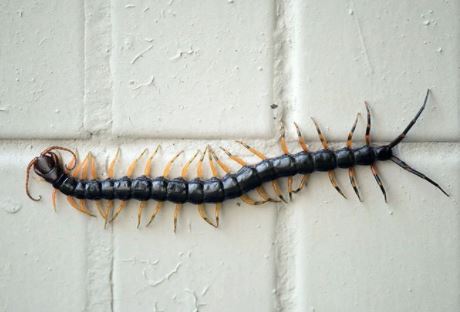
Typically, centipede bites result in severe pain, swelling, and redness at the puncture site, however, these symptoms usually subside within 48 hours.
Centipedes are closely related to lobsters, shrimp, and crayfish. Their bodies are multi-segmented with a pair of legs for each body segment.
Centipedes are usually nocturnal, which means they come out to hunt their prey at night. While they are poisonous and eat insects and worms, they are not typically aggressive toward people. They usually do not bite humans, until they’re provoked.
Though most call it a bite, a centipede stings with its forcipules, which are modified legs with pincer-like tips located close to its head. The site of the bite contains two red markings in a V-shape because of the insect’s forcipules’ arrangement. A bite can be very painful, especially larger centipede bites because they tend to deliver more poison.
Centipede venom contains numerous chemical substances, such as serotonin, histamine, and cardio-depressant toxin-S. Therefore, a bite may result in serious allergic reactions, as well as cardiovascular and neurological effects in people. However, the symptoms may resolve within a few hours to days and do not cause any long-term effects.


-
 Latest7 days ago
Israel marks 3 years since October 7 Hamas attack amid Gaza strikes, election debate
-

 Energy6 days ago
Fuel Battle: Dangote, marketers and government clash over petrol imports
-

 Energy1 week ago
Petrol, diesel prices rise 86% in 2026 as costs hit fresh highs
-

 Football1 week ago
Nigeria’s World Cup exit under spotlight as FIFA’s DR Congo files emerge
-

 Latest1 day ago
Full List: Meet the 2026 Nobel Prize winners across six categories
-

 Latest1 week ago
US Court set to rule on release of FBI, DEA records on Tinubu
-

 Business1 week ago
Nigerian investors at a crossroads as fixed-income yields slide
-

 Latest1 week ago
Oyo APC crisis deepens as Oluyole reconciliation meeting ends in brawl