
News
2018 budget: A look at its priorities

By Odunewu Segun
That President Muhammadu Buhari presented the 2018 budget proposals on Tuesday to the National Assembly is no longer news, what will be news are the detailed sectoral allocations and its implication for the economy in 2018.
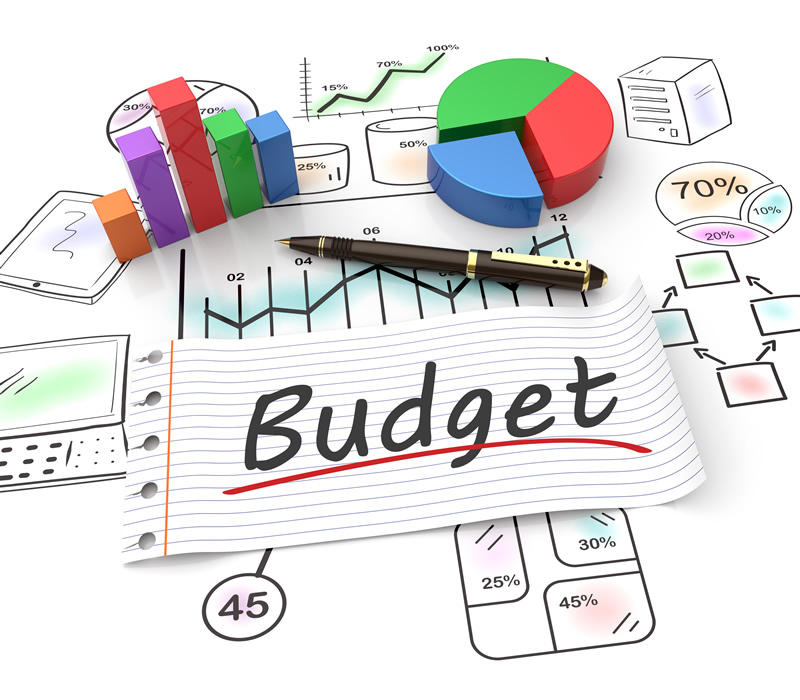
The proposed expenditure for 2018 which is N8.612 trillion has been separated into various subdivision comprising: Recurrent Costs with N3.494 trillion; Debt Service, N2.014 trillion; Statutory Transfers of about N456 billion; Sinking Fund of N220 billion; and Capital Expenditure of N2.428 trillion.
There is especially a 5 percent increase in statutory transfers (over last year’s budget) because of the Niger Delta Development Commission (NDDC) and the Universal Basic Education Commission (UBEC), which are related directly to the size of oil revenue.
The Budget consolidates N500 billion in catering for the most vulnerable in the society with N100 billion set aside for Housing. Schemes like the Conditional Cash Transfer (CCT) and the National Home-Grown School Feeding programme will be implemented as they help create jobs for farmers, provide funding for traders and artisans and assist in growing small business via mentoring.
Because of inflation, overhead costs are expected to rise by N26 billion (12 percent increase) in 2018 thus MDAs are admonished to follow the policies regarding cost control.
ALSO SEE: Buhari presents N8.612tn 2018 budget proposal to NASS
In a bid to keep the peace in the Niger Delta for socio-economic advancement, N65 billion has been allocated for the Presidential Amnesty Programme. This should also ensure the completion of ongoing projects in the area. Similarly, the Nigerian Army was deployed to various regions across the country to combat crime including armed robbery, kidnapping and insurgency.
Funding for projects in 2018 has been allocated to various sectors of the nation to ensure proper economic development and availability of jobs; Power, Works and Housing: N555.88 billion; Transportation: N263.10 billion; Special Intervention Programmes: N150.00 billion; Defence: N145.00 billion; Agriculture and Rural Development N118.98 billion; Water Resources: N95.11 billion and Industry, Trade and Investment get N82.92 billion.
Also in the proposal, Interior gets N63.26 billion; Education N61.73 billion; Universal Basic Education Commission: N109.06 billion; Health: N71.11 billion; Federal Capital Territory: N40.30 billion; Zonal Intervention Projects N100.00 billion while North East Intervention Fund is put at N45.00 billion.
Also, Niger Delta Ministry is allocated N53.89 billion; and lastly, the Niger Delta Development Commission get N71.20 billion.








-

 Latest7 days ago
US Immigration fees rise from October 16 as USCIS announces new charges
-
 Latest2 days ago
Israel marks 3 years since October 7 Hamas attack amid Gaza strikes, election debate
-

 Business6 days ago
Nigeria’s $55bn reserves raise fresh questions over naira value
-

 Health6 days ago
Florida sues Pfizer over deceptive COVID-19 vaccine marketing
-

 Business1 week ago
Tuoyo Erikowa wins digital marketing personality of the Year at 2026 EDGE awards
-

 Crime6 days ago
From camp to captivity: How kidnappers now target NYSC Corps members on highways
-

 Featured7 days ago
2027: Can Nigeria’s opposition still unite behind a single presidential candidate?
-
 Crime6 days ago
Fulani Militia leader linked to Christian killings arrested in Plateau