
Latest
2027: Atiku, Obi absent as opposition begins talks on single presidential candidate

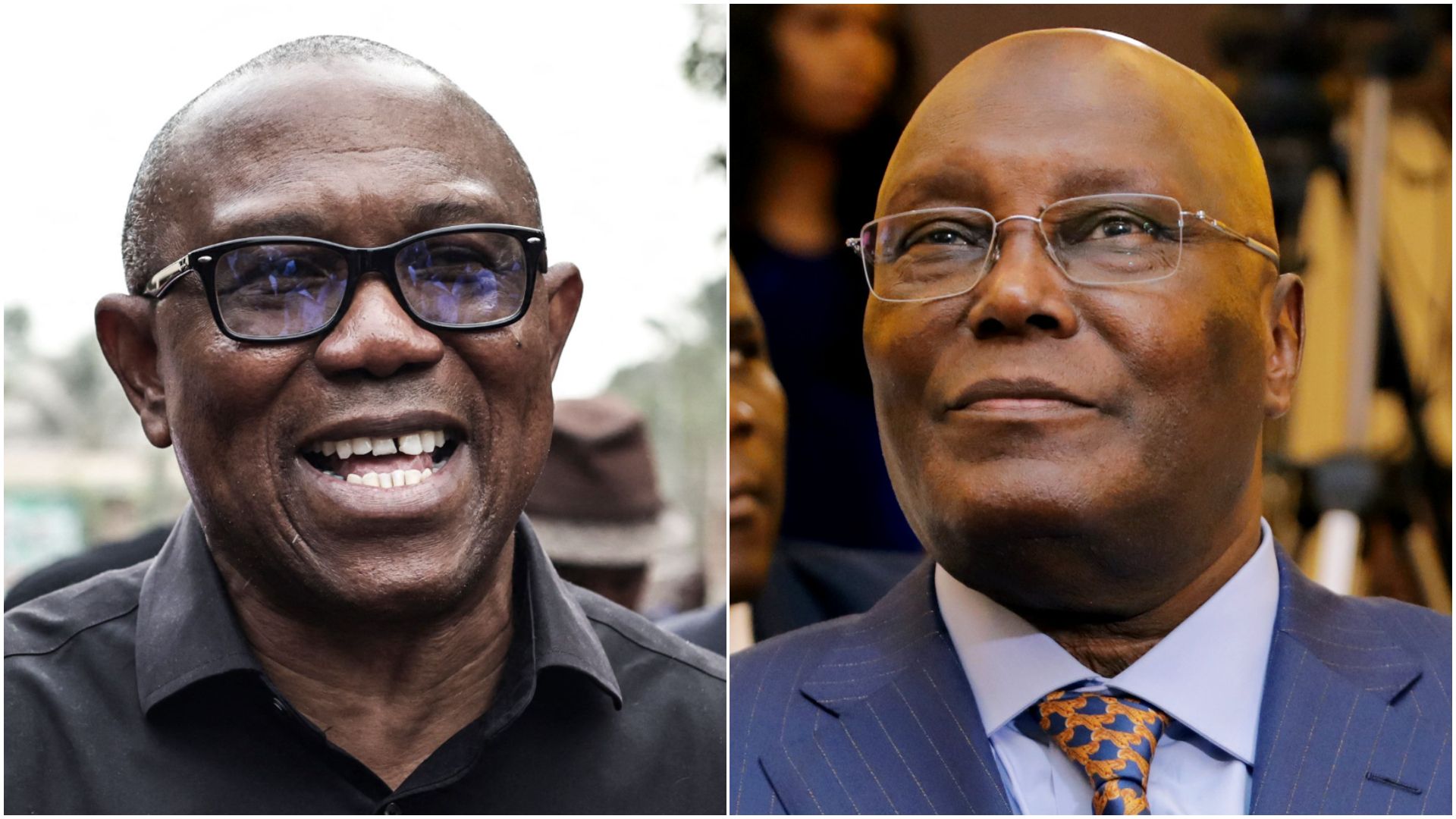
Opposition parties have begun fresh negotiations on the possibility of presenting a single presidential candidate against the ruling All Progressives Congress (APC) in the 2027 general election, with two of the leading opposition figures, Atiku Abubakar and Peter Obi, absent from the opening summit in Abuja.
The talks began on Monday at the Shehu Musa Yar’Adua Centre under the auspices of the G-100 political pressure group, bringing together representatives of six opposition parties — the African Democratic Congress (ADC), Allied Peoples Movement (APM), Nigeria Democratic Congress (NDC), Peoples Democratic Party (PDP), Peoples Redemption Party (PRP) and Social Democratic Party (SDP).
Atiku, the ADC presidential candidate, and Obi, the NDC presidential candidate, did not attend the meeting. Their absence was not initially explained at the summit, although Atiku’s media aide, Phrank Shaibu, later said the former vice-president remained committed to the objective of opposition unity and that his absence should not be interpreted as a boycott.
The meeting was attended by several other opposition figures, including PRP presidential candidate Donald Duke, SDP candidate Adewale Adebayo, Democratic Leadership Alliance candidate Moses Olusoji and APM vice-presidential candidate Lawan Daura.
The summit is aimed at developing a framework through which opposition parties can overcome their differences and negotiate the possibility of fielding a common presidential candidate against the APC in 2027.
Opening the summit, G-100 convener Salihu Lukman said the opposition needed to learn from the 2023 presidential election, when votes were divided among several major candidates.
Lukman argued that opposition parties collectively secured about 13 million votes in 2023, compared with fewer than nine million votes recorded by President Bola Tinubu, but failed to convert their combined strength into victory because they contested separately.
He urged the parties to agree on the rules for cooperation before attempting to determine who would eventually emerge as the opposition’s presidential candidate.
Lukman also cited the 2015 opposition alliance that produced the APC as an example of how competing political interests could be negotiated through an agreed process.
The summit agreed to establish three standing committees, a Central Leadership Committee, a Publicity and Communication Committee, and a Legal Committee to coordinate the negotiations.
Five additional working groups are expected to prepare proposals covering a National Covenant for Democratic Renewal, a Single-Term Transition Charter, a National Reform Programme, a Framework for Opposition Unity and a roadmap for producing a common presidential candidate.
The groups have four weeks to complete their assignments, after which the opposition parties are expected to reconvene for another summit to consider their recommendations.
Lukman stressed that the process was not immediately demanding that any party dissolve or that any presidential candidate withdraw from the race.
Instead, he said the objective was to establish a structure through which competing interests could be negotiated before a final decision was taken on the opposition’s presidential ticket.
The absence of Atiku and Obi highlights one of the major challenges facing the unity initiative: persuading leading presidential contenders to subordinate their individual ambitions to a consensus-selection process.
Earlier reports indicated that both camps had recognised the need for greater opposition cooperation but had been reluctant to surrender their presidential ambitions.
Nevertheless, Atiku’s media team has maintained that his absence from Monday’s meeting should not be interpreted as opposition to the unity project.
Donald Duke, meanwhile, pledged to support whichever candidate ultimately emerges from the negotiations, regardless of whether he himself gets the ticket.
The negotiations therefore mark a significant new phase in the opposition’s attempt to challenge the APC in 2027. Whether the parties can overcome competing ambitions and agree on one candidate remains the central question.
For now, the opposition has created a negotiating table. The more difficult task will be deciding who eventually gets to sit at the head of it.


-
 Latest6 days ago
Israel marks 3 years since October 7 Hamas attack amid Gaza strikes, election debate
-

 Energy6 days ago
Fuel Battle: Dangote, marketers and government clash over petrol imports
-

 Energy7 days ago
Petrol, diesel prices rise 86% in 2026 as costs hit fresh highs
-
 Energy1 week ago
Has Iran lost control of the Strait of Hormuz? Oil flows rebound as war disruptions persist
-

 Football7 days ago
Nigeria’s World Cup exit under spotlight as FIFA’s DR Congo files emerge
-
 Latest6 days ago
US Court set to rule on release of FBI, DEA records on Tinubu
-

 Business7 days ago
Nigerian investors at a crossroads as fixed-income yields slide
-

 Business1 week ago
LoveWorld Trade and Investment Forum to Convene Business Leaders in Accra